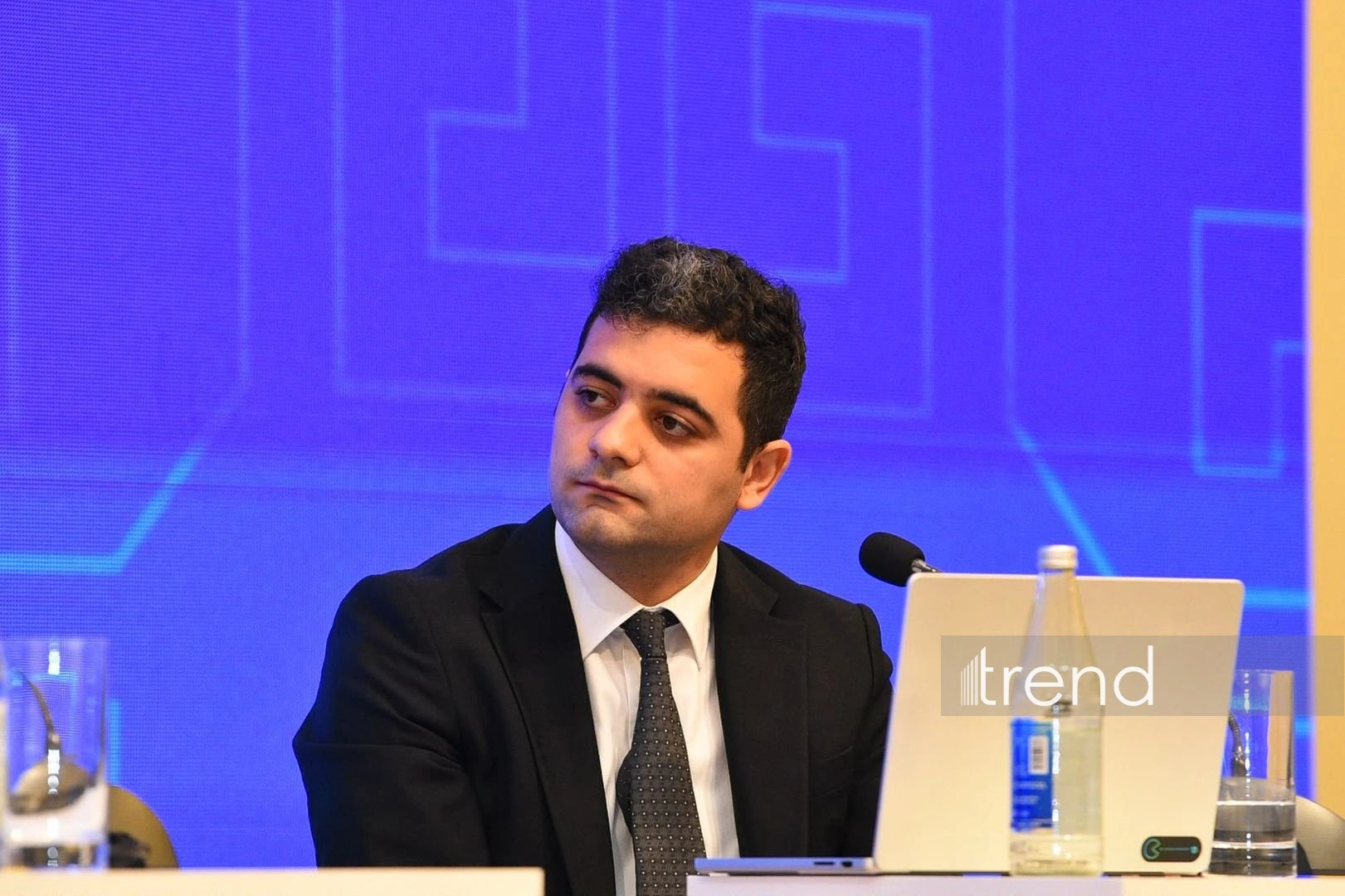
BAKU, Azerbaijan, October 27. A new artificial
intelligence (AI) platform has been prepared in Azerbaijan to
facilitate citizens' access to legal information and to provide
answers to their questions regarding legislation, Chief Commercial
Officer (CCO) of the Azerbaijan National AI Center, Ulfan Aliyev,
said on Tuesday, Trend’s correspondent reports from the event.
He made the remark at a discussion titled "Intercultural digital
future: intercultural digital competence for societies entering the
era of digitalization and artificial intelligence," held within the
framework of the 7th World Forum on Intercultural Dialogue in
Baku.
According to Aliyev, access to information about one's rights is
a fundamental right, and digital technologies should make such
access more readily available.
"We had previously created a platform in Azerbaijan that
consolidated all legal information. However, citizens encountered
certain difficulties when trying to use this information.
Previously, a user had to know the exact keywords to find the
information they were looking for. However, in everyday
conversation, people don’t typically use formal legal terminology.
Even when the correct keywords were used, the system would return a
multitude of legal articles, leaving the user struggling to
determine which one actually addressed their specific question," he
noted.
Aliyev pointed out that the AI-powered ‘e-Qanun.ai’ platform was
developed to address these challenges.
"Now, citizens can describe their issues using everyday,
conversational language. The platform generates an answer to the
query and provides relevant recommendations. This significantly
simplifies the process of accessing legal information," he
emphasized.
The center’s executive remarked that one of the primary
challenges when applying AI in the legal field is the risk of
systems providing incorrect or fabricated information.
"General-purpose language models are trained on vast amounts of
data collected from various sources worldwide, which increases the
likelihood of generating incorrect answers. In the legal sector,
such errors can pose serious problems. Our platform, however,
utilizes a restricted database, which minimizes this risk," said
Aliyev.
He added that it is also essential to develop artificial
intelligence solutions for languages with a relatively smaller user
base, such as the Azerbaijani language.
"Language shouldn’t be a barrier to people's use of modern
technology. There are approximately 10 million Azerbaijani
speakers, and we are striving to address the existing challenges in
this area using our own resources," he stated.
Aliyev also touched upon the issue of building trust in AI
platforms.
According to him, it’s impossible to gain user trust solely
through advertising and promotional campaigns.
"Establishing trust in the field of artificial intelligence
isn’t easy. Simply telling people that they can trust your
platform, or running advertising campaigns to that effect, is not
enough. Trust is built over time," he emphasized.
The CCO mentioned that it’s crucial for AI systems used in the
legal sector to be trained in the Azerbaijani language and based on
local data sources because even a simple translation of legal texts
can lead to a change in their meaning.
He noted that when developing artificial intelligence products,
one of the key requirements should be the explainability of the
decisions made and the information provided by the system.
“Artificial intelligence must, first and foremost, explain why
it reached a certain decision or why it generated specific content.
On our platform, we indicate the source from which the information
was drawn. Thus, the user can see the data upon which the
AI-generated content is based,” he explained.
Aliyev noted that expanding citizens' access to information
about their rights could facilitate their more active participation
in the judicial and legal system.
"As people gain information about their rights, they will likely
seek to engage more deeply with the judicial and legal system.
Consequently, the number of legal cases in the courts may increase,
which will necessitate the development of additional technological
solutions for the courts," he stressed.
He further pointed out that the fact that AI models support
certain languages doesn’t guarantee that the information provided
in those languages will always be accurate.
"Technically, many AI models claim to support specific
languages; however, it is crucial to understand what content is
being generated in the background. Especially in legal systems,
even simple translations can lead to shifts in meaning. Therefore,
such systems must be trained using the Azerbaijani language and
based on local sources," Aliyev added.