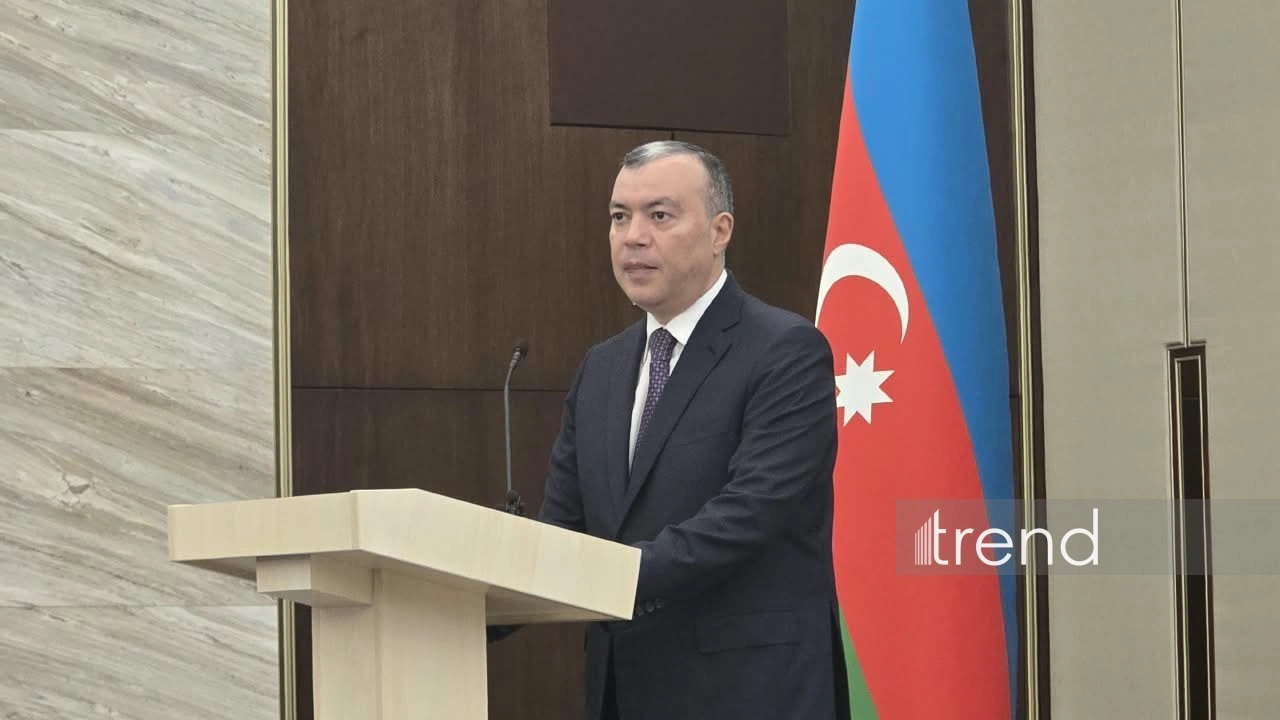
BAKU, Azerbaijan, October 22. The development
of the electronic delivery system is in its final stages and will
be fully operational shortly, Azerbaijan’s Minister of Finance
Sahil Babayev said at a conference dedicated to the digital
transformation of public finance in Baku, Trend's correspondent reports from the
event.
Moreover, Babayev emphasized that, this mechanism will help
improve the operations of finance departments and establish a
unified accounting system.
According to him, since April of this year, 7,500 contracts
totaling more than 3 billion manat ($1.7 billion) have been
concluded in Azerbaijan through the electronic contracting
system,
The minister noted that the implementation of the electronic
contracting system enables fully electronic tracking of government
obligations. The system creates an electronic database of contracts
concluded between government agencies, an electronic database of
prices, and a unified registry of government obligations.
“This system provides transparent, fast, and efficient
capabilities for government agencies. The process of preparing and
signing a contract through the electronic contracting system can
now be completed within one business day,” he said.
According to Sahil Babayev, following the implementation of the
electronic contracting system, bank guarantees were also digitized
and integrated with the relevant platform. Currently, advance
payments, performance guarantees, and other types of bank
guarantees are processed through the electronic platform. The
minister emphasized that the electronic processing of this
procedure, which previously took 5–10 business days, has eliminated
time wasted and accelerated operations.
He added that the development of an electronic receipt and
delivery mechanism is also in its final stages and will be fully
operational in the coming days.
The minister reported that work is also underway to digitize the
State Treasury. According to him, a number of modules of the new
digital treasury model have already been put into operation.
“Whereas in the past it took at least five business days to
process payments through the treasury, payments are now executed
within the same day. Our average processing time is 10 hours. Our
goal is to reduce this time to two hours next year,” Sahil Babaev
said.
He noted that the treasury system is also being integrated with
other electronic systems. This creates a unified digital chain
covering all stages: from signing a contract to making a payment,
and then to recording the corresponding asset in the state assets
registry.
According to the minister, this approach will make it possible
to create a unified database of state assets, improve accounting
practices in government agencies, and manage financial and
non-financial obligations more effectively.
Babayev added that the next phase also involves improving the
electronic budget information system. As a result of the
integration of electronic contracts, the electronic treasury, and
electronic accounting systems, the information generated by these
systems will be consolidated into a single electronic budget
system.
“I believe that as a result of this integration, we will be able
to achieve up to 60% of the state budget in electronic form,” the
minister emphasized.
He also discussed the results of the accountability portal,
created to oversee and monitor the activities of state-owned
enterprises and improve dividend policy.
According to the minister, in a short period of time, 1,113
enterprises have registered on the portal and 11,434 reports have
been submitted.
Sahil Babayev reported that, based on this information, 950
approved budget reports from state-owned enterprises for 2026 were
received, and 885 dividend forecasts for 2027 were generated.
He noted that, based on the results of the analyses conducted,
more than 40 companies plan to pay dividends to the state budget
for the first time next year. Overall, dividend revenue is
projected to total approximately 900 million manat ($529.4
million).
“This is a clear indication of both the successes achieved in
recent years in the management of state-owned companies and the new
direction and approach in state financial policy,” the finance
minister stated.