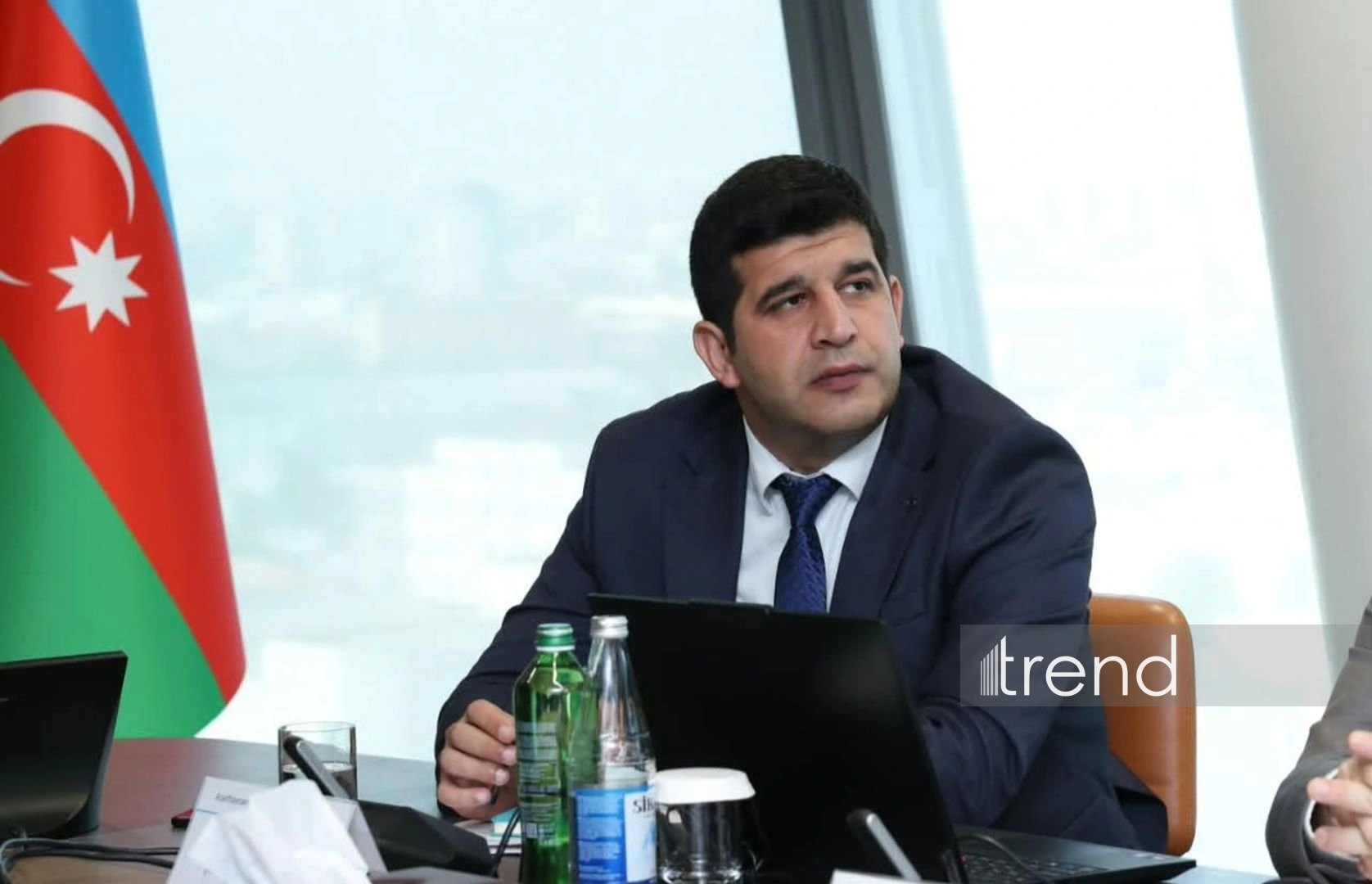
BAKU, Azerbaijan, October 21.
The introduction of a risk-based tariff system for compulsory real
estate insurance is planned in Azerbaijan, Head of the Insurance
Intermediaries Supervision Department at the Central Bank of
Azerbaijan (CBA), Ramin Jafarov, said during a training titled
"Role of the insurance sector in financial stability” in Baku on
Wednesday, Trend’s
correspondent reports from the event.
Jafarov remarked that regulatory mechanisms are being improved
in Azerbaijan with the aim of developing the insurance market,
strengthening the financial stability of insurance companies, and
protecting consumer rights. In this context, he mentioned ongoing
efforts to implement a risk-based tariff system for compulsory real
estate insurance, digitize insurance services, and expand unified
rules across various types of voluntary insurance.
According to him, the law "On insurance activity" is the primary
legal framework for the regulation of the insurance sector in
Azerbaijan.
"The CBA's main objectives in this area are to ensure the
financial stability of insurance companies and to protect the
rights of insurance consumers," he explained.
Jafarov noted that the oversight of financial stability involves
assessing the financial condition and reserves of insurance
companies. The primary goal of this supervision is to ensure that,
in the event of an insured incident, companies are able to fulfill
their contractual obligations in a timely and complete manner.
He pointed out that the reforms being implemented to develop the
insurance market are aimed both at improving the operations of
market participants and at enhancing the stability of the
sector.
According to the department head, within the framework of the
Financial Sector Development Strategy covering the years 2024-2026,
work is underway to develop and implement unified rules for
voluntary types of insurance. He noted that, previously, each
company had its own rules and terms for voluntary insurance types,
such as CASCO.
"This made it difficult for customers to compare products from
different companies. The implementation of unified rules
establishes a common approach regarding individual clients.
Nevertheless, insurance companies are granted a certain degree of
flexibility in determining insurance premiums, taking into account
their own risk appetite and capacity to accept risks," Jafarov
said.
According to him, one of the key innovations implemented in the
field of compulsory insurance is the digitalization of
services.
"Currently, compulsory insurance contracts, including compulsory
civil liability insurance for motor vehicle owners, are processed
electronically, eliminating the need for paper forms.
Information regarding insurance contracts is stored in the
Compulsory Insurance Bureau’s information system, allowing citizens
to access details about their own insurance history," he
shared.
The department head also noted that another mechanism introduced
in the insurance sector is the ‘direct claims settlement’
system.
"Under certain conditions, this system allows a person who has
suffered damages in a road traffic accident to seek compensation
from their own insurance company, rather than from the insurer of
the other party involved.
For this system to apply, the accident must involve two
vehicles, the at-fault party must admit liability, there must be no
personal injury (harm to human health), and both vehicles must be
covered by compulsory insurance," he clarified.
Jafarov emphasized that if any of these conditions are not met,
for instance, in the event of a multi-vehicle collision, the
settlement of damages is handled according to standard
procedures.
The department head highlighted that a risk-based mechanism for
calculating premiums for compulsory motor insurance has been in
place since 2022, and efforts to refine it are ongoing.
He added that projects are also being implemented to apply a
similar approach to the compulsory insurance of real estate. This
approach facilitates a more precise assessment of risks and allows
insurance premiums to be determined based on risk indicators.
According to Jafarov, the assessment of risks related to
earthquakes and other natural disasters is of particular importance
in real estate insurance. Taking into account Azerbaijan's seismic
characteristics, work is underway, with the participation of
international experts, to develop seismic risk maps for the
country.
He further emphasized the significance of the international
motor insurance system. He noted that the Green Card system enables
the coverage of civil liability for vehicle owners when Azerbaijani
vehicles are driven in foreign countries that are members of this
system.
"For example, when traveling to countries that are members of
the Green Card system, such as Italy, in a vehicle registered in
Azerbaijan, it may be required to have appropriate insurance
coverage.
The CBA is also implementing projects aimed at developing the
institution of insurance agents and brokers, as well as improving
the legislative framework that regulates the activities of
insurance intermediaries," he said.
According to him, these measures are directed toward enhancing
the quality of services in the insurance market, protecting
consumer rights, and strengthening the financial stability of the
sector.