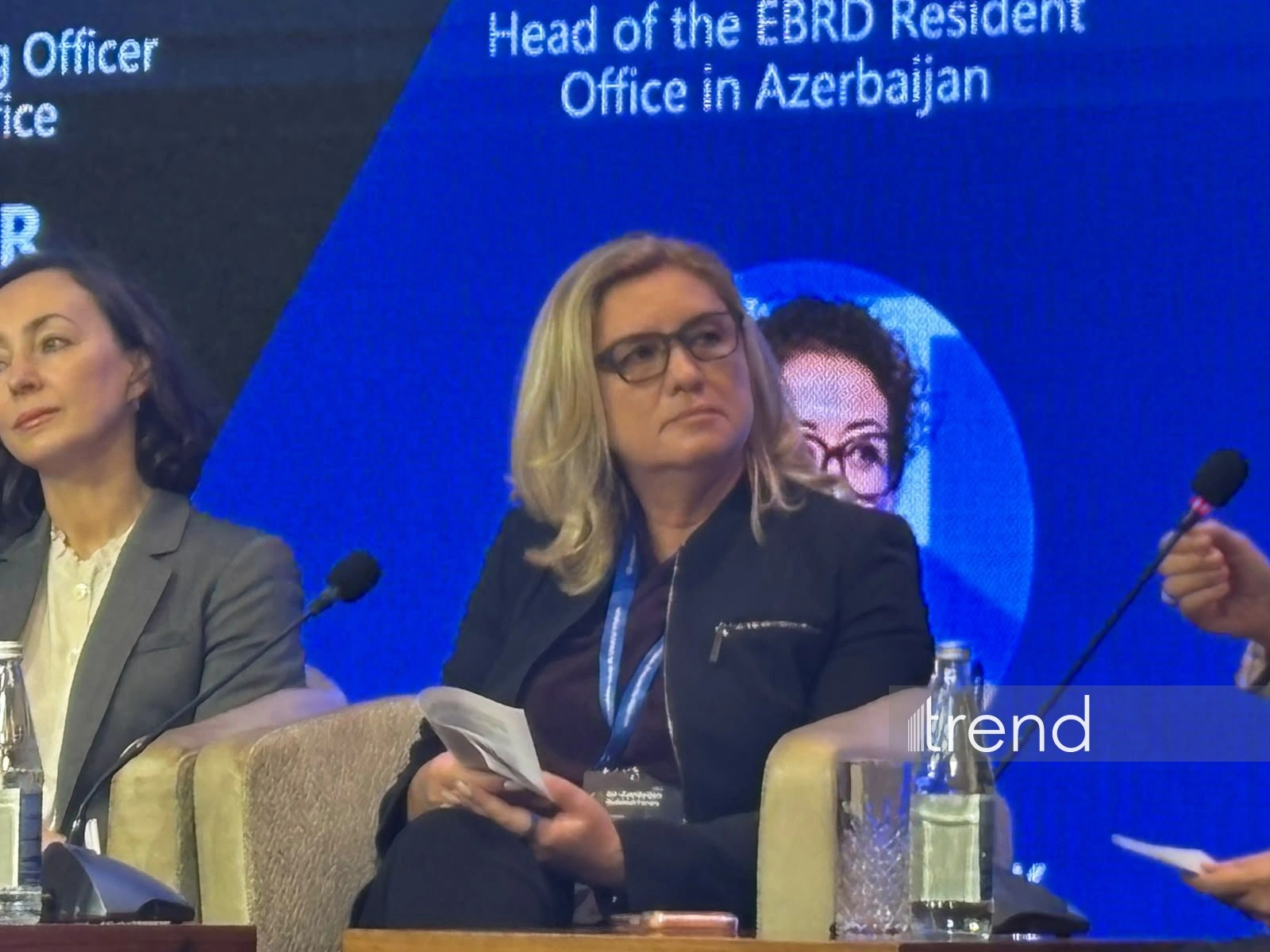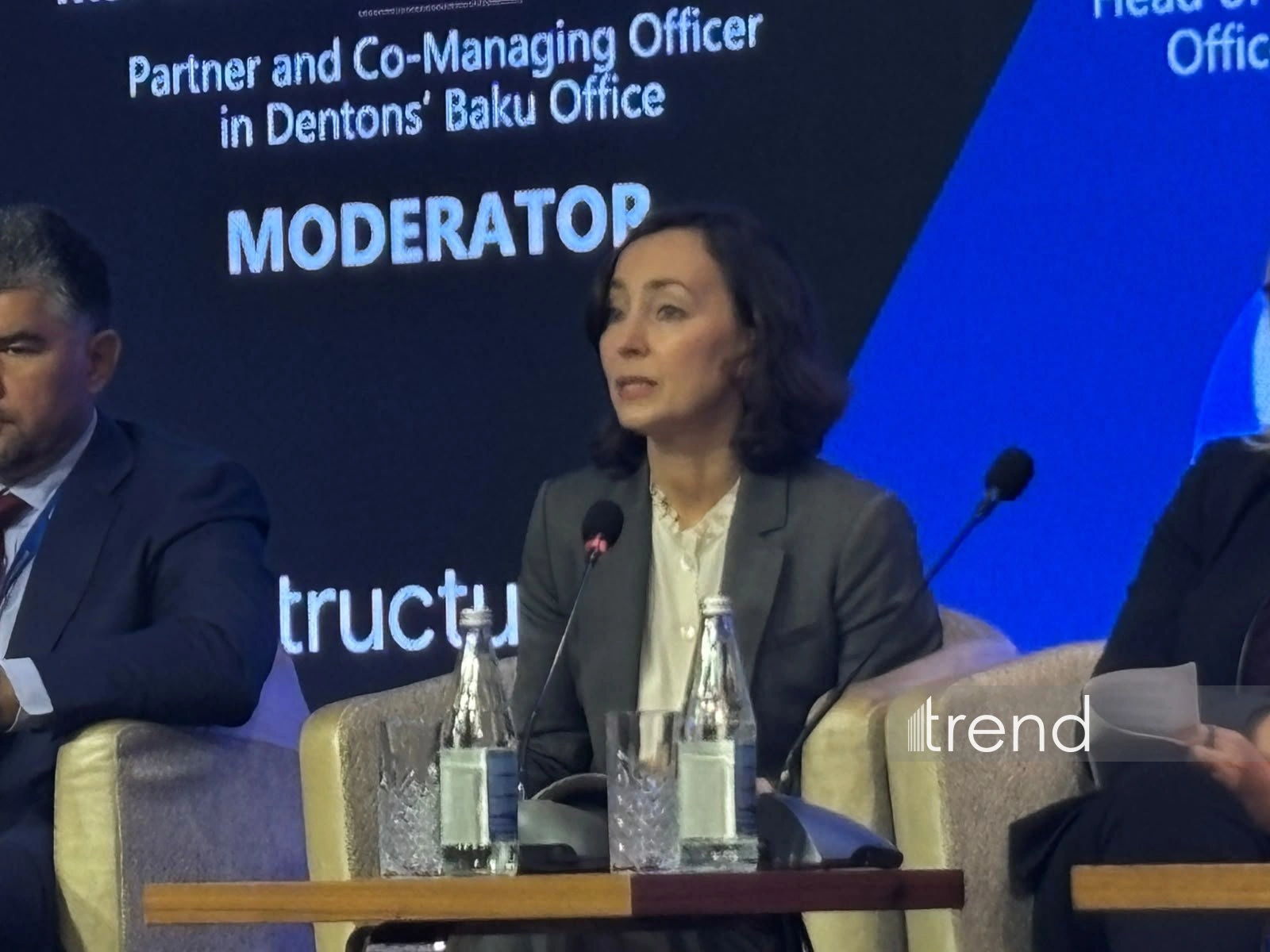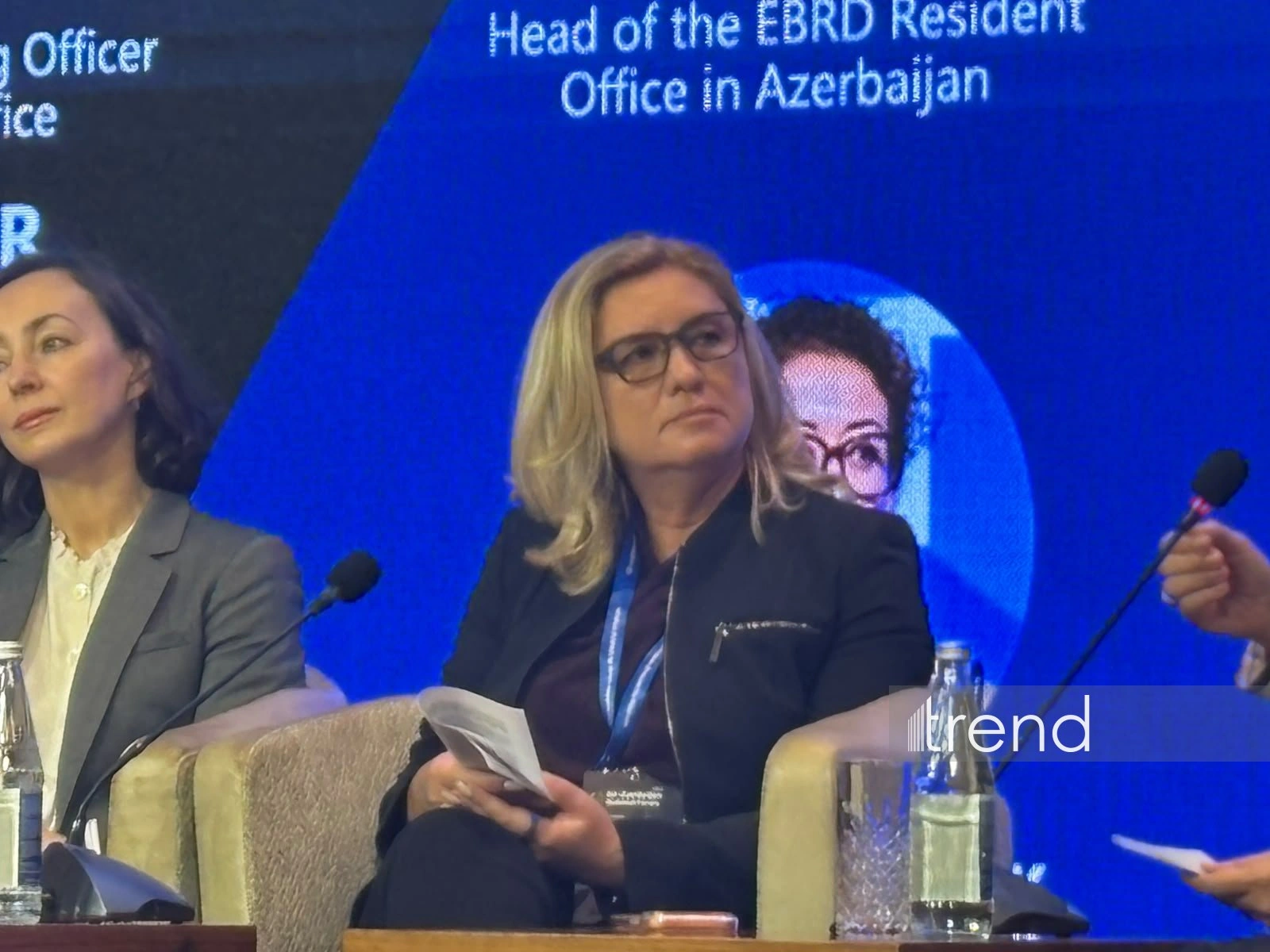
BAKU, Azerbaijan, October 21.
The Middle Corridor should be turned from a transport route into an
economic corridor contributing to attracting investments, creating
jobs, and developing the private sector in the region, Head of the
Baku Office of the European Bank for Reconstruction and Development
(EBRD), Nataly Mouravidze, said at the EU-Azerbaijan Business Forum
in Baku on Wednesday, Trend’s correspondent reports from the event.
According to her, the opportunities that the Middle Corridor
opens up go far beyond the transport sector.
“The key challenge is to use transport connectivity to attract
investment, create jobs, and develop the private sector throughout
the region.
Infrastructure development remains important, but existing
bottlenecks must be addressed to ensure the corridor operates as a
cohesive, efficient, predictable, and commercially viable
system.
The business doesn't consider individual sections of the route.
Reliability, predictability, and costs throughout the entire
journey are important to him,” noted Mouravidze.
She identified three main priorities for the development of the
Middle Corridor. The first is targeted investment to address key
bottlenecks, including ports, railways, maritime infrastructure,
and intermodal facilities.
She identified digitalization and coordination as the second
priority. Significant gains in efficiency can be achieved through
the harmonization of procedures, improved information exchange,
greater transparency, and closer coordination among all
stakeholders.
The third focus area should be the development of economic
activity beyond the transport sector.
"Success shouldn’t be measured solely by the number of
containers transported along the corridor or through the region. It
must be evaluated based on the volume of investment, the number of
jobs, and the level of business activity that the corridor
generates," she emphasized.
Mouravidze pointed out that the Middle Corridor creates
opportunities for developing logistics services, establishing
warehousing capacity, expanding processing and manufacturing, and
launching export-oriented enterprises. Such ventures contribute to
local value creation and the deeper integration of the region into
global markets.
According to her, there is already a political commitment within
the region to developing the corridor, with the primary focus now
increasingly shifting toward the implementation of established
plans.