BAKU, Azerbaijan, October 20. Uzbekistan is
seeking to advance President Shavkat Mirziyoyev’s drive to
diversify international economic partnerships and attract foreign
investment as about 200 American businesses join regional officials
in Samarkand for a forum aimed at expanding U.S.-Central Asia
cooperation in trade, technology, energy, and critical
minerals.
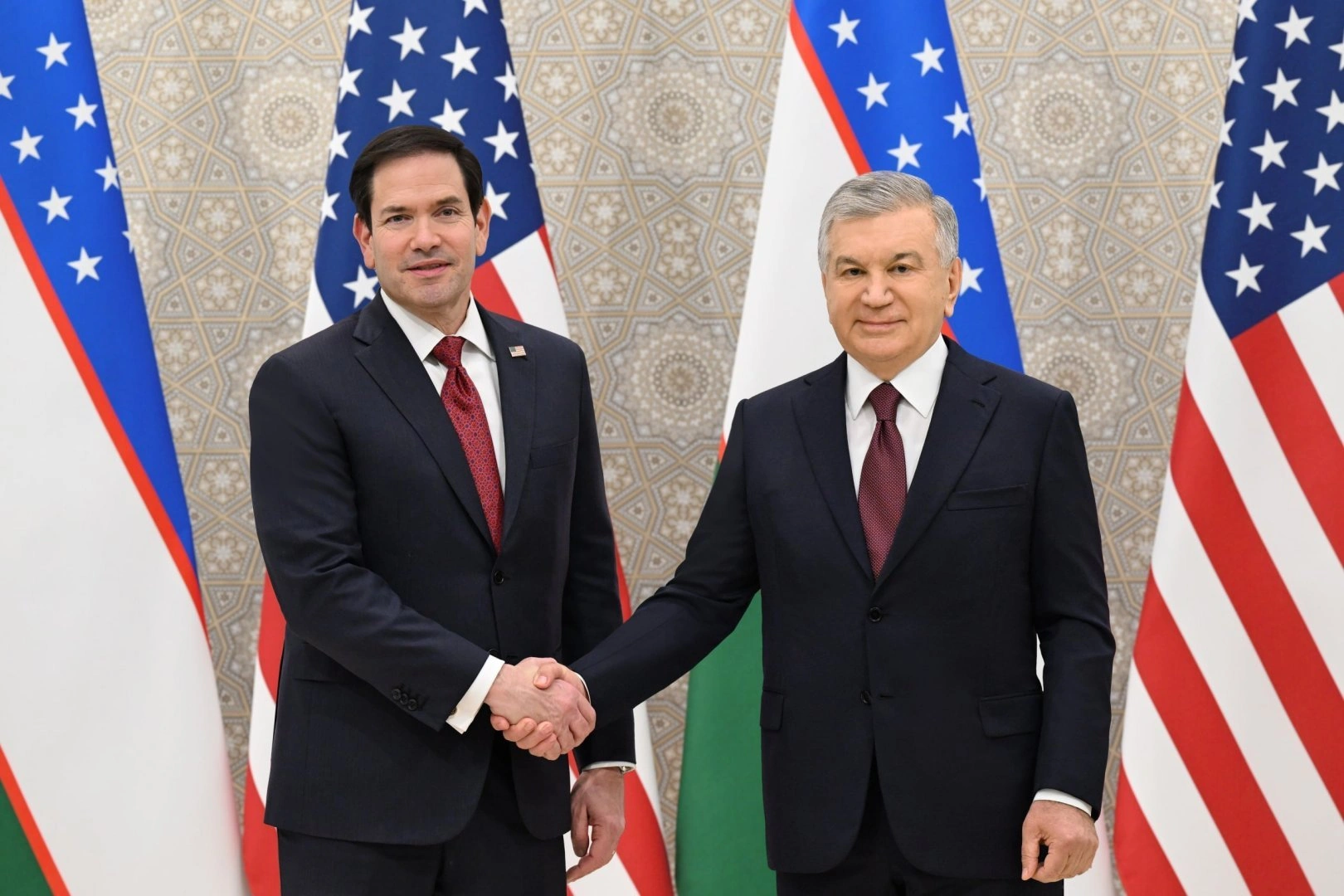
The meetings held on October 19, led by U.S. Secretary of State
Marco Rubio and his Central Asian counterparts, reflect
Washington’s growing engagement with a region whose economic
potential, mineral resources and strategic location have attracted
international attention. For Mirziyoyev, closer ties with the
United States offer an opportunity to attract American capital,
introduce advanced technologies and strengthen Uzbekistan’s
position as a regional economic hub.
The agenda extends beyond conventional trade and investment.
Discussions have covered critical minerals, energy, advanced
technologies, artificial intelligence, cloud computing and digital
infrastructure, while Uzbekistan and the United States have
launched their inaugural Enhanced Strategic Partnership Dialogue.
Uzbekistan has also signed the Artemis Accords, becoming the 77th
country to join the framework for peaceful space exploration.
Mirziyoyev has repeatedly emphasized that foreign investment
should contribute to technological modernization and job creation,
rather than simply increase capital inflows. Addressing the Fifth
Tashkent International Investment Forum on June 17, 2026, he said:
“For us, investment is far more than a source of capital. It is a
catalyst for advanced technologies, modern knowledge and expertise,
new jobs and development that keeps pace with the demands of a
rapidly changing world.”
Together, these initiatives signal an effort to translate closer
political engagement into commercial partnerships and long-term
economic opportunities for Uzbekistan and the wider region.
From diplomatic commitments to commercial
projects
The forum has created a platform for advancing political
commitments into investment agreements, joint ventures and broader
business cooperation.
Rubio said American companies were expected to announce concrete
business deals following the meetings in Samarkand, describing the
current engagement as the beginning of a broader effort to deepen
economic ties with Central Asia.
The U.S. delegation's participation reflects interest in
Uzbekistan's economic growth, domestic market, and potential as a
destination for investment. Rubio highlighted the country's annual
economic growth of nearly 8% and described Uzbekistan as a
cornerstone of Central Asia, pointing to its population and
development prospects.
“This is a place that is growing dramatically and economically.
It’s providing incredible opportunities for prosperity for its
people. And we have American companies that are interested in being
a part of it, and we’re here to explore how we can do more of it,”
Rubio said.
The growing interest from American investors creates a strong
foundation for expanding bilateral economic cooperation. The scale
and diversity of potential projects could help attract long-term
capital, strengthen industrial capacity and open new opportunities
for Uzbek businesses across strategic sectors.
“There is nothing that strengthens relationships more than
shared prosperity, and that’s what we’re looking to build on, and
that’s why we’re here,” Rubio said.
These priorities align with Mirziyoyev's broader efforts to
modernize Uzbekistan's economy, expand its international
partnerships and increase the role of investment and technology in
economic development. For Tashkent, cooperation with American
companies offers opportunities to develop industrial production,
create skilled jobs and strengthen export capacity.
The establishment of the Enhanced Strategic Partnership Dialogue
provides a regular channel for coordinating bilateral priorities
and advancing agreements reached by the two countries' leaders. It
could also help connect diplomatic engagement with business
initiatives, supporting the development of joint projects in
strategically important sectors.
Critical minerals put Uzbekistan in a stronger
position
Critical minerals are emerging as one of the most important
areas of potential cooperation between the United States and
Central Asia.
As demand for advanced technologies and industrial products
grows, access to reliable supplies of strategically important
minerals has become an increasingly significant economic
consideration. Washington is seeking to diversify supply chains,
while Central Asian countries are looking for investment,
technology and opportunities to develop domestic processing
industries.
For Uzbekistan, cooperation in this field could attract capital
into mineral exploration, extraction, processing and the production
of higher-value industrial goods.
Developing processing capacity and related manufacturing
industries would create opportunities to retain more value
domestically, generate employment and strengthen Uzbekistan's
participation in international supply chains. Cooperation with
American companies could also facilitate access to technology and
expertise needed to expand industrial capabilities.
Uzbekistan's proposal to establish regular dialogue between the
C5+1 diplomatic format and the B5+1 business platform is
particularly relevant in this context. Connecting government-level
discussions with private-sector priorities could help identify
commercially viable projects and improve coordination among
regional partners.
A regional approach could further strengthen these opportunities
by linking national markets, infrastructure and industrial
capabilities, making Central Asia more attractive to international
investors.
Technology cooperation could support economic
diversification
Digital technologies represent another potential source of
long-term economic gains for Uzbekistan.
During a technology panel held as part of the C5+1 business
program, Uzbek officials and representatives of American technology
companies discussed cooperation in artificial intelligence, cloud
computing, digital infrastructure and workforce development.
Uzbekistan has identified the development of its technology
sector, the expansion of IT services exports and the training of
specialists as important economic priorities. Partnerships with
U.S. companies could provide access to expertise, advanced
infrastructure and international markets.
The potential benefits extend beyond the technology industry
itself. Wider adoption of digital tools could improve productivity
in manufacturing, financial services, agriculture and logistics,
while stronger technology exports could help diversify the
country's sources of foreign revenue.
Workforce training, reliable digital infrastructure and stronger
links between local businesses and international technology supply
chains will be important to expanding these benefits.
The participation of regional representatives also highlights
the value of cooperation among Central Asian countries. Joint
initiatives could help the region pool expertise, develop
compatible digital infrastructure and become a more attractive
destination for international technology investment.
The forum also introduced participants to the opportunities
offered by IT Park Uzbekistan and Enterprise Uzbekistan, an
international digital technology center designed to attract foreign
companies, support innovative businesses and help technology
projects access international markets.
Space cooperation broadens the strategic
agenda
Uzbekistan's accession to the Artemis Accords adds another
dimension to its expanding cooperation with the United States.
The accords establish principles for responsible civil space
exploration, including transparency, peaceful activities, emergency
assistance, the registration of space objects, and the sharing of
scientific data.
According to Uzbek Foreign Minister Bakhtiyor Saidov, joining
the framework is expected to create opportunities for cooperation
with NASA and other participating space agencies, including
specialist training and the transfer of space technologies.
Although space cooperation is a longer-term undertaking, it
could support the development of technical expertise, scientific
research, and advanced engineering capabilities. Such cooperation
would also broaden Uzbekistan's engagement with the United States
beyond conventional economic sectors and into advanced scientific
and technological fields.
A regional partnership with wider
implications
The Samarkand meetings reflect Washington's effort to strengthen
its engagement with Central Asia as a region rather than
exclusively through bilateral relationships.
"Good-neighborliness, trust and mutual understanding remain as
the foundation of relations between our countries, and it must be
strengthened," President Shavkat Mirziyoyev noted at the expanded
meeting of the Council of Heads of State of the Commonwealth of
Independent States in October 2026.
The C5+1 format brings together the United States and
Kazakhstan, Kyrgyzstan, Tajikistan, Turkmenistan and Uzbekistan.
Its agenda combines economic cooperation with regional security and
other shared priorities.
For Washington, stronger commercial ties offer opportunities to
expand the presence of American companies and diversify access to
resources and markets. For Central Asian governments, closer
engagement provides avenues for attracting investment, accessing
technology and strengthening international economic
connections.
Uzbekistan's geographic position, population, and economic
development ambitions allow it to play a central role in this
process. By linking regional business initiatives with concrete
projects, Tashkent could strengthen the country's position as a
destination for international investment.
At the same time, Central Asian governments continue to pursue
economic relations with a range of international partners. Rubio
indicated that Washington's engagement was not intended to require
countries in the region to choose between the United States and
other countries.
This approach creates scope for Central Asian states to
diversify their economic relationships while pursuing projects that
serve their national development priorities.
Mirziyoyev's economic agenda gains new
momentum
The Samarkand forum reinforces Uzbekistan's efforts under
President Shavkat Mirziyoyev to diversify international
partnerships, attract foreign investment and accelerate industrial
and technological development. Closer ties with the United States
offer Tashkent an additional avenue for pursuing these priorities
while strengthening the country's role in regional and global
markets.
The launch of the Enhanced Strategic Partnership Dialogue,
combined with discussions on critical minerals, energy and advanced
technologies, establishes a framework for expanding cooperation.
The C5+1 and B5+1 platforms can further connect regional priorities
with private-sector investment and joint business initiatives.
For Mirziyoyev, the central opportunity is to use this momentum
to accelerate economic modernization, expand domestic industrial
capacity and integrate Uzbek businesses more deeply into
international supply chains. Stronger commercial ties with the
United States could help advance these objectives while positioning
Uzbekistan as a key destination for investment in Central Asia.
"We are always open to investors interested in cooperation with
Uzbekistan and ready to build an equal and mutually beneficial
partnership." President Shavkat Mirziyoyev said at the Fifth
Tashkent International Investment Forum in June 2026.
The Samarkand meetings therefore represent more than a
diplomatic milestone: they provide a platform for reshaping
U.S.-Uzbekistan economic relations around investment, technology
and strategic industries. The extent to which the two sides advance
concrete projects will shape the partnership's contribution to
Uzbekistan's long-term economic development.