BAKU, Azerbaijan, October 20. The International
Finance Corporation (IFC) is exploring opportunities in Azerbaijan
in desalination and wastewater treatment, and is ready to support
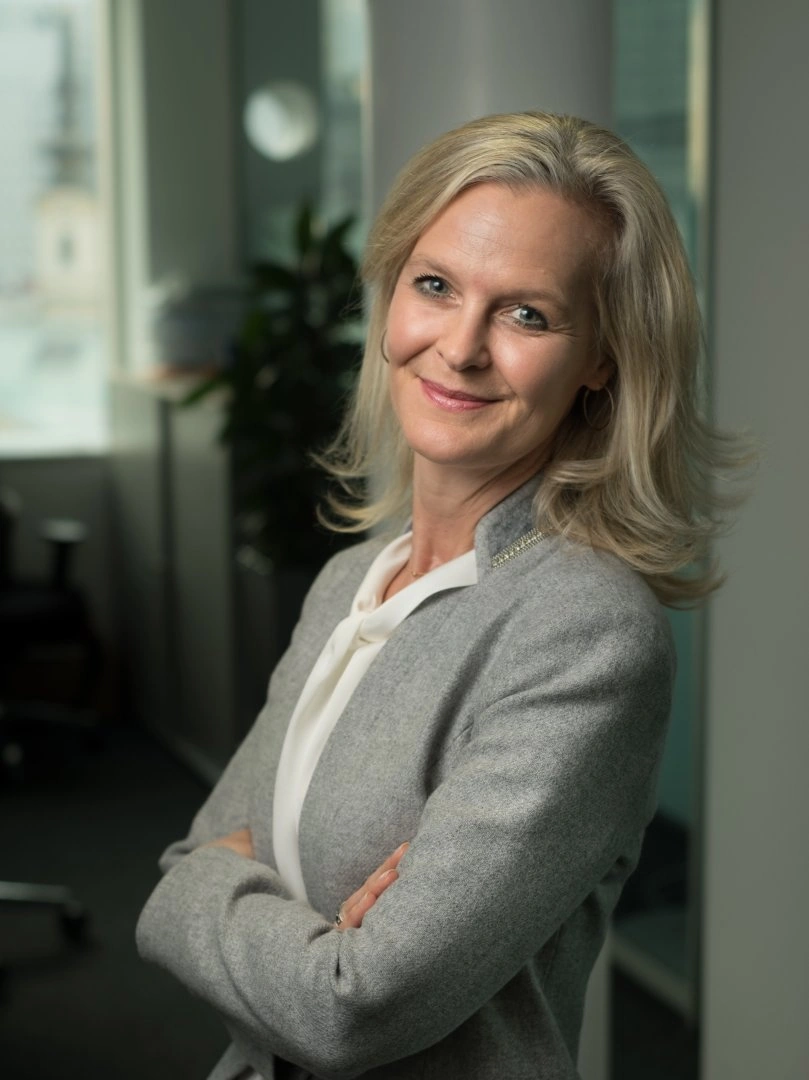
its renewable energy sector, Wiebke Schloemer, IFC’s Director for
the Western Balkans and South Caucasus, said in an exclusive
interview with Trend on October 20.
New projects and investment priorities in
Azerbaijan
She pointed out that a thriving private sector is central to
Azerbaijan's plans to diversify its economy, driving growth,
creating jobs, and strengthening competitiveness. Supporting this
ambition requires targeted and sustained engagement from
international partners.
"Through the World Bank Group's Country Partnership Framework,
IFC works to help build a more dynamic and inclusive economy by
mobilizing private investment across infrastructure, energy,
agriculture, water, transport, and digital connectivity. Water is
an important part of this agenda. As water scarcity becomes an
increasing constraint on communities and businesses, improving
water security will require both better resource management and
investment in new infrastructure. IFC is exploring opportunities in
areas such as desalination and wastewater treatment, where
private-sector expertise and financing can complement public
investment.
More broadly, this is part of the World Bank Group’s effort to
mobilize significantly more private capital for development. In
FY26, the World Bank Group mobilized a record $112 billion in
private capital, more than three times the $35 billion mobilized in
FY22. Combined with the Group’s own financing, this brought total
financing and mobilization in developing economies to more than
$200 billion [worldbank.org]. In
Azerbaijan, the World Bank Group has mobilized around $100 million
in private capital in fiscal year 2026," said Schloemer.
The IFC director added that the objective is not simply to
provide more public or development finance, but to use our
financing, expertise, guarantees and other instruments to address
risks and barriers that keep private investors on the sidelines,
and help create investment opportunities that can attract capital
at scale.
"In agriculture, we promote innovative financial tools, such as
crop and warehouse receipts, to help smallholder farmers access
working capital and connect to global value chains. We also promote
construction value chain sustainability standards through the
development of a green building roadmap and the introduction of
EDGE certification, a green building standard developed by IFC
specifically for emerging markets. IFC is also exploring investment
opportunities in transport, logistics, and digital infrastructure
to further strengthen Azerbaijan’s connectivity," she
explained.
IFC’s vision for supporting green corridor projects
linking Azerbaijan to Europe
Schloemer noted that supporting green corridor development
between Azerbaijan and Europe means investing in the infrastructure
that makes it viable.
"Realizing Azerbaijan’s ambition to export clean energy to
Europe requires a strong, reliable grid and transmission network —
the backbone of any sustainable energy corridor. Building this
infrastructure is central to both Azerbaijan’s energy goals and
broader regional cooperation across the South Caucasus. IFC stands
ready to support Azerbaijan's renewable energy sector, which holds
immense potential, including an estimated 157 gigawatts of offshore
wind capacity, according to an analysis by the World Bank’s Energy
Sector Management Assistance Program," she added.
IFC’s perspective on Middle Corridor's
development
"The first phase of the Trans-Caspian Transport Corridor (TCTC),
also known as the Middle Corridor, has focused on establishing a
viable and resilient transport route. The next phase must be about
turning it into an economic corridor, and its success will be
measured not only by freight volumes, but by the businesses, jobs,
and investment it generates. World Bank Group analysis projects a
multifold increase in non-oil freight by 2040, provided that
coordinated investment and reform follow.
Realizing this potential requires more than transport
infrastructure. Countries along the route need predictable business
environments, access to finance, reliable energy, and efficient
logistics — conditions that can unlock growth in manufacturing,
agro-processing, and warehousing. Private investment will be
essential to achieving this, and IFC sees a strong role in PPP
transaction advisory, project preparation, and financing,
complemented by World Bank and MIGA instruments. Regulatory
clarity, transparent pricing, and border efficiency remain critical
to investor confidence," the IFC director said.
Schloemer believes that for Azerbaijan, the opportunity extends
beyond transit: its strategic location can attract companies that
choose to invest, produce, and create jobs there, not only move
goods through.
She went on to add that Azerbaijan holds a strategic position
along the Trans-Caspian Transport Corridor.
"As freight volumes grow, infrastructure upgrades are critical
to meeting demand and improving regional connectivity. IFC is
well-placed to support these modernization efforts, including
investment in railcar fleet renewal, logistics and warehousing
centers, to enhance freight capacity and reliability. Such
investments can help cement Azerbaijan’s role as a cost-competitive
regional transit hub and contribute to more resilient corridor
infrastructure overall," Schloemer noted.
IFC’s role in supporting MSMEs and private-sector
development
In Azerbaijan, IFC is committed to broadening financial access
for small businesses by partnering with local banks, she said.
The IFC director recalled that the World Bank Group has
finalized a new MSME Strategy to unlock financing and create jobs,
and launched it at the Annual Meetings in Bangkok.
"It addresses a defining development challenge: over the next
decade, 1.2 billion young people will enter the workforce in
developing countries, while only 420 million jobs are projected to
be created. MSMEs account for 90 percent of firms in emerging
markets, making them central to closing this gap. The strategy
focuses on making businesses visible, connected, enabled, and
funded: using digital payments and transaction data to establish
creditworthiness; connecting businesses to markets and shared
services; simplifying regulations; and expanding financing through
banks, fintechs, guarantees, risk-sharing, and securitization. It
calls for a World Bank Group-wide effort to mobilize private
capital and unlock the potential of small businesses to grow,
become more productive, and create jobs.
In line with this strategy, in Azerbaijan IFC is committed to
broadening financial access for small businesses by partnering with
local banks, the primary lenders to MSMEs. These partnerships, with
both existing and new financial institutions, will continue to
grow. At the same time, IFC is supporting the development of a
wider range of financing solutions beyond traditional bank lending.
This includes asset-based finance, supply chain finance, including
factoring (financing against invoices), risk-sharing instruments,
leasing, and other products that can help financial institutions
better serve MSMEs. Such solutions can enable businesses to access
financing based on receivables, inventory, equipment, and other
business assets, rather than relying primarily on traditional
real-estate collateral," she added.
Schloemer pointed out that IFC is also working with the
Azerbaijan Banks Association and other market stakeholders to
support the development of a national asset-based financing
framework, including the broader ecosystem needed to expand
factoring and other forms of alternative MSME finance.
"This combination of investment, risk-sharing solutions, and
advisory support can help strengthen the capacity of local
financial institutions while increasing access to finance for
smaller businesses," she explained.
She noted that as Azerbaijan diversifies its economy and
modernizes its energy sector, IFC remains committed to supporting
these national priorities — and that requires the financial sector
to keep pace with evolving investment needs.
"IFC provides both investment and advisory services to promote
smart solutions and strengthen local banks’ capacity. A concrete
example is IFC’s $20 million local currency facility to Bank
Respublika, half of which was earmarked for MSMEs and low-income
households. IFC intends to scale similar initiatives in line with
the country’s needs. Those investments are not only good for the
environment, but also a driver of cost-competitiveness, reducing
energy and resource costs for businesses," noted the IFC
director.
Balance between supporting traditional sectors and
fostering innovation
Schloemer noted that balancing support for traditional
industries with investment in innovation is central to Azerbaijan’s
long-term growth.
"Hydrocarbons will remain important in the near term, but the
country’s fiscal strength and energy expertise provide a solid
foundation for diversification. Azerbaijan’s renewable energy
potential is substantial — an estimated 23 gigawatts of solar and
157 gigawatts of offshore wind — positioning it as a credible
regional energy exporter. Expanding cross-border transmission
infrastructure would deepen its integration into global
markets.
Beyond energy, IFC sees strong opportunities in digital
infrastructure, agribusiness, and SME development. Its global
experience demonstrates that combining established sector strengths
with forward-looking investment produces more resilient,
diversified economies. IFC is well-positioned to support Azerbaijan
in pursuing that path, one that builds an innovative and
cost-competitive economy capable of competing in regional and
global markets," she concluded.