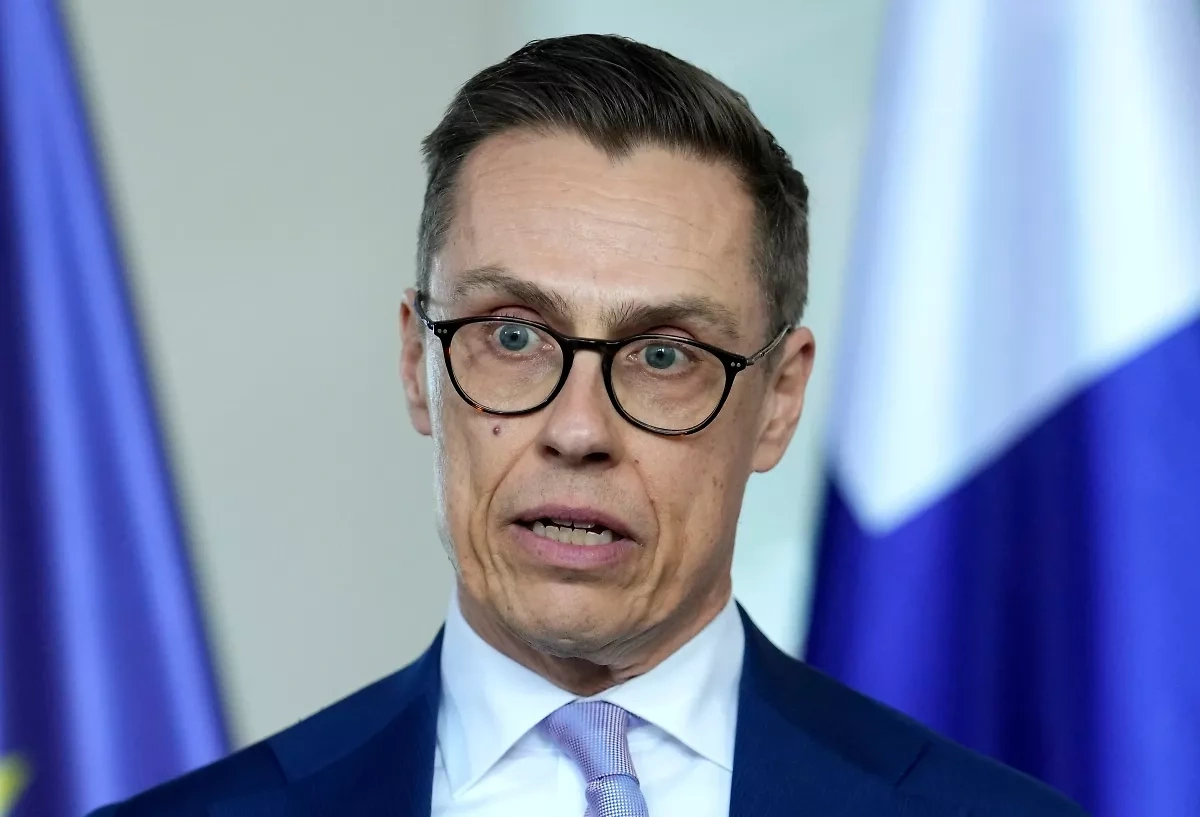
Finnish President Alexander Stubb has urged European allies to remain calm amid growing warnings of further Russian escalation, saying Moscow is seeking to destabilise and intimidate Europe through hybrid attacks.
European officials have issued increasingly stark warnings in recent days about what they describe as intensifying Russian hybrid warfare. Polish Prime Minister Donald Tusk has warned that Moscow could send drones or missiles into the territory of NATO countries supporting Ukraine “in the next few months.” The head of the Czech security service has similarly warned that Russia could undertake “a limited incursion, false-flag provocations, a massive influence campaign” within “months, not years.”
Stubb, however, has urged caution. While acknowledging that Europe needs to prepare for “continued hybrid and sabotage attacks” by Russia, he said European governments should not “overreact,” arguing that Moscow's objective is to frighten allies into reducing their support for Ukraine.
“We have to be very careful and understand that Russia is trying to destabilise and scare Europe. And any time we overreact to a hybrid attack, they have actually won the battle in that particular way,” Stubb told POLITICO in an interview on the sidelines of the U.N. General Assembly in New York.
“We also have to understand that it is not in the interest of Russia nor in the capacity of Russia to go full-scale” with military escalation, Stubb added. “So they will continue to intimidate, and we just have to be, as I say, cool, calm and collected in this situation.”
Stubb praised Germany’s recent decision to attribute responsibility to Russia for an attempted drone attack in Leipzig, saying: “That is exactly what you need to do. You need to point the finger and say, we know what you’re doing and these are the consequences.”
At the same time, he criticized what he described as an “overreaction” by some intelligence services that “basically say that, well, you’re next” for a Russian invasion.
“We don’t see the evidence of that,” Stubb said. He added: “We think we have to be vigilant and awake. But, you know, we have the longest border in NATO with Russia, it’s half the border. In our intelligence we see that there is activity but no imminent military threat right now.”
Stubb also expressed cautious optimism about a possible meeting between U.S. President Donald Trump and Ukrainian President Volodymyr Zelenskyy in New York on Tuesday.
“Obviously, we’re not going to be getting a peace deal here this week,” he said. “But if we were to get, for instance, an idea or a framework for a ceasefire in the Black Sea linked to grain or to energy, I think this would be a move in the right direction.”
The Finnish president said he hoped further peace talks could take place in the coming weeks, including potentially a meeting between Russian President Vladimir Putin and Zelenskyy at the G20 summit in Miami in December.
“Let’s see what President Trump is able to do for the G20 meeting. Is he able to get Zelenskyy and Putin around the same table?” Stubb said, calling this “a possibility” that would be “a jackpot,” although he acknowledged that negotiations were currently “far from that.”
Stubb also rejected suggestions that he could become Europe’s chief negotiator in future peace talks with Russia.
“No, I don’t think that’s sort of in the cards,” Stubb said. “I don’t think Europe will have one representative as such,” he argued, while describing his role as trying “to help in the back office.”
By Tamilla Hasanova