Yemen is back in the global spotlight after the Iran-aligned Houthi movement made military gains against forces loyal to the internationally recognised government, tightening its control over the Red Sea coast, Al Jazeera reports.
The latest escalation follows a period of relative calm that largely held after a UN-brokered truce in 2022. The conflict began to take its current form in 2014, when the Houthis seized large parts of northwestern Yemen, including the capital, Sanaa. They later took control of the government, forcing President Abd-Rabbu Mansour Hadi to flee.
Saudi Arabia intervened in March 2015, leading a military coalition in support of Hadi's government. Years of fighting caused tens of thousands of deaths and displaced millions, while Yemen experienced a severe humanitarian crisis.
A UN-mediated truce in April 2022 significantly reduced the intensity of fighting, although a permanent peace agreement was never reached. In 2023, Saudi Arabia and the Houthis agreed on a UN roadmap towards a permanent ceasefire, but it was never formally implemented.
The balance of power shifted again this year. In January, the internationally recognised government took control of southern and eastern areas previously held by the UAE-backed Southern Transitional Council (STC), which subsequently announced its dissolution.
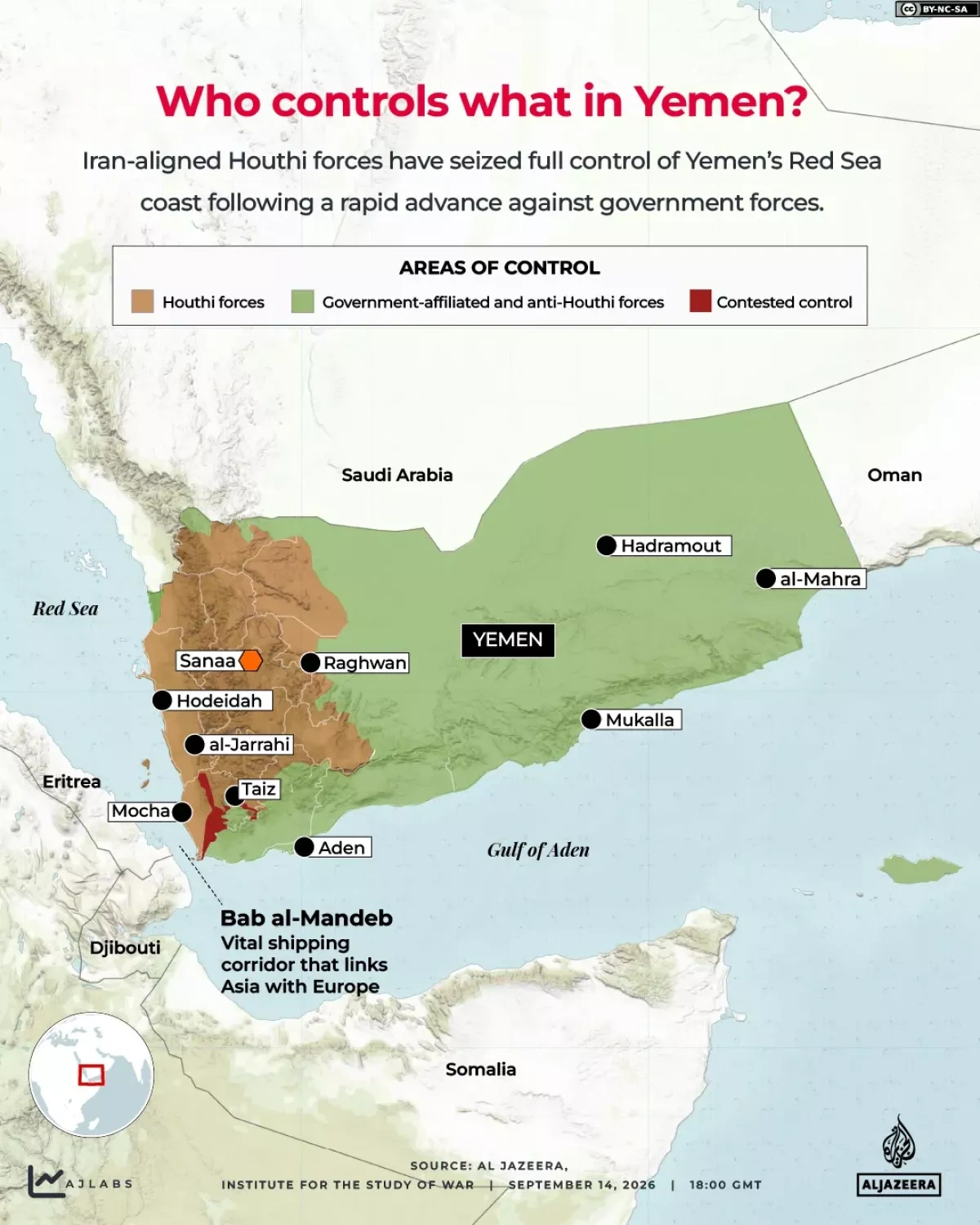
The Houthis now control Sanaa and most of northern and northwestern Yemen, including the Red Sea coast. The internationally recognised government, represented by the eight-member Presidential Leadership Council, controls much of the rest of the country.
The latest fighting intensified in July and escalated further in late August, when the Houthis launched a major offensive. On September 10, they captured the strategic Red Sea city of Mocha, expanding their control around the Bab al-Mandeb strait, a major international shipping route.
The Houthis have also resumed attacks on Saudi Arabia. Riyadh said on September 19 that it had intercepted a missile targeting the capital and thwarted other attacks on western Saudi cities. The Houthis confirmed targeting what they called sensitive sites in Riyadh and Aramco facilities in Yanbu.
Fighting has also intensified inside Yemen, including in Marib, Taiz, Lahj, al-Jawf and al-Bayda. The Yemeni army said 13 soldiers were killed in two days of clashes in Taiz and Lahj.
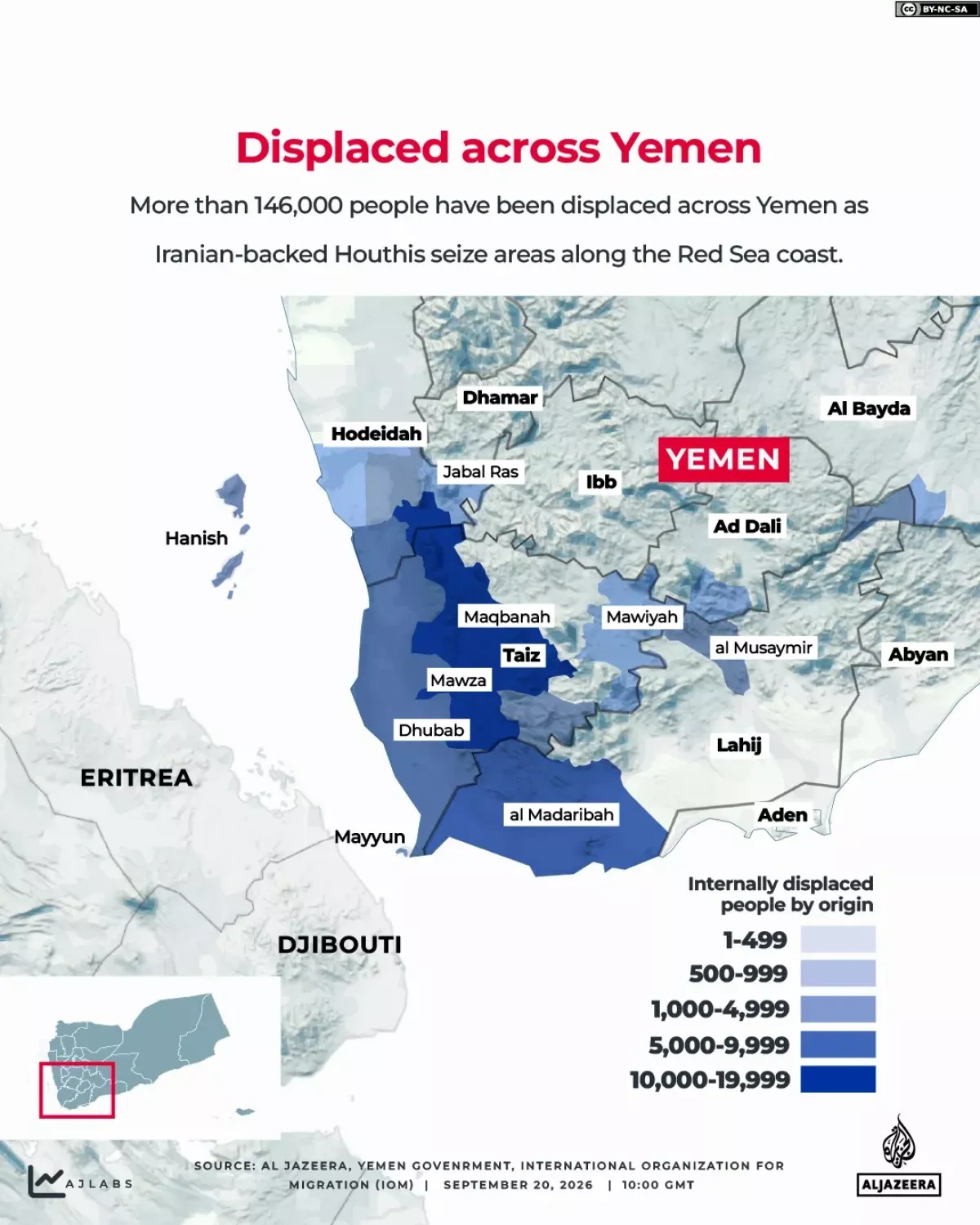
The renewed conflict is also worsening humanitarian pressures. The UN says more than 112,000 people have been displaced, while the International Organization for Migration estimates that 22 million Yemenis urgently need humanitarian assistance.
By Aghakazim Guliyev