BAKU, Azerbaijan, September 17. The European
Commission has approved grants totaling €125.81 million to finance
works on three cross-border renewable energy projects, according to
a statement from the European Commission.
Two of the projects involve cross-border district heating
systems between Germany and Poland, while the third supports the
development of a cross-border onshore wind farm near the
Latvia-Lithuania border.
The projects are being funded through the Connecting Europe
Facility (CEF) Energy under the EU budget. They are expected to
support investment in energy infrastructure, advance the EU’s
decarbonization goals and strengthen energy integration among
member states.
The largest grant, €70 million, was awarded to the UNITED HEAT
project, which aims to develop climate-neutral district heating
systems in the twin cities of Görlitz, Germany, and Zgorzelec,
Poland.
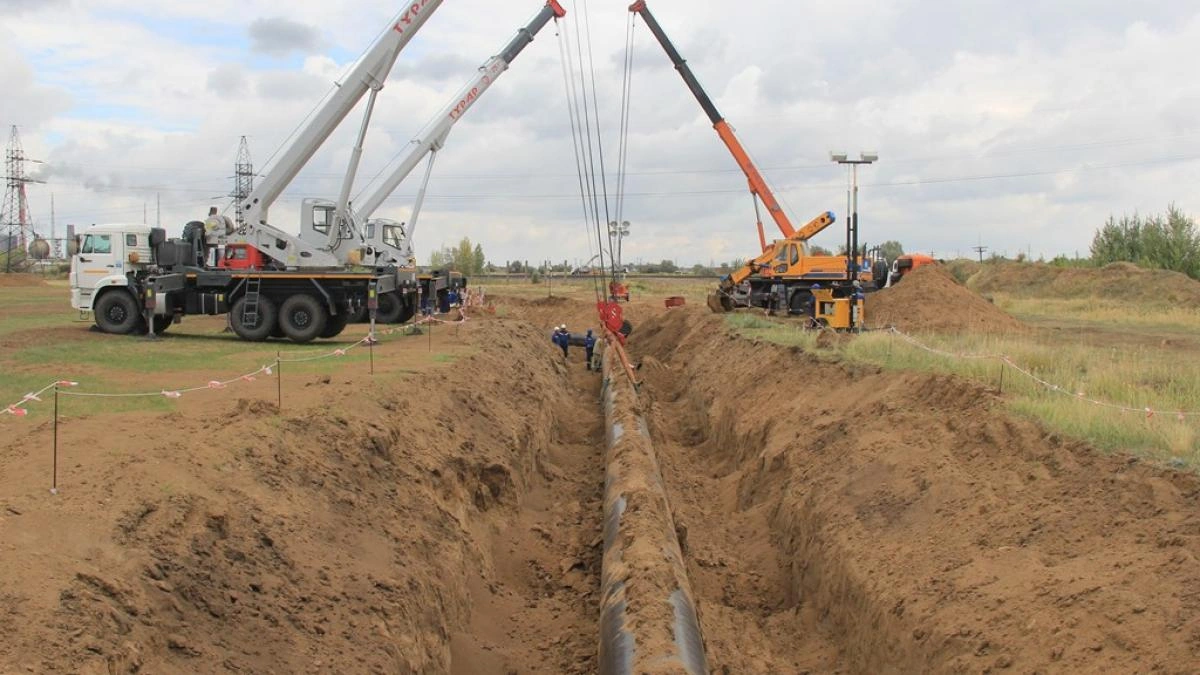
The funding will cover the final works phase, including
construction of a cross-border pipeline to enable physical heat
exchange and system balancing between the two district heating
networks. The pipeline will also integrate heat sources developed
under earlier phases of the project.
A further €11.41 million will go to the TWIN HEAT project, which
seeks to decarbonize district heating in Słubice, Poland, while
supporting the transition toward lower-carbon heating in Frankfurt
(Oder), Germany.
The project will replace existing coal-fired heating units in
Słubice with two biomass boilers, each with a thermal capacity of 6
MW, using sustainably sourced wood chips.
The third project, UELJO, will receive €44.40 million for its
first development phase. The project envisages a cross-border
onshore wind farm near the Latvia-Lithuania border comprising
around 30 wind turbines and generating up to 680 GWh of renewable
electricity annually.
The grant will support works in Latvia, including construction
of balance-of-plant infrastructure, grid connection works and
installation of wind turbines.
The European Commission granted the UELJO project Cross-Border
Renewable Energy (CB RES) status in 2025, while UNITED HEAT
received the status in 2022. The TWIN HEAT project is part of the
EU’s efforts to promote coordinated renewable energy development
across member states.
The EU has progressively strengthened its renewable energy
targets as part of its broader climate and energy policy. Building
on the 20% renewable energy target set for 2020, the revised
Renewable Energy Directive adopted in 2018 established a binding
EU-wide target of at least 32% by 2030, with the possibility of a
subsequent upward revision.
Following the launch of the European Green Deal in 2019, the
European Commission proposed in July 2021 to raise the 2030 target
to at least 40% of the EU’s overall energy mix.
The target was subsequently increased further under the
REPowerEU plan, presented by the European Commission in May 2022 in
response to the energy crisis following Russia’s invasion of
Ukraine. The plan aimed to accelerate the clean energy transition,
reduce the EU’s dependence on Russian fossil fuels and diversify
energy supplies. As part of the initiative, the Commission proposed
raising the renewable energy target to 45% by 2030.
The revised Renewable Energy Directive (EU) 2023/2413, which
entered into force in November 2023, ultimately set a binding
minimum target of 42.5% for renewables in the EU’s energy mix by
2030, while aiming for a 45% share.
The EU has also introduced measures to accelerate renewable
energy deployment, including faster permitting procedures for
renewable projects and measures to facilitate power purchase
agreements.