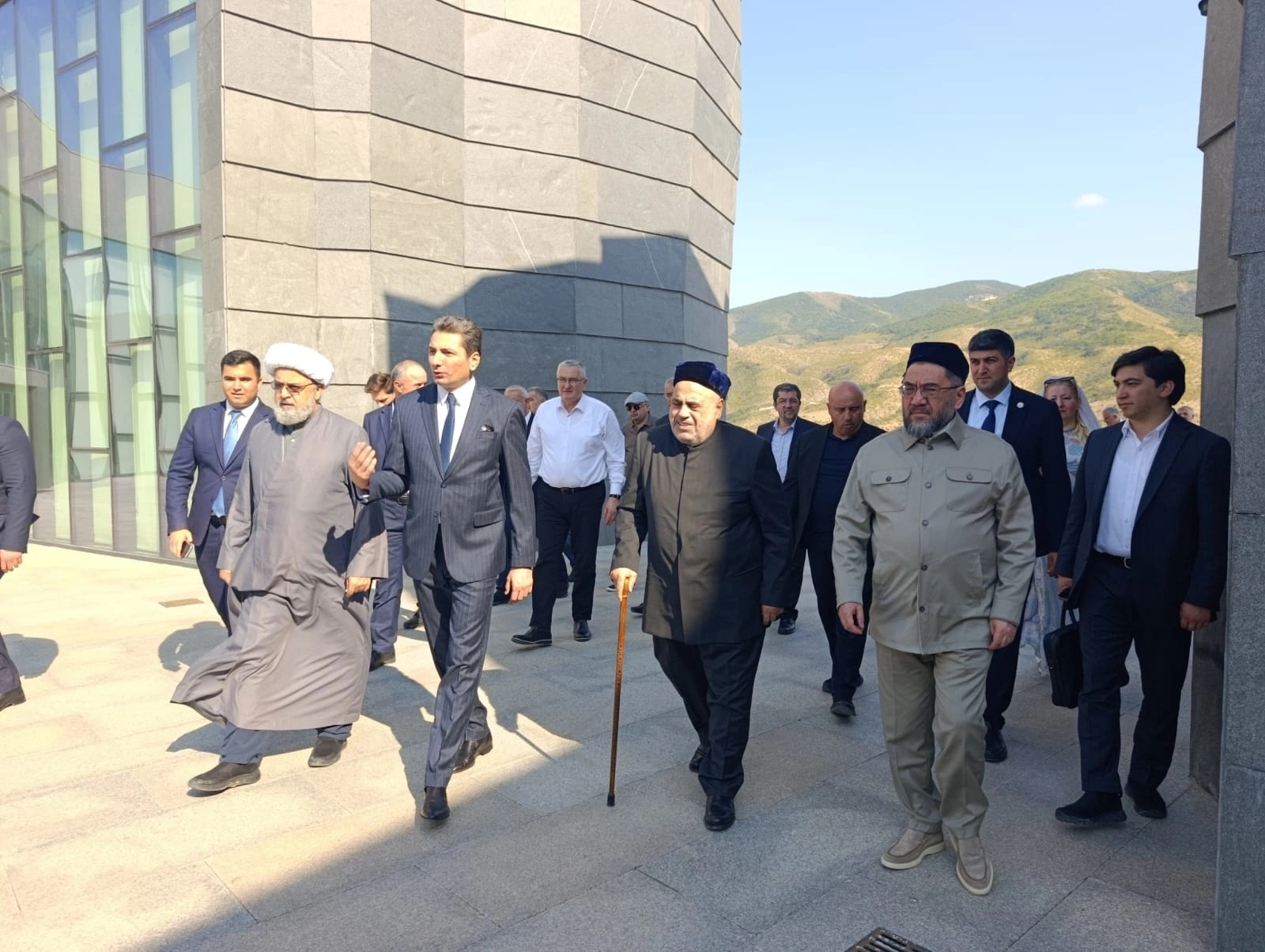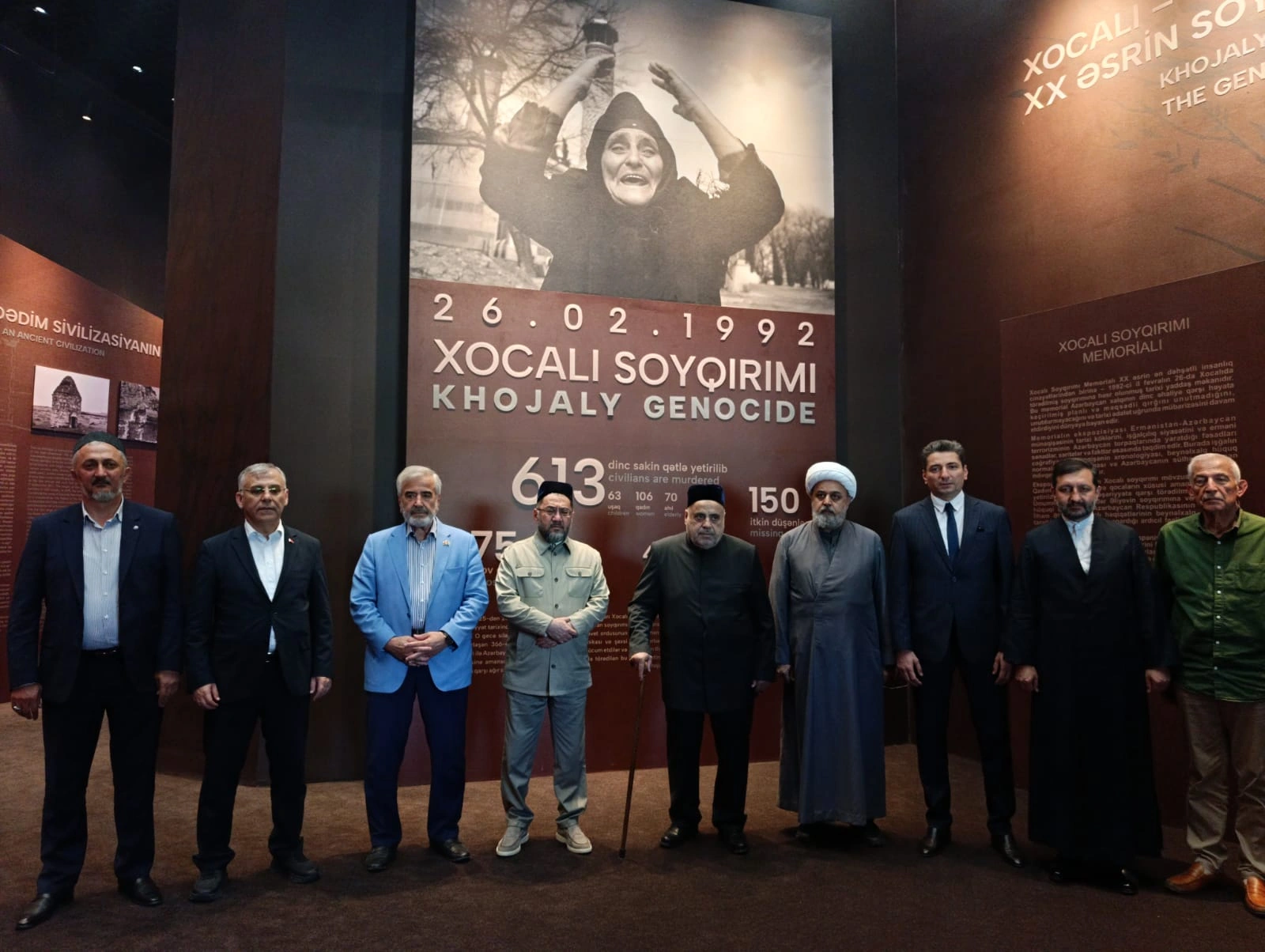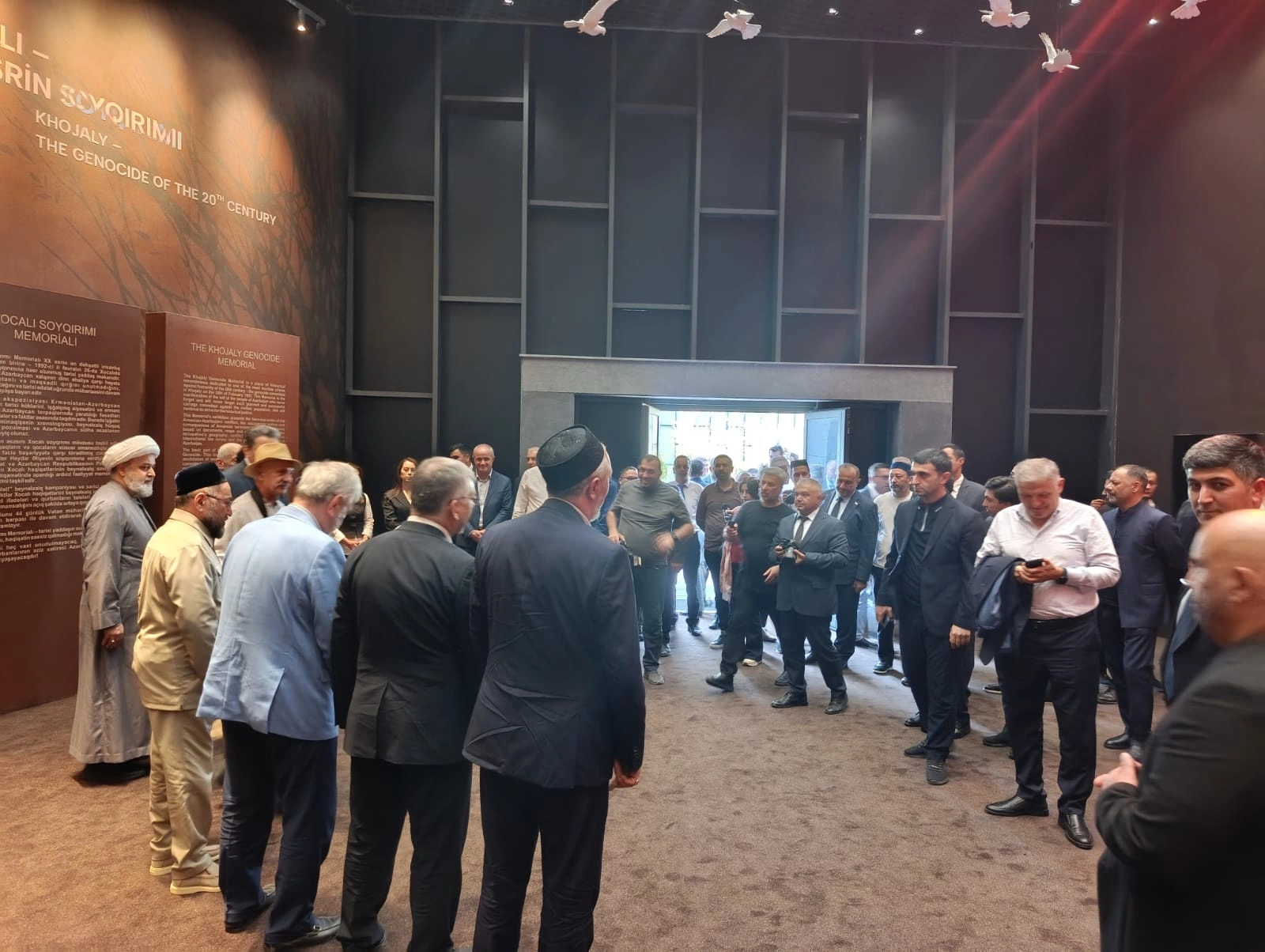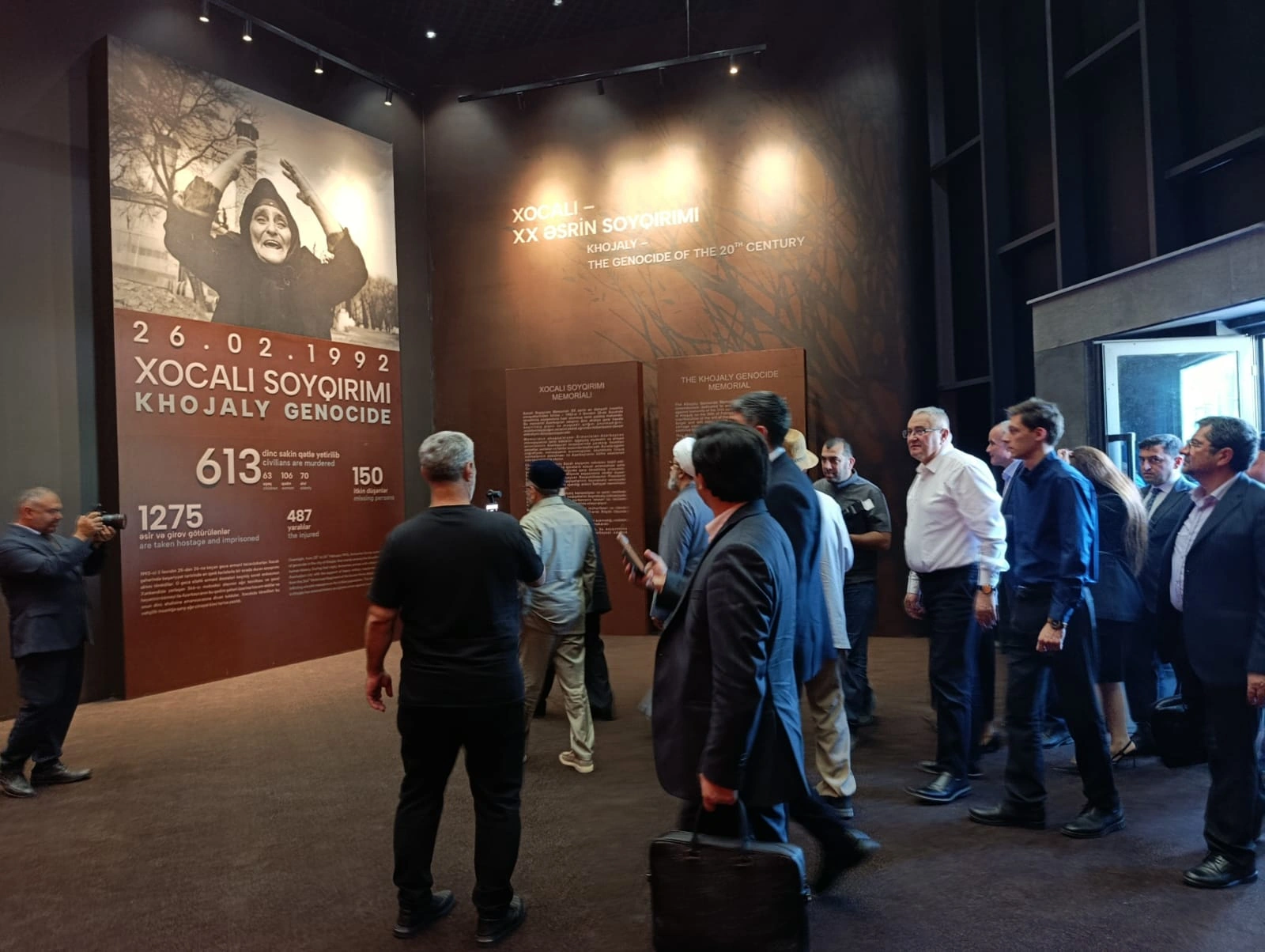
KHOJALY, Azerbaijan, September 16. Participants
of the international scientific-practical conference dedicated to
the prominent Azerbaijani scholar and theologian-philosopher Sheikh
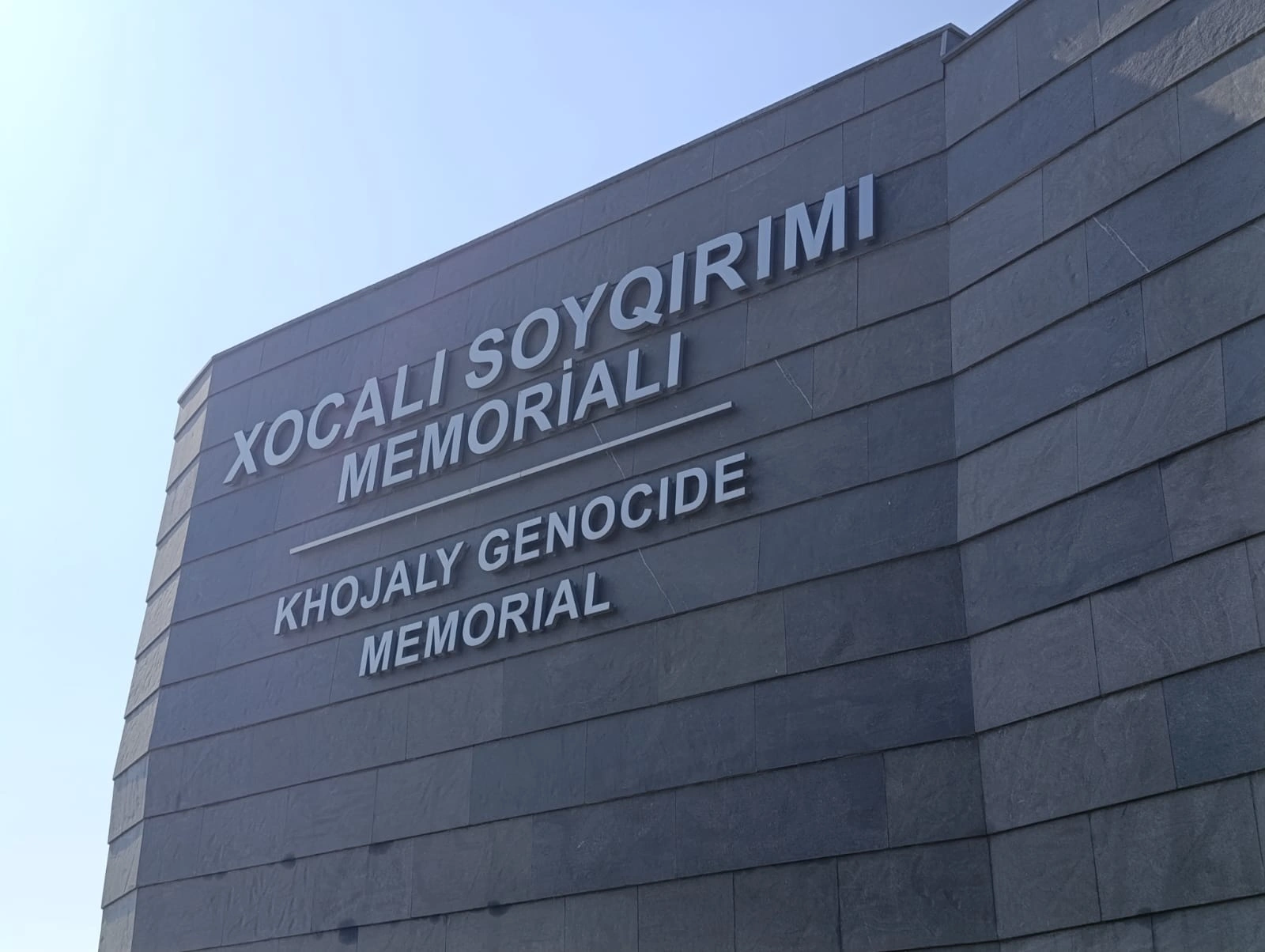
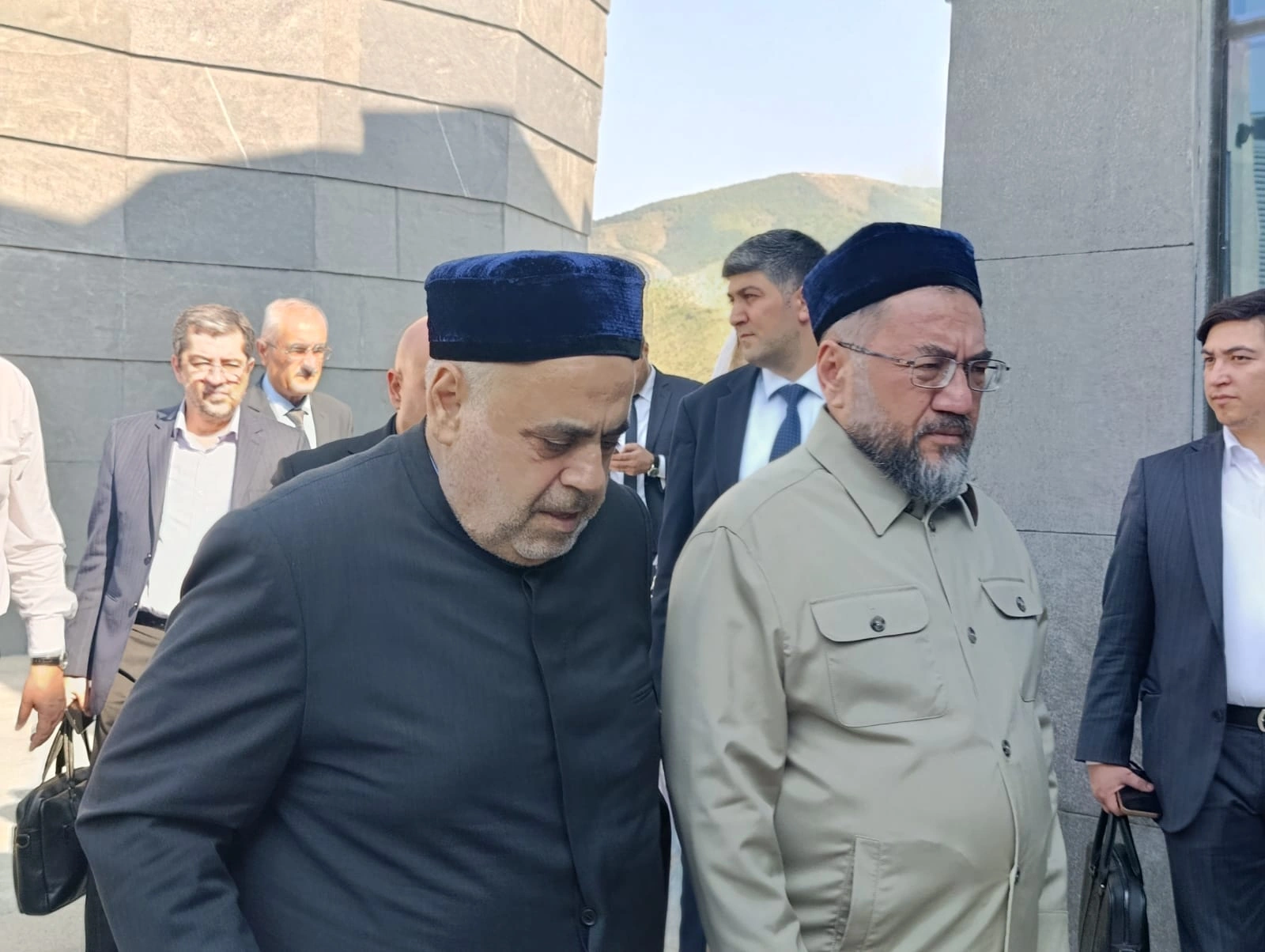
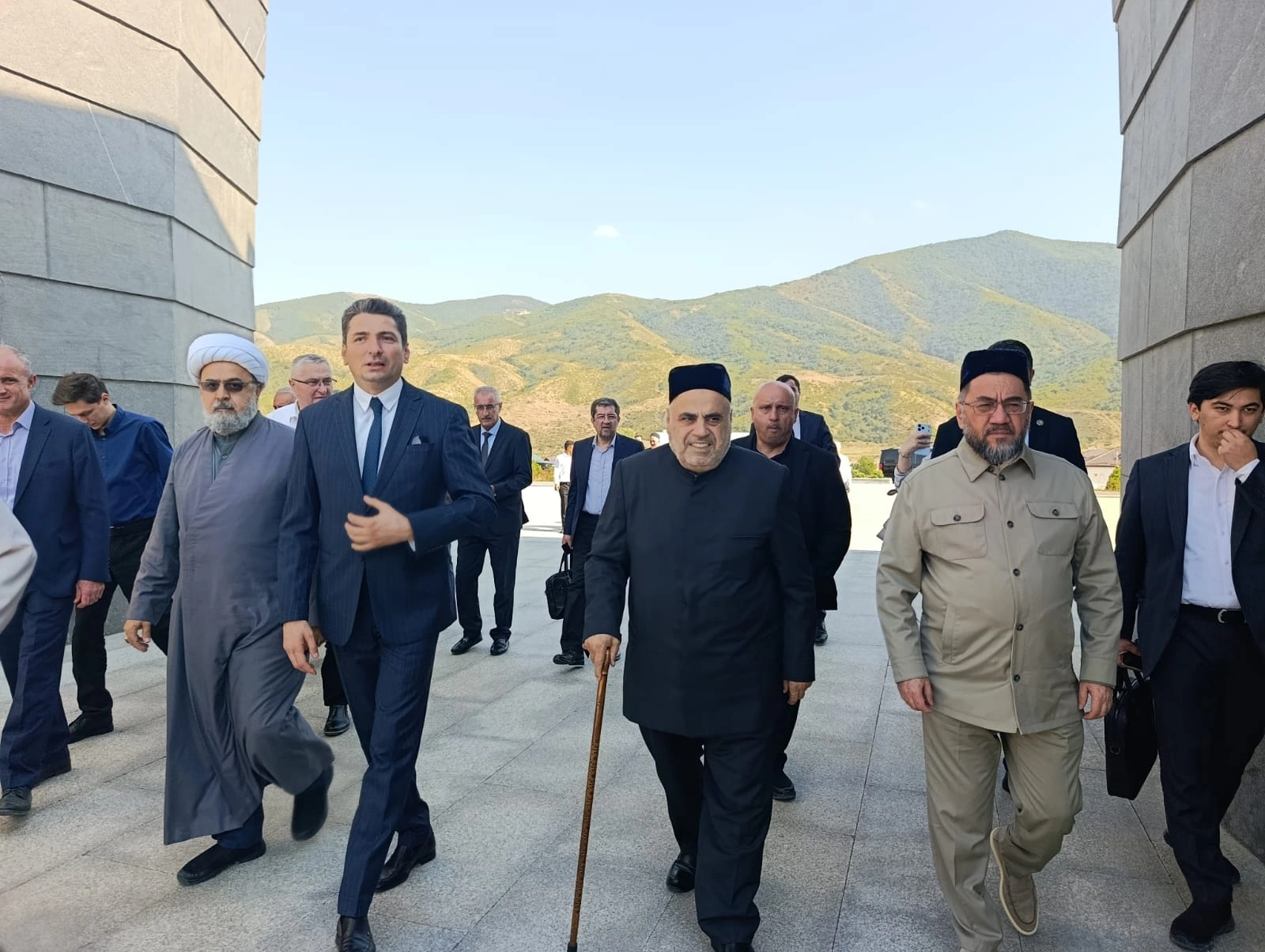
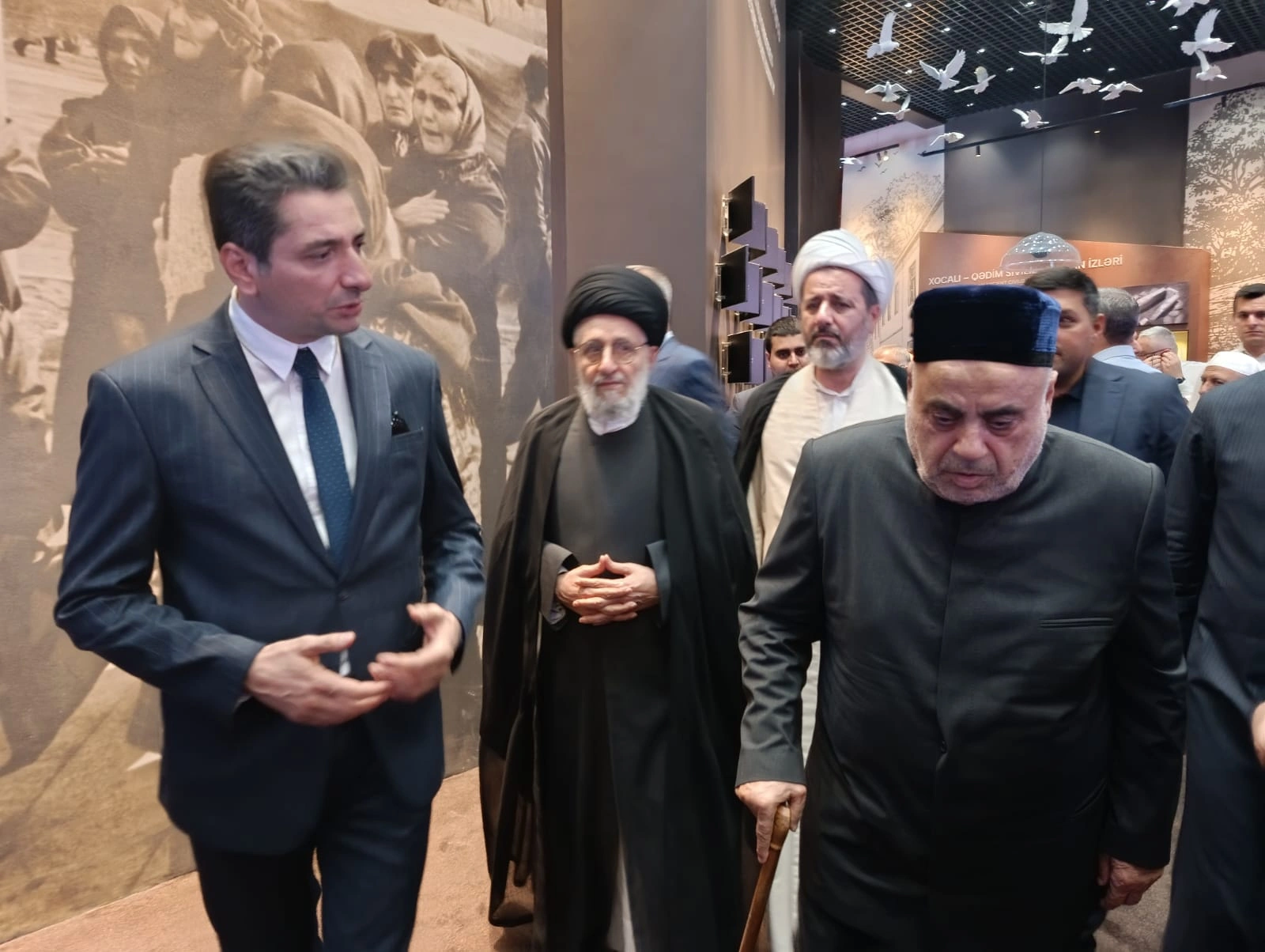
Seyid Yahya Bakuvi Shirvani have visited the Khojaly Genocide
Memorial Complex in Khojaly city within the framework of the 7th
meeting of the Council of Heads of Muslim Religious Boards of the
Organization of Turkic States (OTS).
This was reported by the public relations department of
Restoration, Construction, and Management Service in Khankendi
city, Aghdara and Khojaly districts.
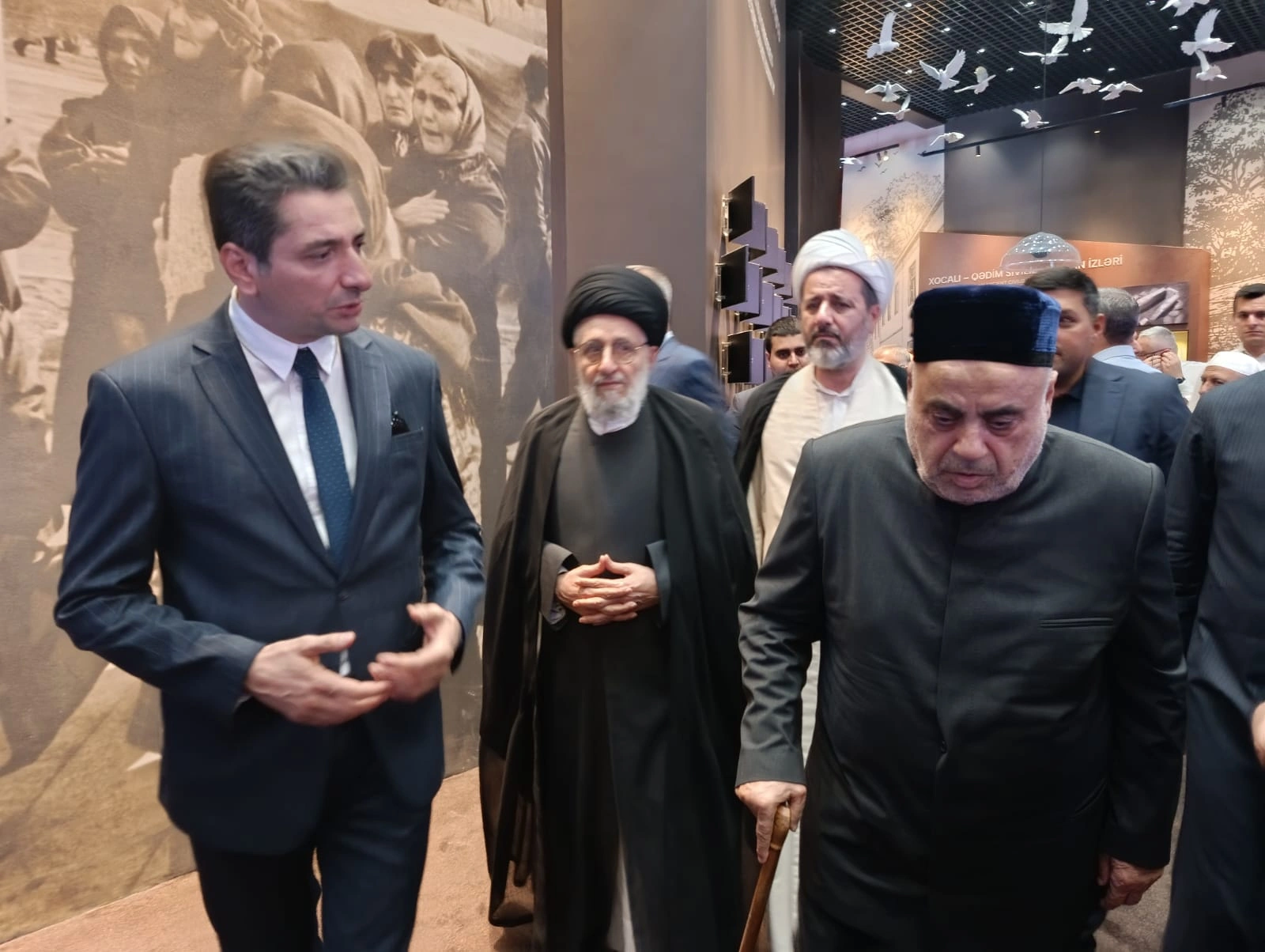
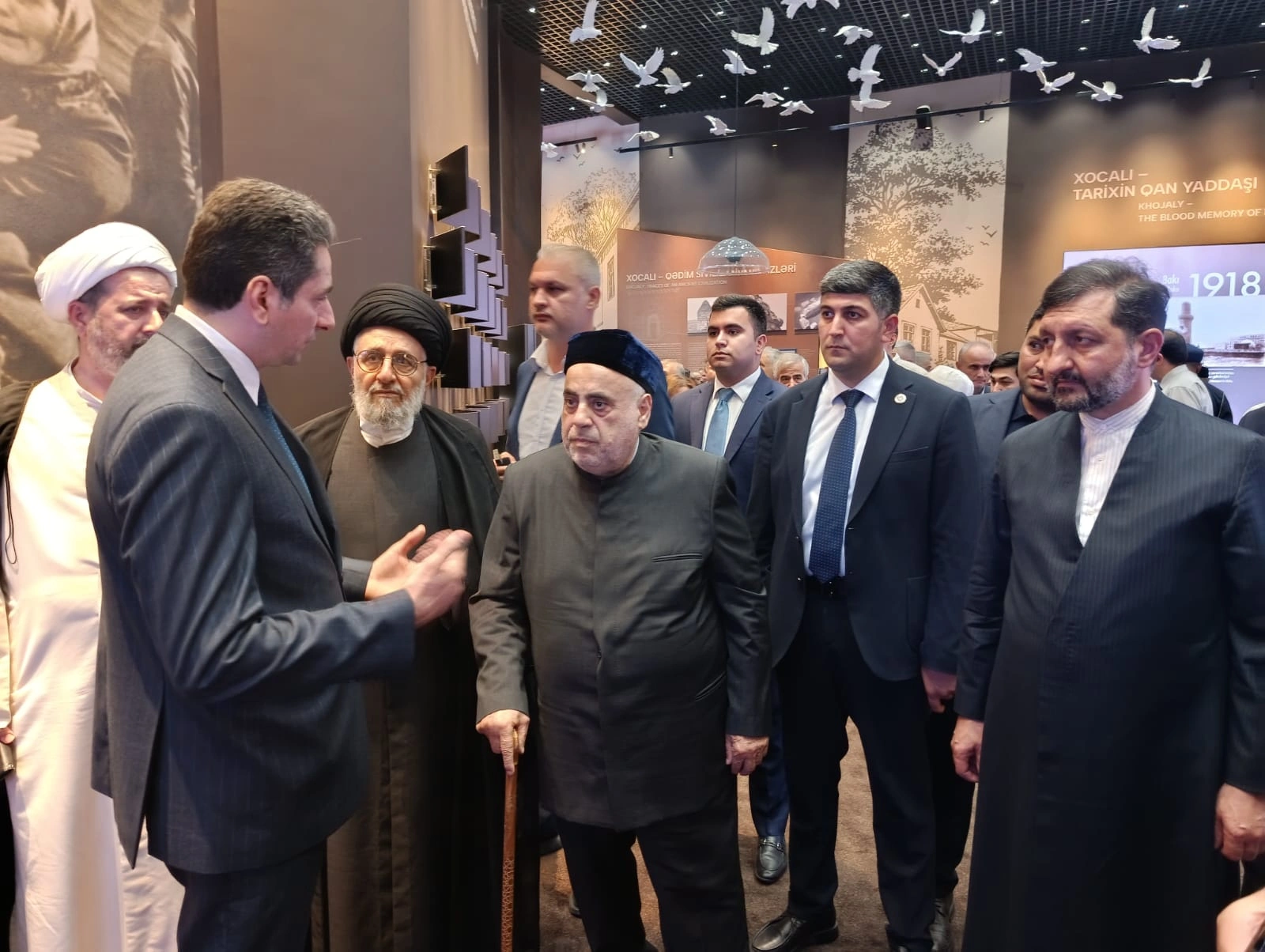
The guests were welcomed by Sabuhi Gahramanov, Deputy Special
Representative of the President of Azerbaijan for Khankendi city,
Aghdara and Khojaly districts. Gahramanov briefed the guests on the
restoration and construction work underway in the city of Khojaly,
the return of the population to their native lands, and the modern
infrastructure being established there. The delegation was further
informed that the Khojaly Genocide Memorial Complex was created to
perpetuate the memory of the tragedy's victims and to convey the
truth about Khojaly to future generations. The foundation of the
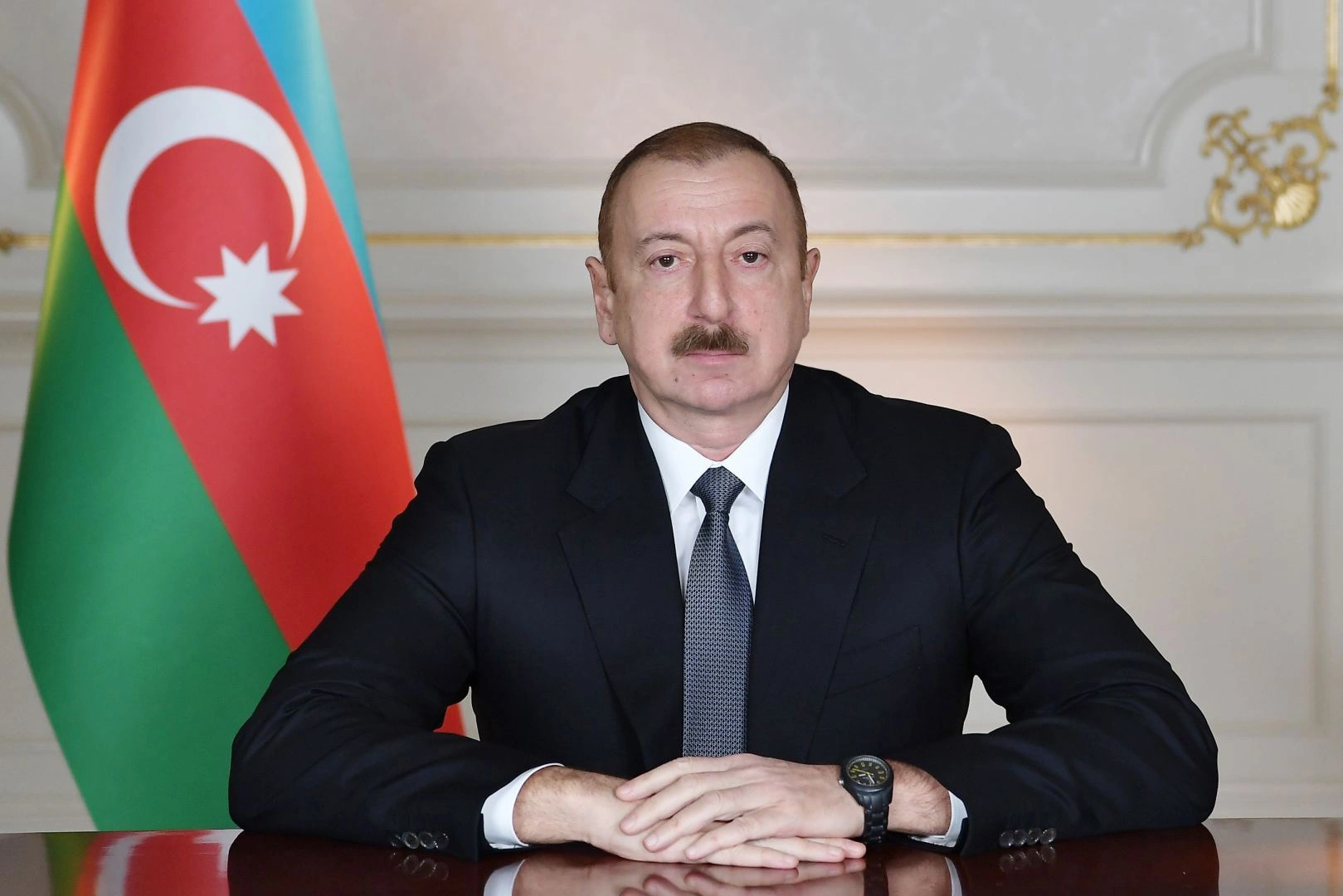
complex was laid on February 26, 2024, with the participation of
President Ilham Aliyev. The establishment of the Khojaly Genocide
Memorial Complex in the city of Khojaly was formalized by a
relevant decree of the Head of State on February 25, 2025.
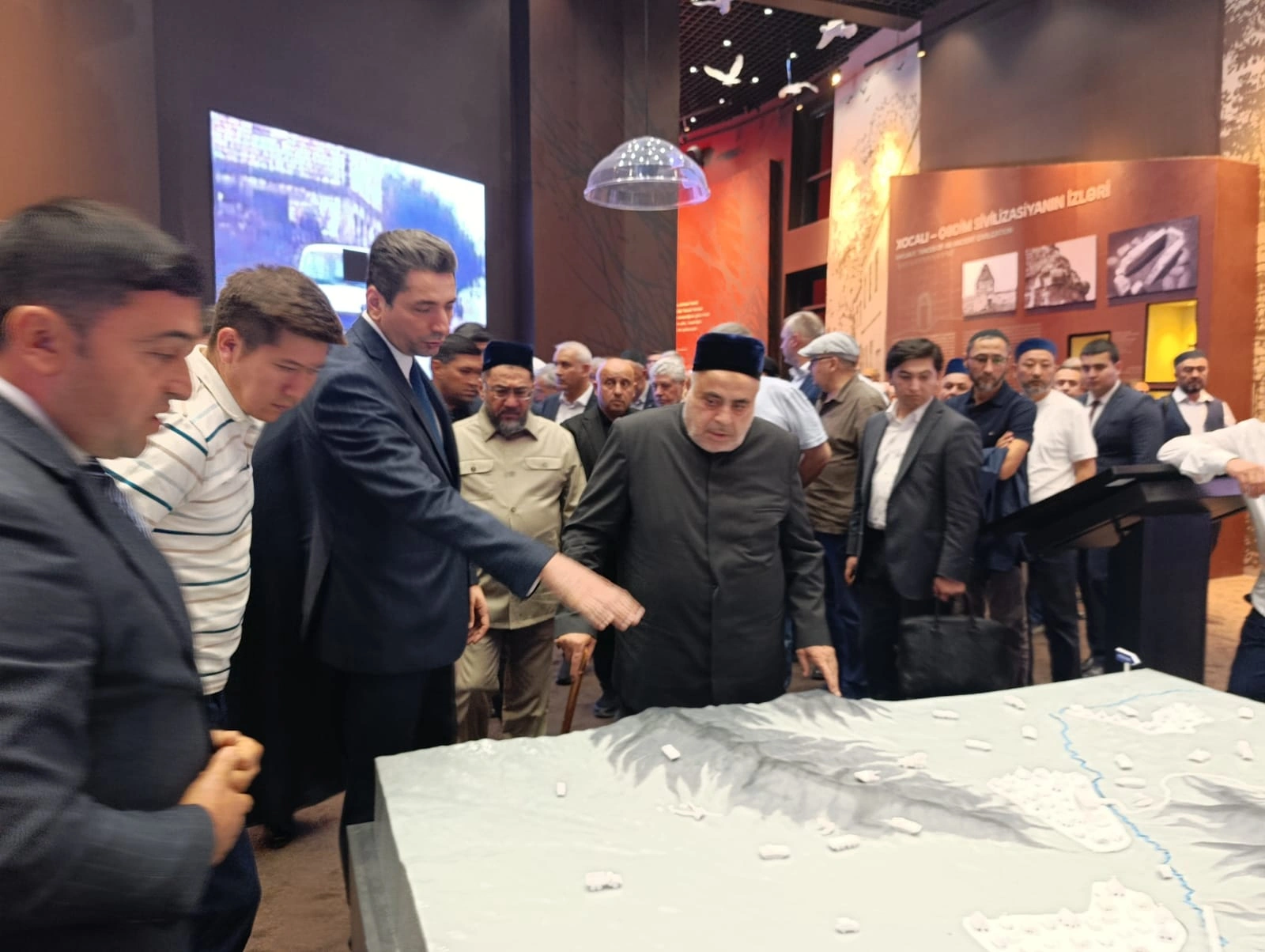
The information was also provided that the complex, located on
the Khojaly-Asgaran highway, was established by the Heydar Aliyev
Foundation. The memorial complex’s exhibition presents information
not only on the tragedy committed in Khojaly on the night of
February 25–26, 1992, but also on the city's history and
geographical significance, as well as life in Khojaly and the daily
existence of the civilian population prior to the tragedy. During
the complex tour, participants were provided with detailed
information about the crimes committed against the civilian
population during the Khojaly genocide. The information noted that,
as a result of the tragedy, hundreds of civilians were killed,
wounded, taken prisoner, or went missing, and the city was
destroyed. Conference participants paid their respects to the
victims of the Khojaly genocide at the memorial complex. As part of
the visit, the guests also familiarized themselves with the
restoration and reconstruction work being carried out in Khojaly
city.