BAKU, Azerbaijan, September 10. ASAN Service
has evolved into an internationally recognized model of
Azerbaijan’s national innovation and public-sector reforms, with
unified service centers based on the model now operating across
four continents and numbering nearly 600, Trend’s correspondent reports from the
event.
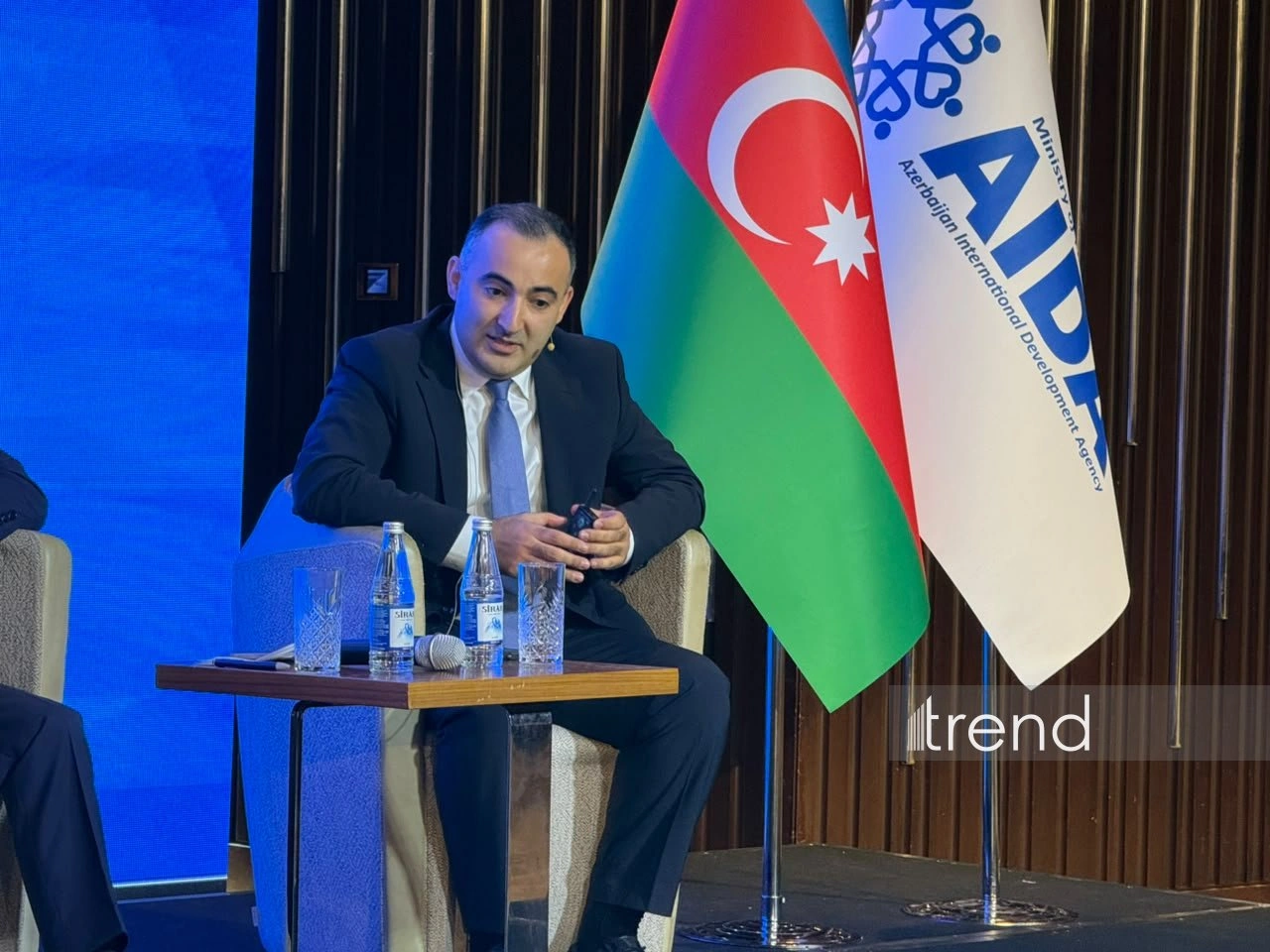
Mahammadali Khudaverdiyev, a representative of Azerbaijan’s
State Agency for Public Service and Social Innovations under the
President of Azerbaijan, made the remarks during the panel session
titled “Partnerships for Sustainable Development and Effective
Humanitarian Assistance,” held as part of a conference titled
“Promoting Global Solidarity through Cooperation for Humanitarian
Support and Development,” dedicated to the 15th anniversary of the
establishment of the International Development Assistance
Agency.
“ASAN Service” is a multi-channel public service model that
provides government services in a single location and through
various channels, he said.
“ASAN Service” is a good example of a multi-channel public
service delivery model under which 400 government services are
provided to citizens in one location, while mobile buses also
operate.
“Our slogan is clear: leave no one behind. As ASAN Service, our
main goal is to reach everyone through different channels, from
cities to districts and even mountainous areas,” Khudaverdiyev
said.
He noted that citizen satisfaction is one of the key indicators
of ASAN Service’s performance, adding that the model’s
international recognition has enabled Azerbaijan to share its
experience in innovation and reform in public administration with
other countries.
“ASAN Service is Azerbaijan’s national innovation and reform.
Today, we can clearly see that this national reform and agenda
implemented by Azerbaijan in terms of innovation in the public
sector has become an internationally recognized model,” he
said.
Khudaverdiyev noted that ASAN Service has received two United
Nations awards and several other major international awards.
“ASAN Service was also named the ‘Best Government Service’ at
the annual World Government Summit held about three years ago.
These awards demonstrate the high level of international
recognition enjoyed by ASAN Service,” the State Agency
representative said.
He said unified service centers established based on the ASAN
Service model now number nearly 600 across various countries and
contribute to improving access to public services for more than 800
million people.
“These countries are not limited to those with which we have
cooperated to date. With many of them, we already have agreements
and memorandums of understanding. We cover four continents and are
also very active in Africa,” Khudaverdiyev added.
According to him, examples of the ASAN Service model being
implemented in different countries include centers in Afghanistan,
Indonesia, Uzbekistan and Uganda.
Khudaverdiyev also touched on Azerbaijan’s cooperation with
Ethiopia in developing public services.
“Ethiopia’s MESOB model for public services is an interesting
example in this regard. In the local language, ‘MESOB’ means a
basket, that is, having everything in one place. They encourage
other African countries to develop public services and the public
sector. They currently have more than 100 public service centers,”
he said.
The State Agency representative said that prospects for
implementing the ASAN Service model in Somalia are also being
discussed.
“We are also cooperating closely with Somalia’s ambassador to
Azerbaijan in this area and discussing the potential for
implementing the ASAN Service model in Somalia,” Khudaverdiyev
said.
He emphasized that Azerbaijan has also achieved significant
results in implementing the ASAN model as part of its cooperation
with Pakistan.
“We succeeded in establishing the first Pakistan-ASAN Center in
Islamabad. The process of expanding the ASAN model is currently
underway, and we are working closely with our partners in Pakistan
in this area,” he added.