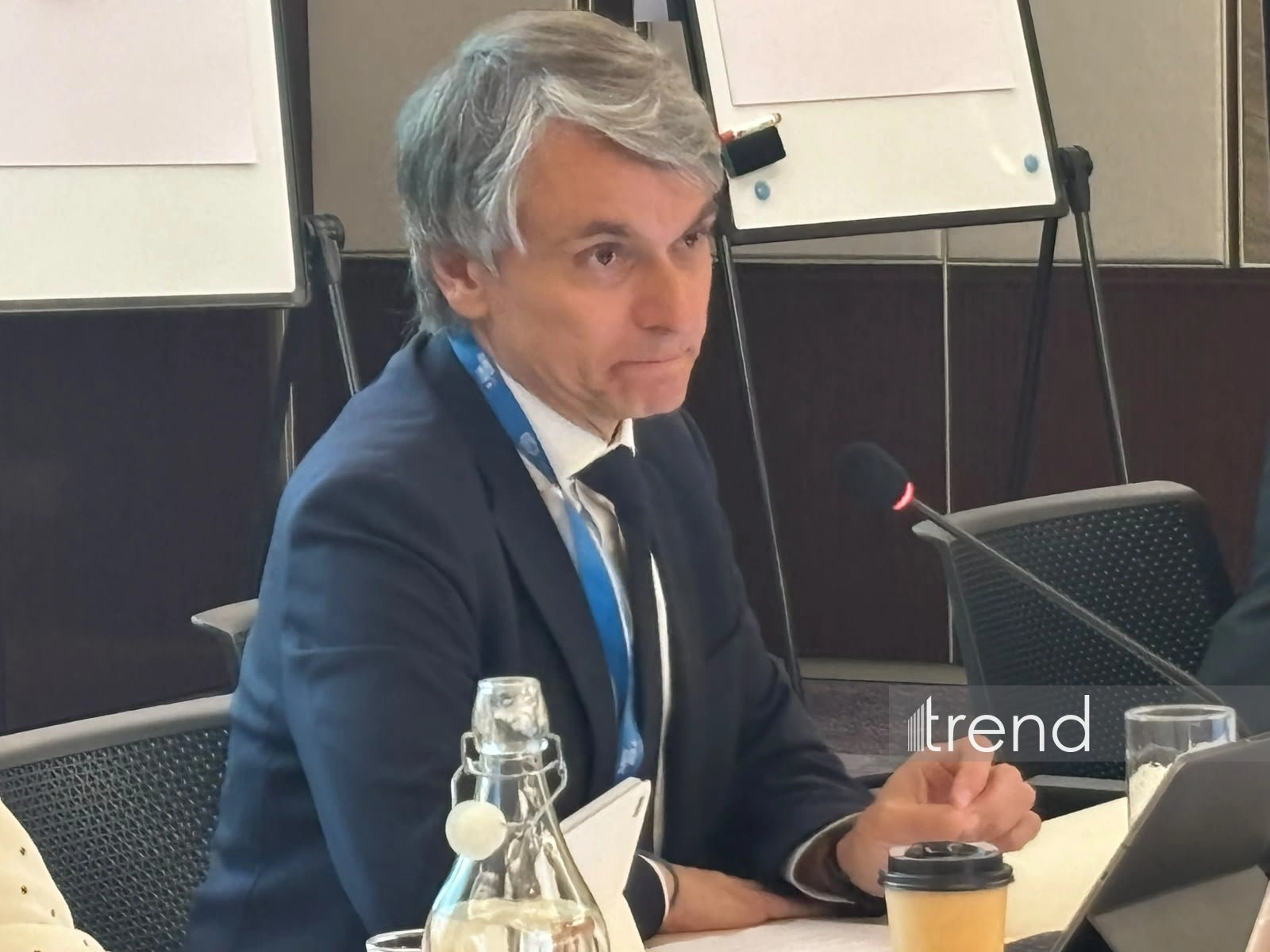
BAKU, Azerbaijan, September 9. Azerbaijan can
enhance the competitiveness of its projects through strategic
environmental assessment, the Deputy Executive Secretary of the
UNECE, Dmitry Mariyasin said during Baku Climate Action Week,
Trend's correspondent
reports from the event.
According to him, the development of future mobility requires
the active participation of automakers, mobility companies, and the
technology community.
Mariyasin noted that the design of future mobility depends to a
large extent on the IT sector, which plays a key role in creating
digital ecosystems that are resilient to climate change and help
reduce emissions.
“One example relevant to Azerbaijan is the development of the
Trans-Caspian Corridor as a ‘green’ corridor. When designing port
infrastructure and intermodal terminals, it is essential to take
climate factors into account from the very beginning. This makes
such facilities more competitive, efficient, and profitable,” he
said.
He added that strategic environmental assessment is often
perceived by the business community as an additional requirement or
a filter imposed by the government that reduces the competitiveness
of projects.
“In fact, strategic environmental assessment and environmental
impact assessment are investments that contribute to increased
competitiveness rather than creating obstacles,” Mariyasin
said.
According to him, future projects, especially in
upper-middle-income countries, can be improved through the early
implementation of strategic environmental assessment.
Mariyasin added that Azerbaijan is a leader in this area.
The third day of “Baku Climate Action Week 2026” (BCAW 2026) is
underway.
The program for the third day focuses on issues such as the
transition from climate commitments to concrete actions, climate
finance, youth participation in climate processes, artificial
intelligence and climate technologies, energy efficiency, methane
emission reduction, water resource management, and the preservation
of cultural heritage.
The events are attended by representatives of state and
government agencies from various countries, international
organizations, experts, and representatives of financial
institutions, the private sector, and civil society.
Climate Action Week in Baku, now in its third year, is being
held this year for the first time in conjunction with the UN
Framework Convention on Climate Change (UNFCCC) Climate Week. As
part of the Fourth Climate Week and Baku Climate Action Week, a
series of sessions, panel discussions, and other events will be
held, focusing on combating climate change, climate finance,
sustainable development, and accelerating climate action.
Baku Climate Action Week (BCAW 2026) will run through September
11.