BAKU, Azerbaijan, September 5. The deal between
the State Oil Company of Azerbaijan (SOCAR) and the U.S.-based
Comstock Resources to acquire stakes in gas assets in the U.S. is a
landmark and promising step for the Azerbaijani company, economic
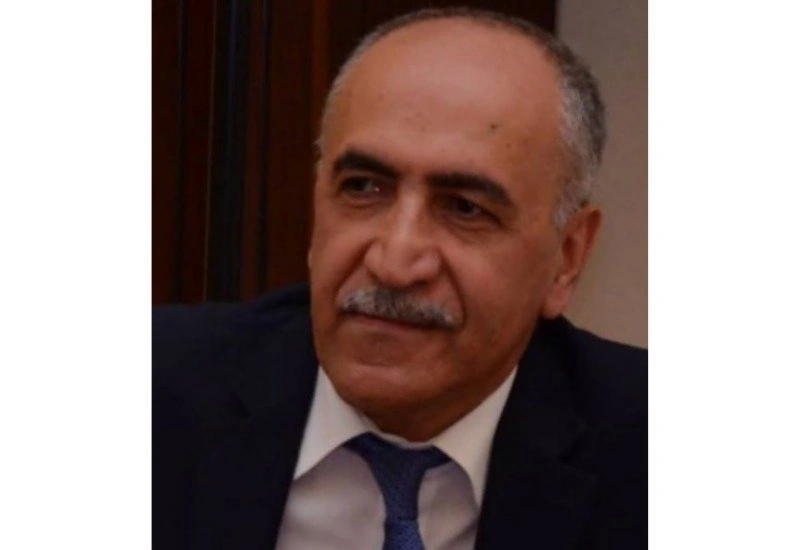
expert Ingilab Ahmadov told Trend.
“The news itself is positive and promising. This is one example
of SOCAR’s gradually expanding involvement not only in downstream
operations but now also in upstream operations, and in a region far
from the shores of the Caspian Sea, Azerbaijan, and the wider
region. Expanding SOCAR’s geographic reach and increasing the
number of such partnership projects could bring the company
long-term benefits, leading to further expansion of its geographic
footprint and portfolio of contracts and projects,” the expert
noted.
According to him, SOCAR is acquiring a 20% stake in the Comstock
assets, which offers the potential for concrete returns given the
value of these assets and the project’s future profitability: “In
Western Haynesville, SOCAR is acquiring a 15% stake, which will
subsequently be reduced to 7.5% once a 15% return on investment in
these assets is achieved.”
He emphasized that the deal itself is unusual for SOCAR, since
it largely involves shale gas and the U.S., that is, a completely
different geographic context. According to the expert, developments
in the global hydrocarbons market are contributing to the growing
attractiveness of the U.S. gas market.
"Given current developments in the global hydrocarbon market, as
well as changes in the Middle East and, more broadly, in Europe and
Eurasia regarding supply routes, the U.S. gas market is becoming
not only one of the main markets but also a key factor in
maintaining balance in the global fuel market.
Entering a new market is typically the first step and is usually
followed by the expansion of partnerships in other projects in the
U.S. region,” he said.
According to Ingilab Ahmadov, this is a new direction for SOCAR,
as the company previously had no such experience in the LNG sector:
“This is a new direction for SOCAR because it largely involves LNG,
which was not part of its previous operations. Given the current
developments regarding transport routes in the Eurasian region and
the Middle East, this direction is becoming very promising.”
He added that participation in U.S. projects could have a
positive impact on SOCAR’s international positioning: “This is
exactly what SOCAR needed to position itself as a company stepping
into the spotlight with a strong statement in terms of a
diversified portfolio and operations across different regions and
geographies.”
Speaking about the significance of SOCAR gaining access to U.S.
gas assets and Comstock’s experience in developing the Haynesville
and Western Haynesville fields, the expert noted that he views the
current deal as the beginning of further development: “It seems to
me that this is just the beginning. Comstock itself isn’t that big
of a company. Its market capitalization is about $4 billion or
slightly more. But the main thing here is to enter the market."
“This is just the beginning, because market conditions are
currently favorable for emerging companies and countries such as
Azerbaijan and Kazakhstan. Global market conditions are
contributing to this,” Akhmedov said.
According to him, the company may gradually gain more influence
in the international market and acquire the necessary experience:
“We will gradually see the company gain more influence and, in the
eyes of global giants, join the ranks of companies that will have
to follow the principles of international management, be more
aggressive, and gradually gain experience. Because in this
business, experience is what matters most,” the expert noted.
“At the dawn of the new oil era, when development of the
Azeri-Chirag-Guneshli, Shah Deniz, and other fields began, there
were only a handful of transnational corporations, oil and gas
giants, on the global market capable of operating in such complex
fields. At that time, companies such as SOCAR and KazMunayGas
mainly acted as secondary partners and primarily provided support
to global oil and gas giants,” Ahmadov noted.
He believes that our companies now have the opportunity to
gradually shift the balance on the global market: “I believe we are
now at a point where a real chance is gradually emerging to cross
this Rubicon, and companies such as SOCAR and KazMunayGas can
change the course of the game. The implementation of cutting-edge
management concepts and technologies, as well as demonstrating
operational efficiency, are the keys to our companies’ success.
Increased competition in the global energy market also contributes
to this.”