China has formulated nearly 200 key artificial intelligence standards and plans to establish 500 zero-carbon factories during the 15th Five-Year Plan period from 2026 to 2030, as Beijing accelerates efforts to modernize its industrial sector, Xinhua reports.
Xin Guobin, vice minister of the Ministry of Industry and Information Technology (MIIT), said that AI has been broadly integrated throughout China’s industrial chain, spanning research and development, design, manufacturing, quality inspection, and operations and maintenance.
Speaking at a State Council Information Office press conference, Xin said several cities are also being organized to conduct AI ethics reviews and develop related services.
China will simultaneously accelerate research into core 6G technologies, continue technology trials and advance standards development, MIIT official Liu Yulin said. The aim is to support the development of the 6G industry and ecosystem ahead of eventual commercial deployment.
The country also plans to establish 500 zero-carbon factories over the next five years, creating replicable models for the green and low-carbon transformation of industry.
Beijing will further promote the development of intelligent connected new energy vehicles (NEVs), while strengthening product quality and improving the safety and reliability of autonomous driving systems. NEV insurance policies will be refined and maintenance costs reduced to address consumer concerns and encourage wider adoption.
China’s computing infrastructure is also expanding rapidly. As of the end of June, the country’s intelligent computing capacity had reached 2,185 EFLOPS, with more than 70 major computing corridors established around computing hubs. An EFLOPS represents one quintillion floating-point operations per second.
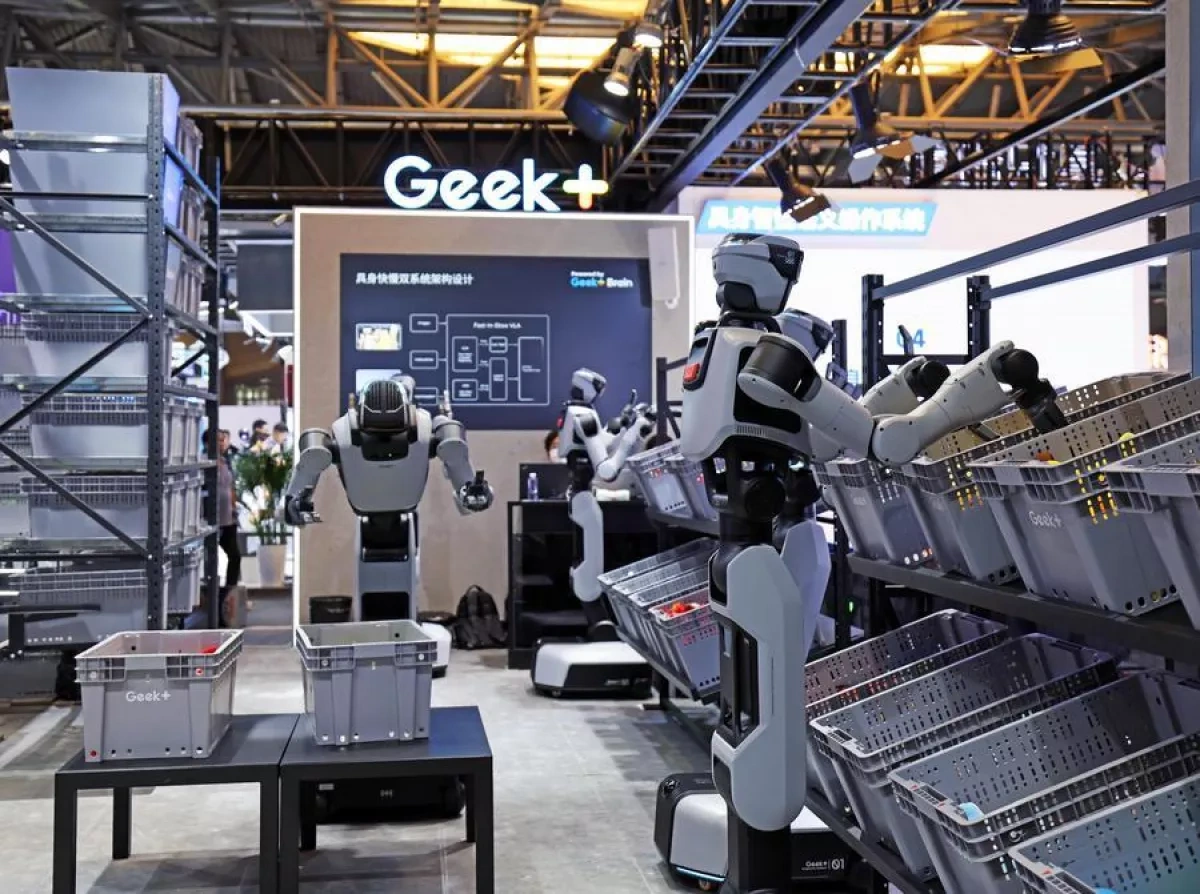
Xin said China’s open-source large AI models have made significant advances, offering cost-effective performance and attracting a growing global user base. Robots are also increasingly being deployed in manufacturing, emergency response and catering.
Over the next five years, China intends to develop emerging industries including integrated circuits, aerospace, biomedicine, the low-altitude economy, advanced energy storage and intelligent robotics. Future sectors such as quantum technology, biomanufacturing, hydrogen and nuclear fusion, brain-computer interfaces, embodied intelligence and 6G are also being positioned as new economic growth drivers.
China is also seeking to strengthen high-quality enterprises and cultivate more specialized “little giant” companies.
In 2025, China’s core AI industries exceeded 1.2 trillion yuan ($176.6 billion) in value, while the number of AI enterprises nationwide surpassed 6,200.
By Vafa Guliyeva