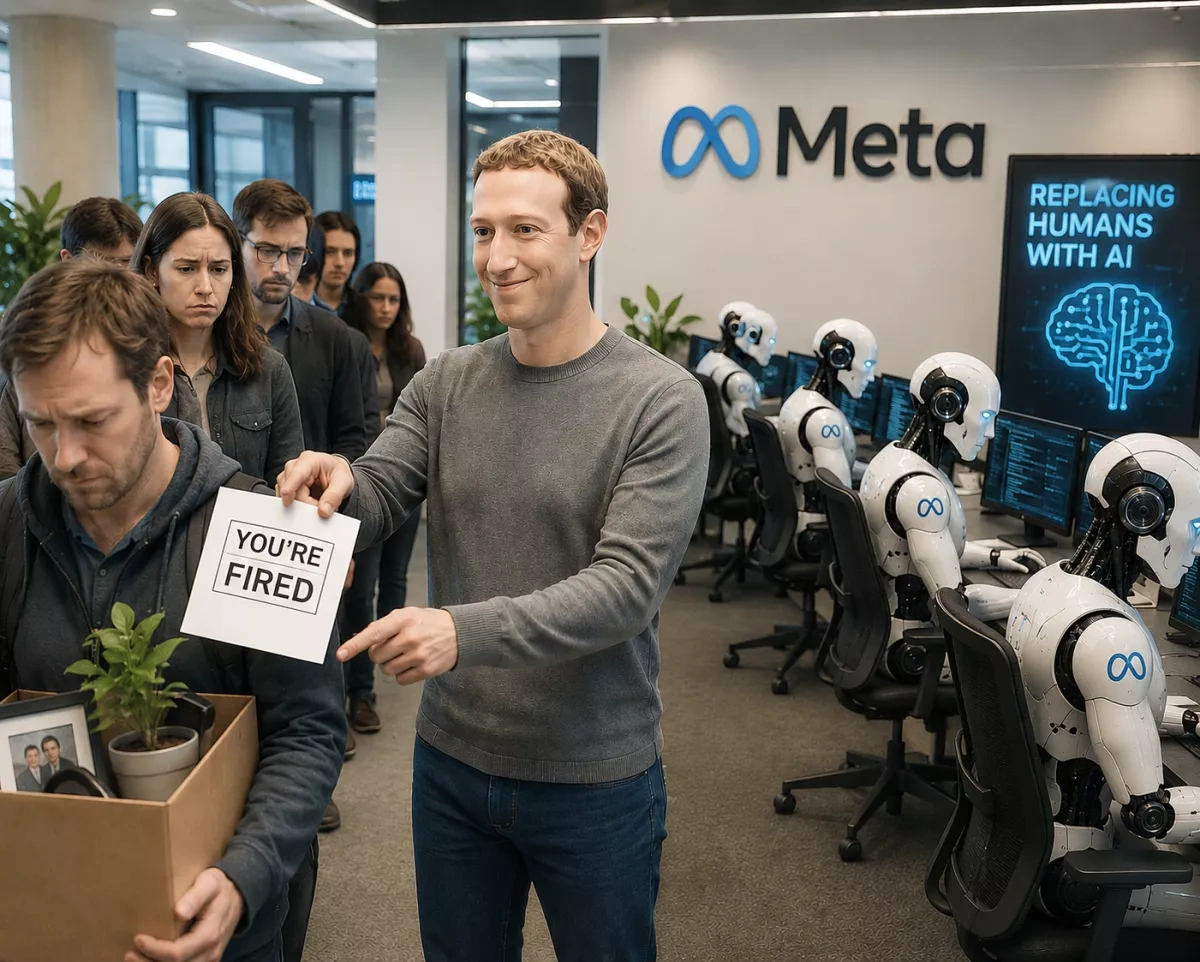
Meta CEO Mark Zuckerberg and his senior executives developed an ambitious plan to transform the company into an “AI native” organization, including scenarios that could have reduced the size of some teams by as much as 60%, Reuters reports.
The plan, code-named Project OT, or Organization Transformation, was developed during a leadership retreat in January. Internal documents reviewed by Reuters and people familiar with the project said Meta envisioned artificial intelligence taking over much of the routine work performed by thousands of employees, with smaller teams of human workers overseeing AI systems.
The restructuring was designed to unfold in two waves, with an initial round of layoffs in May followed by another shake-up in November. The plans also included closing vacant positions and removing employees considered poor performers.
However, the strategy began to unravel as employees pushed back against the prospect of AI replacing human workers and internal data raised concerns about the productivity gains delivered by autonomous AI agents.
On May 19, just hours before the first round of layoffs, Zuckerberg called off preparations for the November cuts, according to an internal document reviewed by Reuters. Meta subsequently laid off 10% of its workforce the following day.
Meta confirmed the existence of Project OT, describing it as a year-long effort focused on cost reductions, restructuring teams and moving employees into priority areas, including the production of training data for AI models.
The company acknowledged that the project involved two waves and that some scenarios contemplated reducing certain teams by up to 60%. However, it stressed that this did not mean cutting 60% of its overall workforce.
“As part of our company restructuring earlier this year, we asked some teams to conduct a scenario planning exercise looking at the potential impact of redeployments, open role closures and cuts,” Meta said.
“This ultimately resulted in moving thousands of employees to do priority work on several newly-established teams, as has been publicly reported. Ultimately, we didn’t move forward with every scenario from the exercise – and it was never assumed we would.”
It could not determine what prompted Zuckerberg to change course or what Meta’s current plans are for reshaping its workforce. Meta declined to make Zuckerberg available for comment.
The developments underscore the challenges facing major technology companies as they seek to integrate increasingly autonomous AI systems into their operations while managing workforce disruption and investor expectations.
By Vafa Guliyeva