BAKU, Azerbaijan, August 14. On August 10,
Chairman of Turkmenistan’s Halk Maslahaty (Parliament) Gurbanguly
Berdimuhamedov paid a working visit to Afghanistan, where he held
talks with Deputy Chairman of the country's government for economic
affairs Abdul Ghani Baradar. One of the central issues discussed
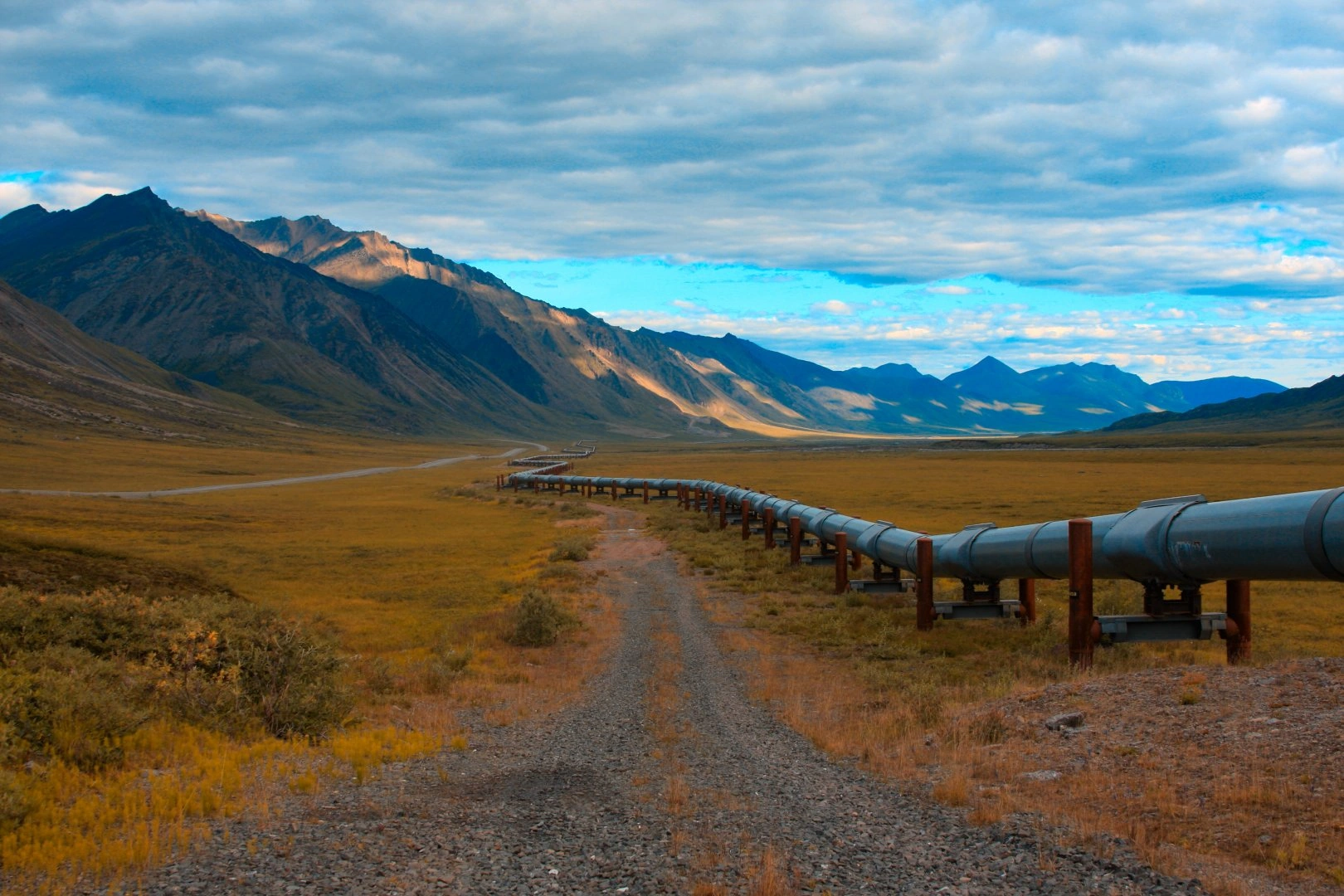
was the implementation of the
Turkmenistan-Afghanistan-Pakistan-India (TAPI) gas pipeline,
including its key Afghan section, Serhetabat-Herat.
During the visit, the sides discussed further progress on the
project, transport and energy infrastructure, and the need for
closer coordination between relevant agencies. The results of
construction work on the Serhetabat-Herat section were presented on
site. In addition, state concern Turkmengas and Afghan Gas company
signed a memorandum of understanding on supplies of Turkmen gas to
Herat province.
The importance of TAPI is currently driven primarily by the need
for additional and more diversified natural gas supplies in South
Asia. The project is designed to deliver up to 33 billion cubic
meters of gas annually from Turkmenistan to Afghanistan, Pakistan
and India, with the Galkynysh field serving as its resource
base.
For India, the project is particularly important amid long-term
growth in gas demand and the need to expand its import base. In its
January analytical article "Turkmen gas for Asia: the role of TAPI," Trend had
already examined these processes, noting that rising gas
consumption in India, combined with growing geopolitical
uncertainty around maritime energy supplies, could increase the
country's interest in TAPI. The current situation can therefore be
viewed as a continuation of that trend, which has gained additional
momentum amid growing vulnerabilities in global energy markets.
Against this backdrop, an overland route from Central Asia to South
Asia gains additional value for consumer countries because its
operation does not depend on tanker shipments passing through the
Strait of Hormuz.
At this stage, TAPI faces another issue - a commercial one. On
August 10, as part of Gurbanguly Berdimuhamedov's visit to
Afghanistan, state company Afghan Gas and Turkmengas signed a
memorandum on gas purchases, but the sides still need to determine
the price, demand volumes and the mechanism for allocating
supplies. On the same day, Abdul Ghani Baradar called for a
long-term agreement on the gas price and urged the sides to adjust
the pricing formula so that sharp swings in European gas markets
would have less impact on the cost of supplies. He also proposed
including a flexible mechanism for revising the contract.
To understand the logic behind this request, it is important to
look at how gas prices are formed in Europe today. The key
benchmark is the Dutch Title Transfer Facility (TTF), Europe's main
gas trading hub and the continent's principal gas price reference.
Prices there are shaped by wholesale supply and demand, with
trading covering day-ahead deliveries as well as monthly, quarterly
and longer-term contracts. Since 2022, however, the European market
has become much more dependent on the global liquefied natural gas
(LNG) market: LNG's share of EU imports rose from 20% in 2021 to
45% in 2025. As a result, TTF prices are increasingly influenced by
competition between Europe and Asia for LNG cargoes, the
availability of tanker supplies, global infrastructure and
geopolitical risks.
This feature of the European market may create a potential
problem for Afghanistan. A price linked to a rapidly changing
external market can respond to events that do not directly alter
the gas balance in South Asia. In 2026, this became particularly
visible amid the crisis involving Iran and the Strait of Hormuz:
reduced LNG availability and stronger competition between European
and Asian buyers triggered another wave of volatility in European
gas prices. A report by the European Agency for the Cooperation of
Energy Regulators (ACER) titled "Key Developments in European Gas
Wholesale Markets (Winter 2025–2026)" notes that in 2026, this was
particularly evident against the backdrop of the crisis in the
Middle East and disruptions to supplies through the Strait of
Hormuz. According to the European Agency for the Cooperation of
Energy Regulators (ACER), TTF prices rose above €50 per MWh at the
start of the crisis and exceeded €60 per MWh following damage to
energy infrastructure. At the same time, Asian gas premiums reached
record levels, intensifying competition for flexible LNG
supplies.
Such volatility is particularly significant for Afghanistan. The
country would serve both as a gas consumer under TAPI and as a
transit link along the route, meaning that gas costs would affect
both domestic energy supply and the economics of transit. Against
this backdrop, Baradar's request can be viewed as an effort to
limit the transmission of external price shocks into a long-term
contract. Historically, TAPI has already envisaged a formula-based
pricing approach relying mainly on oil indexation; no publicly
available documents confirm that the current formula is directly
linked to TTF.
The issue, therefore, appears to be about finding a more
predictable pricing structure for TAPI. This could involve a longer
pricing reference period, mechanisms for smoothing short-term
spikes or a hybrid formula with predetermined conditions for
revisions. It remains unclear which approach Afghanistan will
propose and what terms Turkmenistan will accept: the August 10
memorandum leaves these parameters open.
The European model has nevertheless proved effective as a
mechanism for building an integrated wholesale gas market. TTF's
high liquidity, large number of market participants and ability to
quickly redistribute gas between regions allow prices to respond
rapidly to changes in supply and demand. This gives the European
market a common gas price reference and helps it adjust quickly to
changes in supply. However, the same characteristics can produce a
different result in a project built around a long-term pipeline
contract and a limited number of participants. In such case,
excessive sensitivity to short-term external market movements can
create additional uncertainty for the buyer, particularly when its
own market is much less liquid and offers fewer tools for managing
price risk.
The future TAPI pricing formula could therefore potentially
evolve toward a mechanism that takes long-term supply parameters
into account while allowing for predetermined price adjustments
when market conditions change significantly. This could involve an
averaging period, several price indicators, limits on the scale of
price changes or other mechanisms already used in international gas
trading. It is not yet clear which approach the sides will choose,
so it would be premature to speak of a new regional pricing system.
However, the TAPI pricing debate shows that, in developing a
long-term gas market between Central and South Asia, the parties
may face the need to adapt existing international mechanisms to the
specific characteristics of regional demand.
Similar adjustments are already taking place in other markets.
In 2024, Indian companies Petronet LNG and GAIL India, major
state-controlled players in the country's gas import and trading
sector, concluded long-term contracts with lower oil price linkages
of around 12-12.5%, compared with roughly 13-14.5% in agreements
signed in 2022-2023. This allowed buyers to reduce the impact of
oil price fluctuations on the final cost of gas.
At the same time, Asia is developing its own LNG price
benchmark, the Japan Korea Marker (JKM), which is used to assess
LNG supplies to Northeast Asian markets. However, JKM and Europe's
TTF remain closely connected: according to the International Energy
Agency, their correlation reached 0.955 in 2025, while changes in
the price spread affect the direction of LNG flows between Europe
and Asia.
The structure of LNG contracts is also changing. According to
international consulting firm McKinsey, around 70% of surveyed LNG
buyers plan to use long-term and short-term contracts
simultaneously over the next two to three years, seeking to combine
greater price predictability with flexibility.
Against this backdrop, a possible adjustment of the TAPI pricing
formula fits into a broader process of adapting gas contracts to
changing market conditions. Buyers continue to use international
price benchmarks while seeking to account more closely for regional
characteristics and limit the impact of sharp external price
swings.
The gas pricing issue shows that, as TAPI progresses, the
project's focus is gradually shifting toward its commercial model.
For Turkmenistan, this is a matter of monetizing a new export
route, while for Afghanistan it concerns long-term access to gas
and predictable costs. Kabul's intention to revise the formula in
light of external price volatility can therefore be viewed as an
effort to establish terms better suited to the economic conditions
of the region.
At the same time, a potential adjustment of the TAPI formula
fits into a broader process already visible in the global gas
market. Buyers in different regions are revisiting the structure of
long-term contracts, using multiple price benchmarks and seeking
greater flexibility. Asia is developing benchmarks such as JKM,
while companies are adjusting oil indexation and the balance
between long- and short-term purchases. Against this backdrop, a
possible revision of the TAPI pricing formula can be viewed as part
of a broader adaptation of gas contracts to new market conditions
and changing price risks. Buyers continue to rely on international
price benchmarks while seeking to better reflect regional
characteristics and limit the impact of sharp external
fluctuations. If the sides develop a mechanism that takes into
account the specific conditions of the Central and South Asian
markets and reduces the impact of external price shocks, this
experience could also be relevant to other regional gas
projects.