BAKU, Azerbaijan, August 5. Turkish-American
engineer, researcher and writer Ergun Kirlikovali has criticized
Nobel Prize-winning author Nassim Nicholas Taleb’s position
regarding Ruben Vardanyan, arguing that public narratives
surrounding the former businessman and philanthropist do not
reflect what he described as the full record of Vardanyan’s
activities.
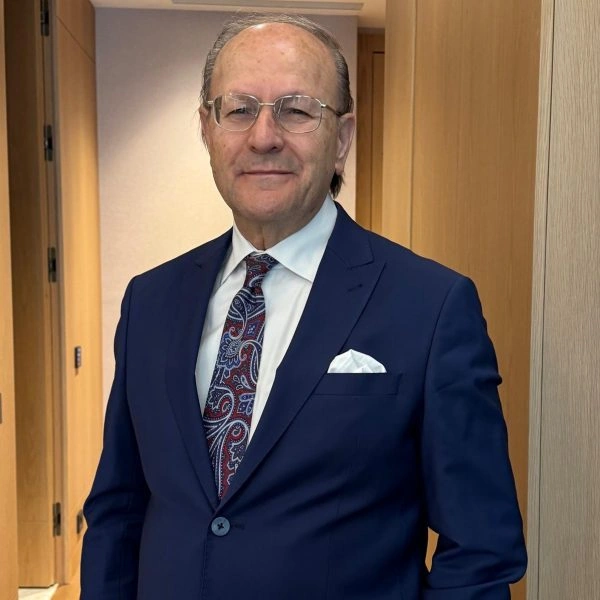
Kirlikovali, who has lived in the United States for 43 years, is
known for his work in the field of advanced materials and
engineering technologies. He is described as the only Turkish
engineer to have developed specialized materials used by the U.S.
Navy and Air Force. His research has focused on creating
high-performance coatings and composite materials combining
strength and flexibility.
In an open letter addressed to Taleb, Kirlikovali responded to
the latter’s recent statement on X that he would not lecture in
Baku while Vardanyan remains imprisoned. "I am writing to you
regarding your recent public declaration on X stating that you
refuse to lecture in Baku while Ruben Vardanyan remains
imprisoned," Kirlikovali wrote.
The researcher argued that Taleb, whose work has focused on
financial risks and systemic vulnerabilities, should apply similar
scrutiny to Vardanyan’s background and activities.
According to Kirlikovali, Vardanyan’s public image as a
philanthropist should be examined alongside allegations related to
his financial and political activities. He referred to
investigations surrounding Troika Dialog and the so-called "Troika
Laundromat", claiming that the network was linked to complex
offshore financial schemes.
Kirlikovali also mentioned international restrictions and
assessments related to Vardanyan, arguing that his activities had
broader geopolitical implications. He stated that Vardanyan’s move
to Karabakh in 2022 and his subsequent arrest should be viewed in
the context of regional security developments.
Vardanyan was sentenced by a Baku Military Court in February
2026 to 20 years in prison after being convicted on charges
including financing terrorism and creating illegal armed groups.
Vardanyan has rejected the accusations against him.
In his letter, Kirlikovali also criticized what he called a lack
of attention to the experiences of Azerbaijani civilians affected
by the Karabakh conflict. He referred to the displacement of
Azerbaijani residents during the conflict and the Khojaly tragedy,
emphasizing that accountability and respect for the rule of law are
essential for lasting peace. "True humanity demands that we side
with the victims of displacement and aggression, rather than the
powerful financiers who profit from their suffering," Kirlikovali
wrote.
He called on Taleb to reconsider his public position and apply
what he described as a rigorous analytical approach to Vardanyan’s
activities and public image.