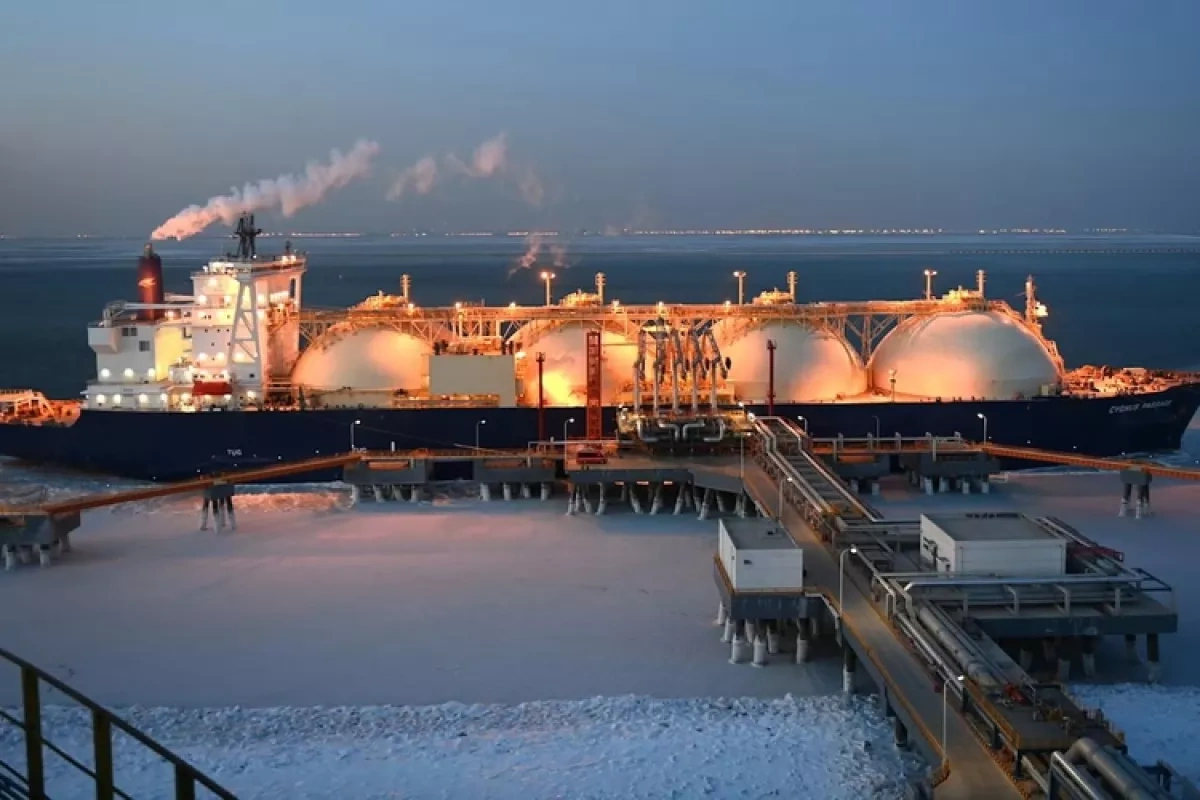
Russia has been quietly expanding its shadow fleet of liquefied natural gas (LNG) carriers by acquiring second-hand vessels and deploying its first domestically built tankers ahead of a European Union ban on Russian LNG imports set to take effect next year, the Financial Times (FT) reports.
According to maritime analytics company Windward, at least eight second-hand LNG carriers have been sold and subsequently used to transport Russian cargoes over the past six months. This has increased the fleet to 25 vessels, including two newly built tankers from Russia's Zvezda shipyard.
Data from Kpler shows that four recently acquired vessels — Kosmos, Orion, Merkuriy, and Luch — have already carried cargoes from hubs handling Russian LNG subject to Western sanctions.
The four LNG carriers, built between 2005 and 2006, changed ownership before being reflagged under the Russian registry. Companies linked to Russia and registered in Dubai, Hong Kong, and Singapore are commonly used to own vessels in the shadow LNG fleet, while operators allegedly conceal cargo origins by disabling or spoofing navigation signals and conducting ship-to-ship transfers.
The FT also reported that four additional LNG carriers remain under construction in Russia, while six more vessels cannot be delivered from South Korea's Hanwha shipyard because of sanctions.
In January, the Council of the European Union approved a phased plan to end imports of Russian gas. A full ban on Russian LNG imports is due to take effect at the beginning of 2027, followed by a ban on pipeline gas later that autumn.
By Jeyhun Aghazada