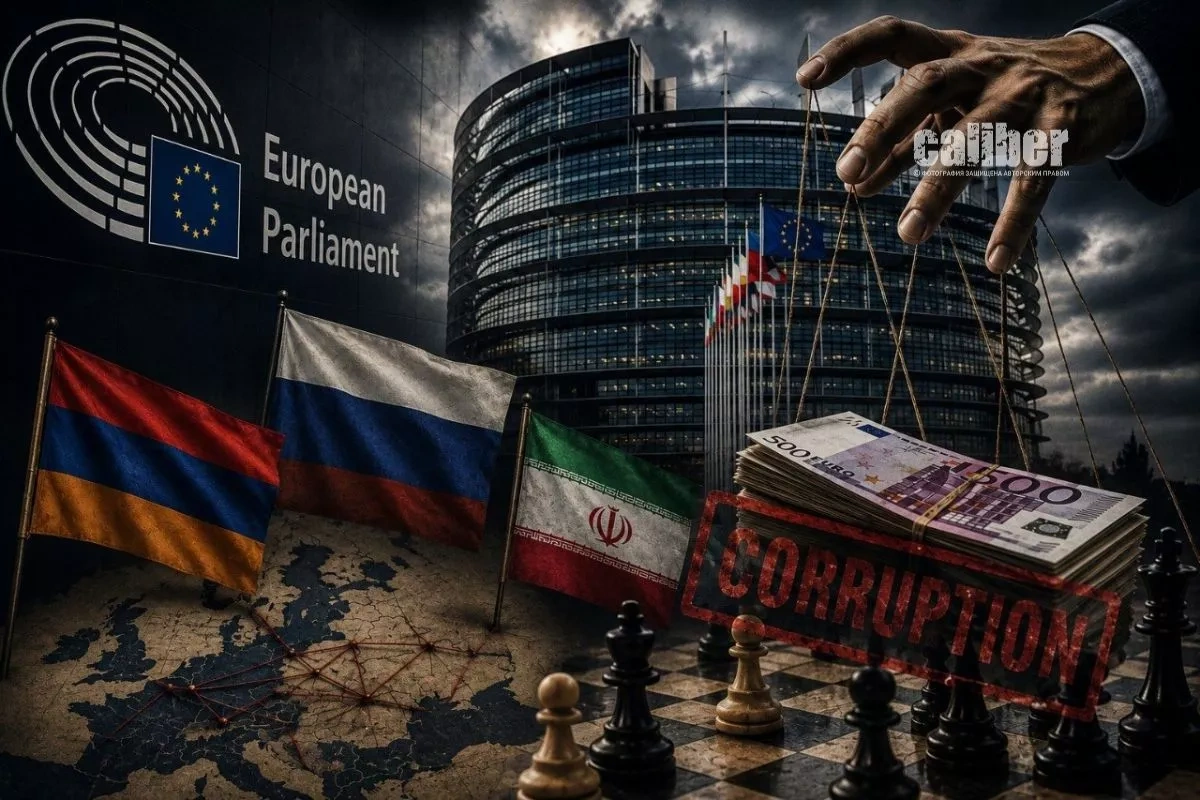
One of the European Parliament's favourite pastimes is to cloak itself in the mantle of a moral arbiter, lecturing other countries on democracy from its self-appointed pedestal, passing judgment on their political choices, and adopting resolutions on human rights.
Against this backdrop, the investigation by the Faktyoxla research group into the Armenian lobbying federation EAFJD and its head, Kaspar Karampetian, is noteworthy not merely because it exposes yet another lobbying network. More importantly, it reveals a far broader and more panoramic picture of the European Parliament's underlying power structure. Through EAFJD's web of contacts emerges a system in which a significant portion of the Parliament is closely linked to Russia and mired in corruption and the pursuit of interests that bear little resemblance to the values Europe claims to uphold. In this broader context, the Armenian lobby is merely one thread; once pulled, it begins to unravel the entire tangled skein.
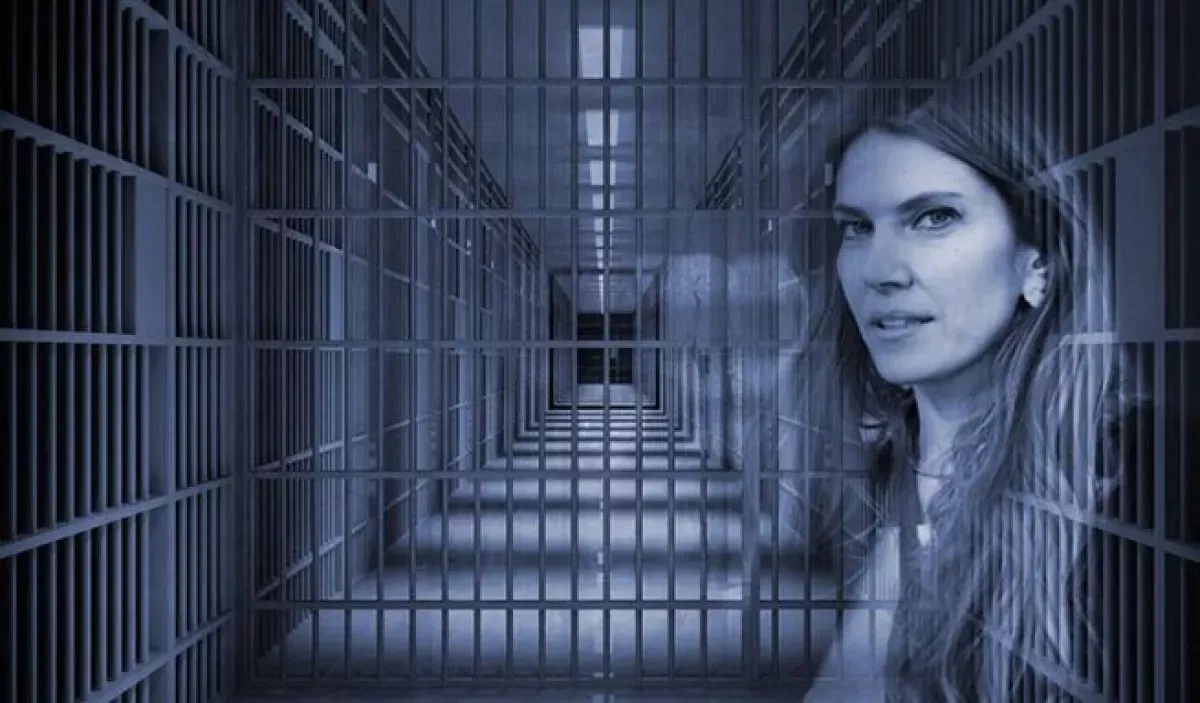
Eva Kaili became a symbol of this moral decay. The Greek politician and Vice-President of the European Parliament was arrested in 2022 as part of the Qatargate corruption scandal, after investigators found large sums of cash at both her residence and her father's home—money prosecutors believe originated from Qatar. Yet the scandal also revealed a Russian dimension. As vice-chair of the European Parliament's delegation to the EU–Russia Parliamentary Cooperation Committee, Kaili consistently advocated a softer approach toward Moscow and opposed a resolution designating Russia a state sponsor of terrorism. Polish MEP Dominik Tarczyński went so far as to accuse her of spying on behalf of Moscow.
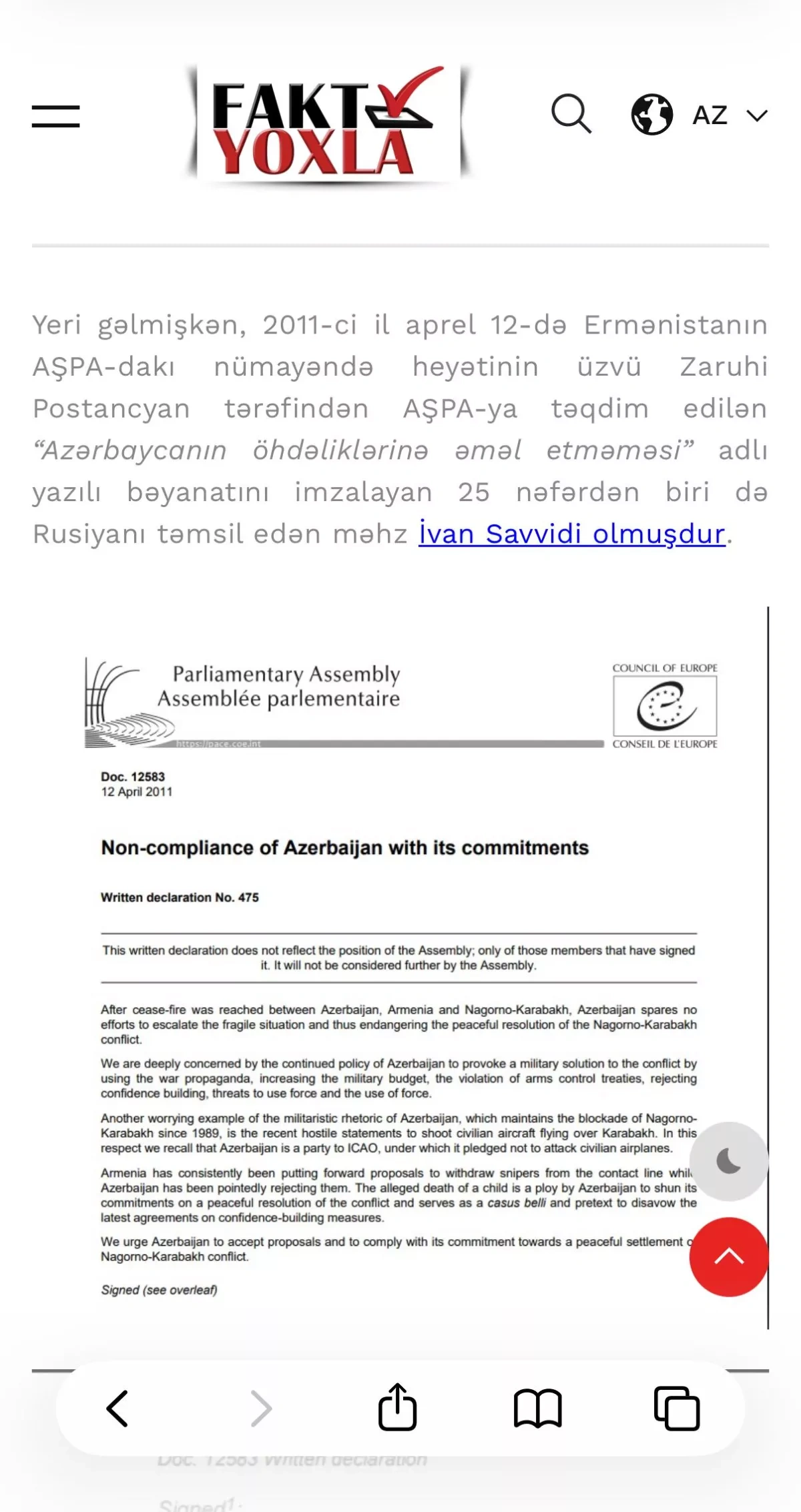
Also appearing in this web of connections was Ivan Savvidi, the Greek-Russian billionaire, former State Duma deputy from United Russia, and a figure widely regarded as being close to the Kremlin. Savvidi has been placed under Ukrainian sanctions and was accused of financing anti-NATO unrest in North Macedonia in 2018. According to the investigation, it was Savvidi who helped establish contacts between Kaili and the Armenian lobby. Publications by Kaspar Karampetian further suggest that the EAFJD actively supported Kaili's 2019 re-election campaign and her subsequent appointment as Vice-President of the European Parliament—a favour she repaid by joining anti-Azerbaijani initiatives.
Kaili's case is far from an isolated incident; rather, it reflects a broader pattern. Another figure who emerges in this context is Eldar Mamedov, a longtime adviser to the Progressive Alliance of Socialists and Democrats (S&D) group in the European Parliament. He was among the first to be dismissed after the Qatargate scandal broke. Although a Latvian citizen, Mamedov's public positions consistently reflected a pro-Iranian, pro-Russian, and pro-Armenian orientation, coupled with an unwavering hostility toward Azerbaijan.
Mamedov epitomises the "shadow adviser"—the kind of behind-the-scenes figure who, for years, helps shape the positions of a major political group on sensitive foreign policy issues while remaining virtually invisible to voters. When the same individual consistently advances the interests of Tehran, Moscow, and the Armenian lobby at the same time, it ceases to look like coincidence and instead reveals a distinct pattern. Behind different causes and slogans lies the same constellation of fundamentally anti-Western interests, cloaked in the respectable language of human rights and democratic values.
The Faktyoxla investigation also illustrates the scale of the EAFJD's lobbying efforts in concrete terms. Between February 2023 and April 2026, representatives of the federation held 41 meetings with 30 Members of the European Parliament from various political groups. Seventeen of those meetings involved members of the Progressive Alliance of Socialists and Democrats (S&D)—the same parliamentary group closely associated with both Eva Kaili and Eldar Mamedov. And once one begins examining who those interlocutors were, the Armenian dimension quickly recedes into the background, giving way to a far more revealing Russian connection.
Among those figures, Finnish MEP Eero Heinäluoma, who met with EAFJD representatives more frequently than any other lawmaker, was awarded the Order of Friendship by decree of Russian President Vladimir Putin. German MEP Lars Patrick Berg conspicuously abstained from voting on the European Parliament's resolution declaring Russia a state sponsor of terrorism, adopted an openly pro-Russian stance during debates on the South Caucasus, and met with EAFJD just a week later. Romanian politician Vasile Dîncu lost his post as defence minister after calling for territorial concessions to Russia. French MEP Aymeric Chauprade, whose office once hosted an internship for the daughter of the Kremlin's press secretary, also served on the EU–Russia Parliamentary Cooperation Committee. Taken together, the roster of politicians carefully cultivated by the Armenian lobby reads like a register of pro-Russian sym
The pattern is further reinforced by the geography of the lobby's contacts within the European Parliament itself. Armenian lobbyists systematically cultivated members of the EU–Russia Parliamentary Cooperation Committee, including Portuguese MEPs Carla Tavares and Francisco Assis, French MEP Bernard Guetta, Swedish MEP Ilan De Basso, and French MEP Sylvie Guillaume, who previously co-chaired the Parliament's informal "Friends of Nagorno-Karabakh" group. At the same time, the investigation documents efforts in the opposite direction as well: outreach to lawmakers known for their hard-line stance against Russia, such as German MEP Sergey Lagodinsky, apparently with the aim of softening or neutralising their positions.
For an organisation that formally claims to focus exclusively on Armenian issues, EAFJD displays a striking and otherwise difficult-to-explain interest in Russia-related resolutions and the voting behaviour of prominent anti-Russian lawmakers. Add to this the Iranian dimension—its contacts with members of the European Parliament's delegation for relations with Iran, including Cypriot MEP Michalis Hadjipantela and Danish MEP Per Clausen—and the organisation's broader role becomes far clearer. The evidence suggests that EAFJD functions as a point of convergence for the interests of two states that are in strategic opposition to the West.
All of this takes on added significance in light of the European Parliament's decision of June 2, 2022, to ban lobbying activities on its premises by organisations and individuals directly linked to Russia or acting on its behalf. The measure was intended to cut off Moscow's legitimate channels of influence. Yet those channels did not disappear—they simply adopted a different guise. Where Russian-linked structures could no longer operate openly, alternative organisations such as EAFJD stepped in, with the Armenian agenda providing an effective cover.
After all, who would suspect an organisation presenting itself as a defender of Armenian rights of advancing Kremlin interests? And yet, this very structure appears to offer a way around the Parliament's restrictions. Formally, the focus remains on Karabakh and human rights; in practice, however, the same networks of Russian influence seem to persist—only repackaged under a different label.
At this point, the Armenian dimension completes the picture, exposing the broader scheme in full. On April 30, 2026, the European Parliament adopted the resolution "Supporting Democratic Resilience in Armenia," which EAFJD immediately and enthusiastically welcomed. Passed on the eve of Armenia's parliamentary elections, the resolution called on Yerevan to guarantee the rights of the opposition, safeguard judicial independence, and ensure a free and fair electoral process. On the surface, these are unquestionably worthy principles—until one considers which opposition forces the resolution was effectively seeking to protect.
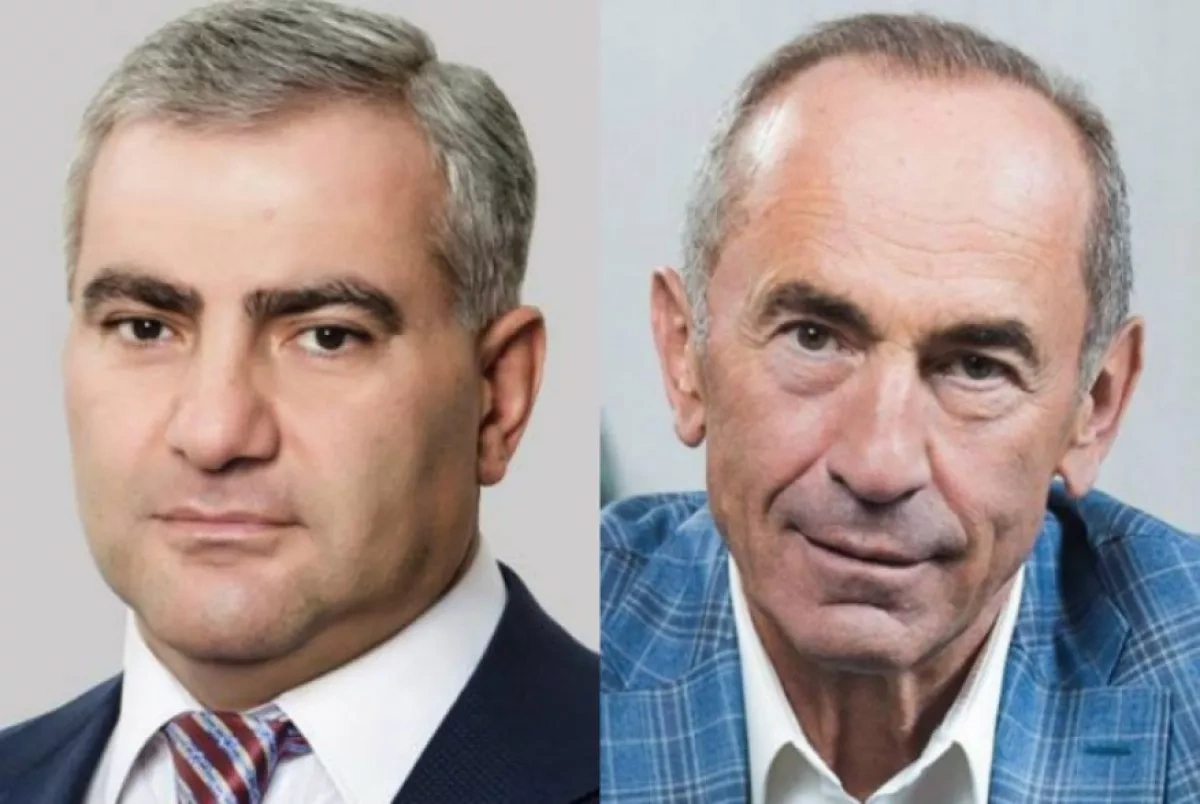
The principal opposition contenders in those elections were the Strong Armenia bloc led by billionaire Samvel Karapetyan—a Russian oligarch who has initiated the process of renouncing his Russian citizenship—and the Armenia Alliance of former President Robert Kocharyan, a politician widely regarded as pro-Moscow and seeking a political comeback. It was these pro-Russian opposition forces that stood to benefit most from the European Parliament's concern for the "rights of the opposition."
The circle thus closes with remarkable precision: pro-Russian and corruption-tainted members of the European Parliament, working through the Armenian lobby, helped advance a resolution that ultimately benefited Armenia's pro-Russian opposition—all under the banner of defending European democratic values.
The Faktyoxla investigation ultimately points to a conclusion whose significance is difficult to overstate. The issue is not the existence of an Armenian lobby—many countries and communities have lobbying organisations, and lobbying itself is entirely legitimate. The real concern, according to the investigation, is that part of the European Parliament—an institution that presents itself as Europe's moral authority—has become intertwined with networks linked to Russia and Iran, tainted by corruption scandals, and willing to advance anti-Western interests under the cover of human rights advocacy.
In this context, Kaspar Karampetian and EAFJD are not the central story but rather a convenient point of entry—a thread that, once followed, leads to a much larger and more complex web of influence.
For Azerbaijan, which for years has been the target of resolutions and political campaigns originating in the European Parliament, the implications appear straightforward: criticism directed at Baku does not come from a neutral and impartial arbiter, but from an institution whose significant segment has itself been deeply compromised.