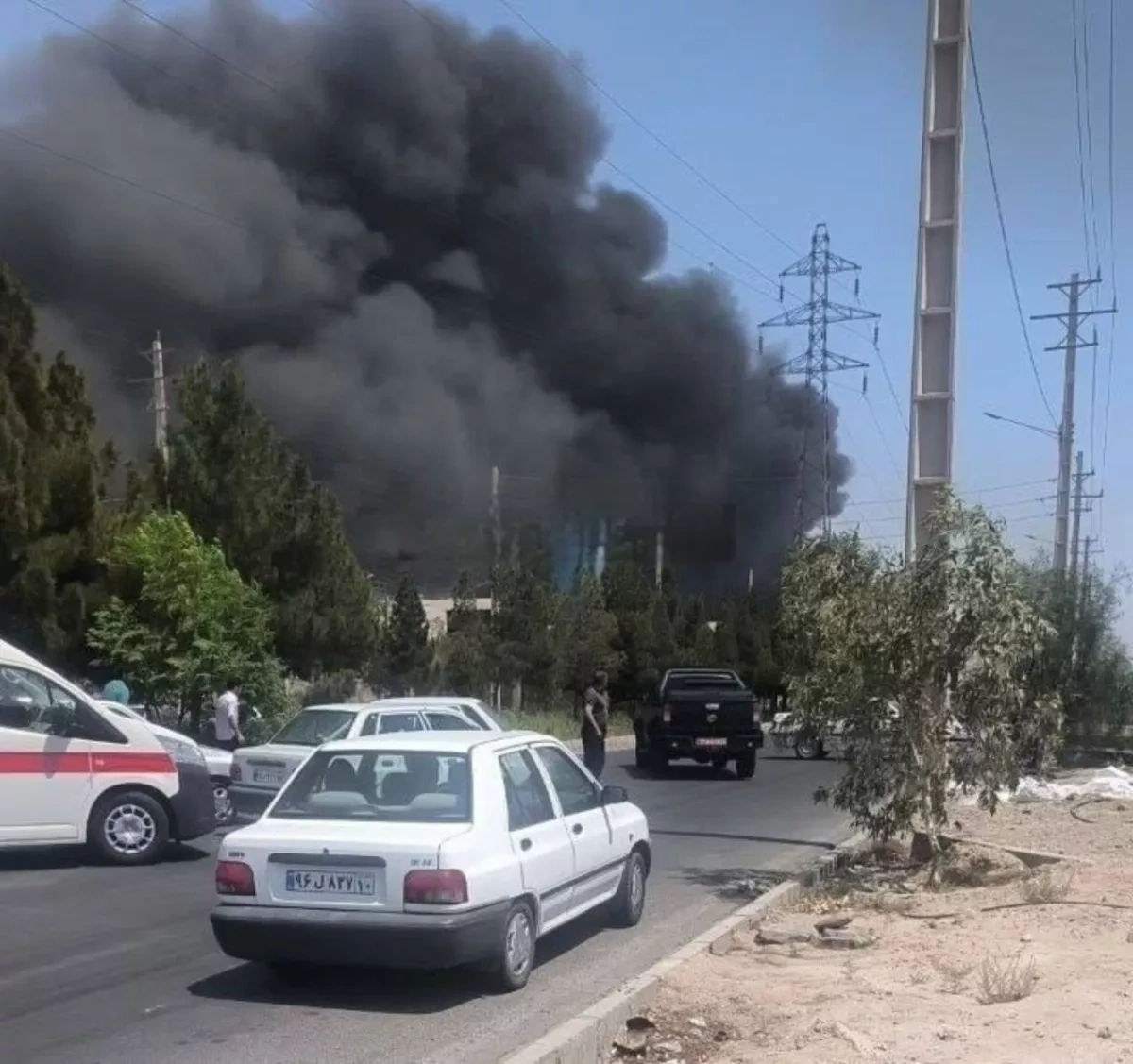
An explosion heard in Fashafuyeh, south of Tehran, came from an internal tank at a factory in the Aluminumkaran Industrial Park, local official Davoud Vali said.
The blast and resulting smoke alarmed nearby residents and prompted rumors about its cause, Iran International reports.
Tehran sustained the heaviest damage of any Iranian province during the 40-day conflict with US and Israel, with more than 50,000 homes damaged and the capital accounting for 650 reported strikes, according to a municipal report published on August 3.
The figures, presented at a public event hosted by the University of Tehran's Faculty of Urban Planning, offer the most detailed breakdown yet of damage across the capital following the conflict.
The report says District 4 in northeastern Tehran recorded the highest number of strikes, followed by District 21 in the west, District 1 in the north and District 22 in the northwest.
"The number of strikes in District 4 alone exceeded the combined total recorded in some provinces," Hossein Nouhi, a certified construction expert in Tehran's municipality, said during the event.
According to the report by Tehran Municipality's Urban Planning and Architecture Department, District 4 was hit 90 times, District 21 Tehran sustained 62 strikes, District 1 recorded 57 and District 22 recorded 55. District 17 in southwestern Tehran was the least affected, with three reported strikes.
The municipality said 50,849 residential units across Tehran sustained damage ranging from broken windows and doors to complete destruction.
Around 40,000 homes required minor repairs, about 8,900 suffered more extensive architectural damage, 415 buildings required structural reinforcement or reconstruction and 2,042 homes were completely destroyed and must be rebuilt, according to the report.
District 4 recorded the largest number of damaged residential units with 7,948, followed by District 2 with 4,037, District 15 with 3,490, District 11 with 3,432, District 21 with 3,205 and District 7 with 3,196.
Nouhi put the country's economic losses from the 40-day conflict at an estimated $280 billion, excluding psychological impacts and the cost of restoring industrial production. He argued that the conflict highlighted the need to require shelters in new high-rise developments.
Separately, geologist Mehdi Zare’ estimated that military strikes generated around 10 million metric tons of debris across affected urban areas by August 1. He said the waste includes concrete, steel, glass, asbestos and industrial pollutants that could create long-term environmental and public health risks.
Zare’ also said the demolition and cleanup process released millions of tons of greenhouse gases, adding to the environmental impact of the conflict.
By Vafa Guliyeva