BAKU, Azerbaijan, August 4. Kazakhstan plans to
complete the creation of a unified digital product traceability
system by the end of this year to improve monitoring of domestic
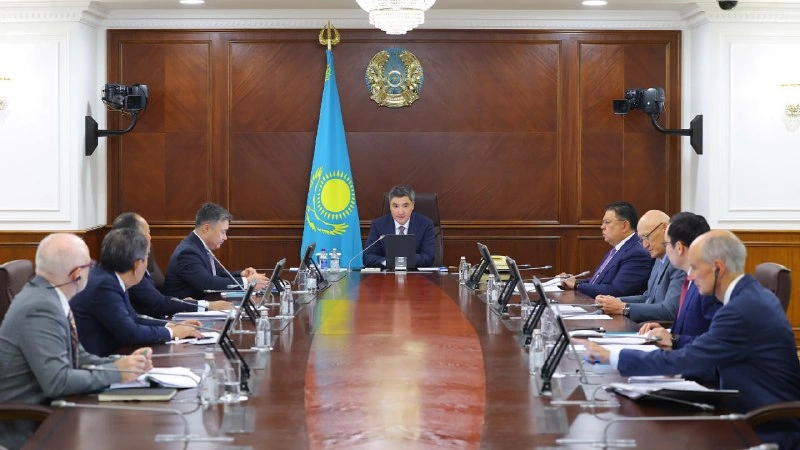
goods, Prime Minister Olzhas Bektenov said at a government
meeting.
According to Bektenov, the system will be developed on the basis
of the National Product Catalogue and integrated with data from the
State Revenue Committee, the Register of Domestic Producers and
other information systems. "Without reliable data, it is impossible
to assess the real share of domestic products and the effectiveness
of government support. The Ministry of Trade, together with
relevant state bodies, must complete the formation of a unified
digital product traceability system based on the National Product
Catalogue by the end of the year," Bektenov said.
The digital platform is expected to provide more accurate
information on the origin of goods, improve transparency in
assessing the share of locally produced products and help
government agencies better evaluate the impact of support measures
for domestic manufacturers.
The Prime Minister said that digital tools should become one of
the key elements in strengthening the position of Kazakh producers
on the domestic market.
He also emphasized the need to improve conditions for domestic
companies in retail networks, noting that some producers continue
to face barriers when accessing store shelves, including high
rental costs. "Domestic manufacturers of consumer goods often face
limited access to retail space, including due to high rental costs.
This restrains the expansion of Kazakh products on the domestic
market and reduces their competitiveness. I believe that owners of
retail chains should reconsider their attitude toward Kazakh-made
goods," Bektenov said.
He added that giving preference to imported goods at the expense
of domestic products is unacceptable.
The government instructed the Ministry of Trade, together with
state bodies, regional authorities and the Atameken National
Chamber of Entrepreneurs, to develop mechanisms to provide more
favorable rental conditions for domestic producers, including
companies in light industry and household chemicals.
Bektenov also called for stronger protection of Kazakh brands
from unfounded information campaigns. "There are cases of
deliberate information campaigns aimed at discrediting popular
Kazakh-made products, particularly food and confectionery goods.
This is done with one goal — to push out competitors and capture
the market," he said.
The Ministry of Culture and Information was instructed to
organize a unified information campaign to promote the national
“Kazakhstan-made” brand, increase awareness of domestic products
and protect producers from unjustified attacks.
In addition, the Prime Minister highlighted the importance of
developing sectors with export potential, including agriculture and
light industry. He instructed relevant authorities to ensure timely
implementation of the Comprehensive Plan for the Development of
Light Industry until 2030 and expand support for livestock projects
aimed at increasing meat production and strengthening Kazakhstan’s
position among major meat exporters.
Meanwhile, Kazakhstan's Vice Minister of Trade and Integration
Aset Nusupov told Trend that existing Kazakhstan's National Product
Catalogue (NPC) creates new opportunities for cross-border
interaction.
According to the vice minister, for trade digitalization, the
NPC has become a point of integration for various systems. In
particular, its interaction with electronic invoices, cash
registers, and the public procurement portal ensures seamless data
exchange between market participants. "No transaction remains in
the 'shadow'. I would like to emphasize that this regulatory
measure is not aimed at excessive control, but at creating a secure
and trusted environment for trade," Nusupov emphasized.