BAKU, Azerbaijan, August 1. Azerbaijan's
consistent foreign policy towards Central Asia in recent years is
entering a new qualitative stage.
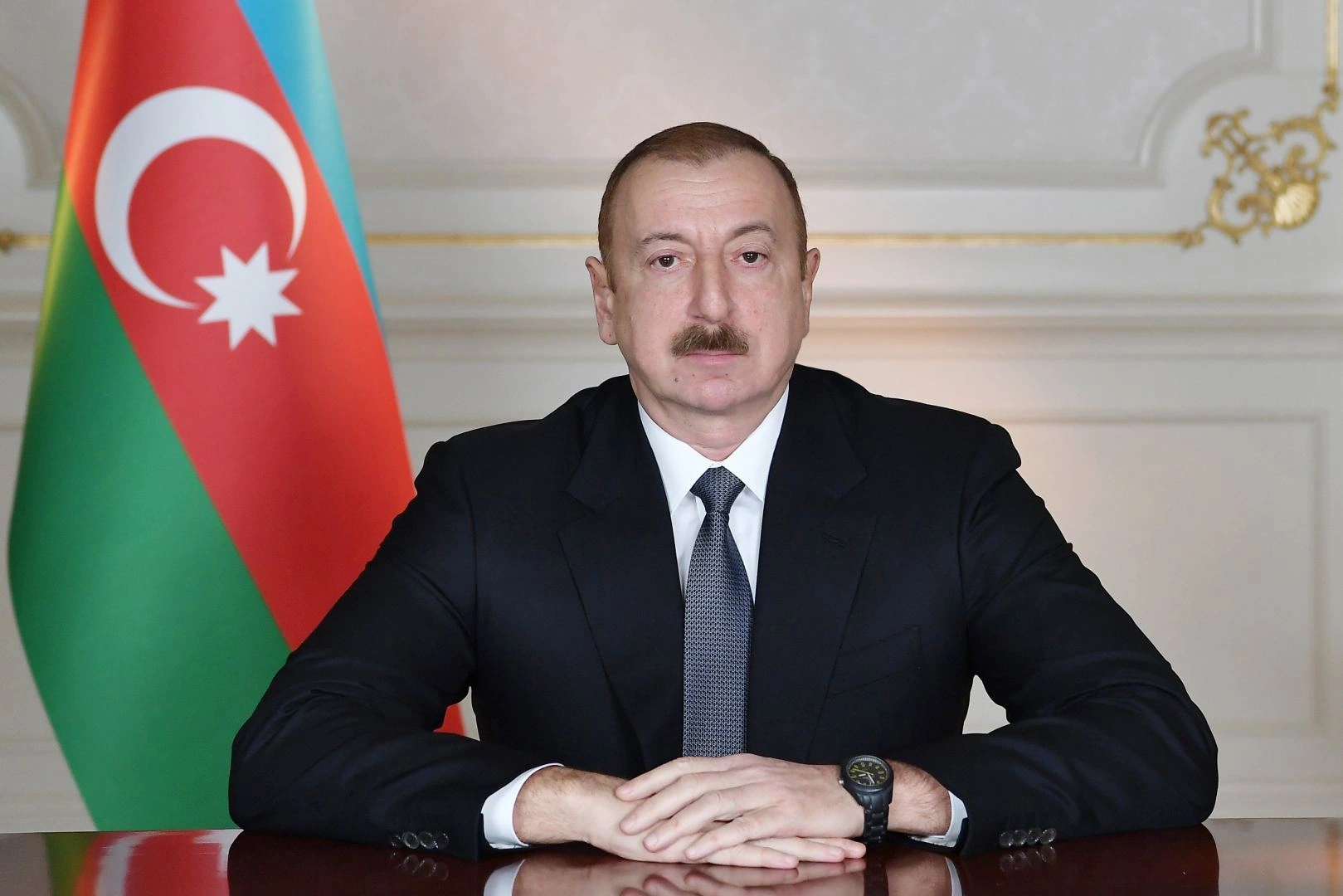
The high-level meetings held within the framework of President
of Azerbaijan Ilham Aliyev's state visit to Kyrgyzstan, the
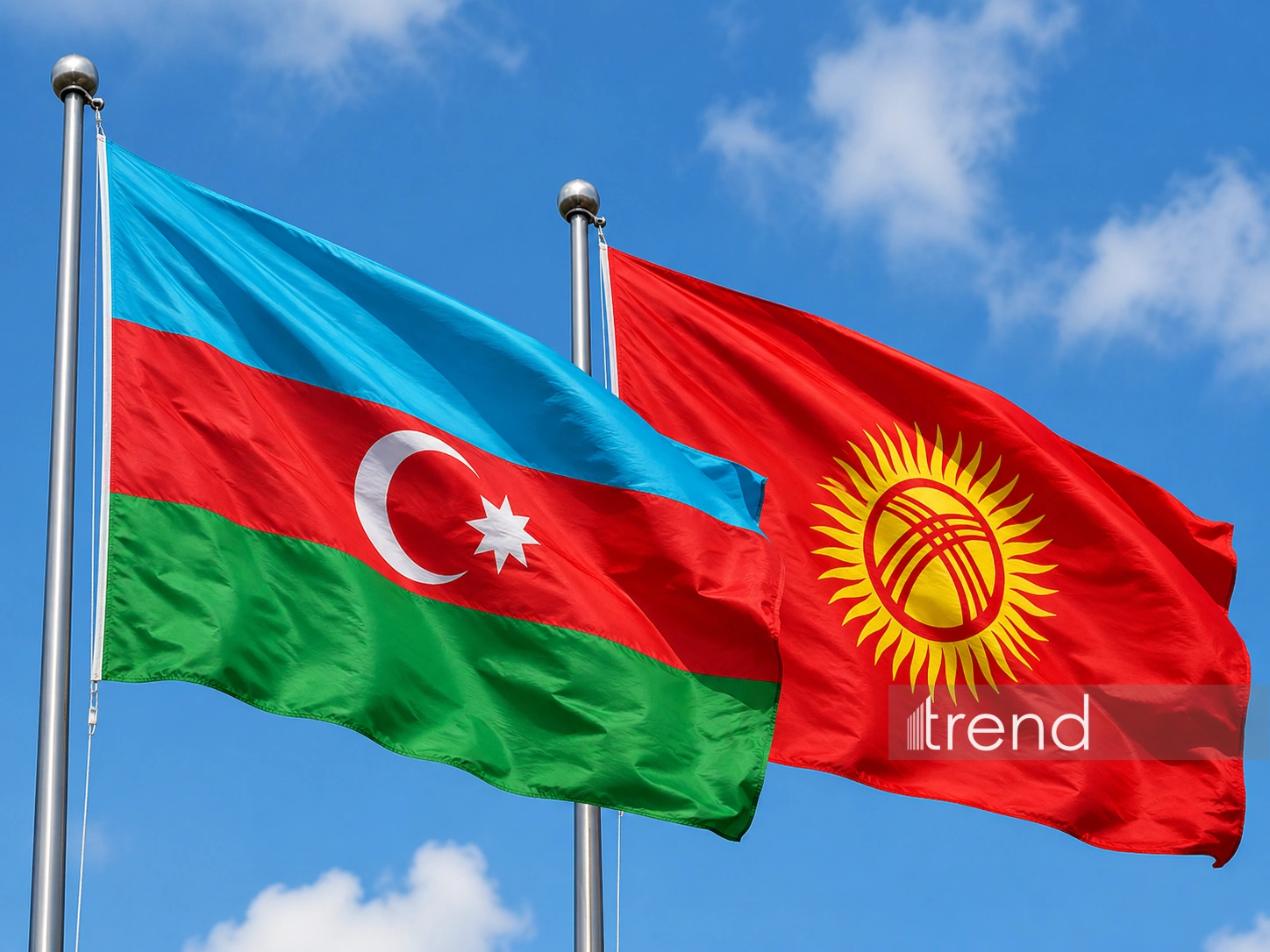
numerous documents signed, and in particular the "Treaty on Allied
Relations between Azerbaijan and the Kyrgyz Republic" demonstrate
that cooperation between the two countries has acquired a long-term
strategic character not only in the political, but also in the
security, economic, transport, energy, and humanitarian
spheres.
This visit can also be assessed as another successful example of
the reliable partnership model formed by Azerbaijan in Central
Asia.
Alliance document forms new legal and political basis of
relations
The alliance treaty signed between Azerbaijan and Kyrgyzstan is
considered the beginning of a qualitatively new stage in the
relations between the two states. Relations built on strategic
partnership until now have already risen to a higher level from a
legal perspective. The document strengthens the mutual trust,
political will, and intention of the parties for future cooperation
with a system of concrete obligations.
The main ideological line of the treaty is based on the
fundamental principles of international law. Respect for the
sovereignty of states, inviolability of territorial integrity,
non-interference in internal affairs, equality, and protection of
mutual interests constitute the main pillars of the document. These
principles are of particular importance for Azerbaijan because
official Baku has been a consistent defender of the principle of
sovereignty and territorial integrity in international relations
for many years. The fact that Kyrgyzstan also supports this
approach from the same position further strengthens political trust
between the two countries.
One of the noteworthy points is the confirmation by the parties
that they won't participate in any political or military blocs
directed against each other. This approach, in addition to showing
that relations are based on mutual interests, not against any third
party, also reveals the importance attached to the right of states
to make independent decisions.
Security cooperation acquires new content
One of the most important directions of alliance relations is
the expansion of mechanisms for interaction in the security field.
According to the agreement, if it is concluded that an armed threat
to either party is posed by a third state, Azerbaijan and
Kyrgyzstan will immediately hold consultations and coordinate their
activities to resolve the situation through political and
diplomatic means.
Unlike the classical military alliance model, this mechanism
provides for mutual support and political coordination within the
framework of the norms of international law. At the same time, the
document specifically emphasizes the interaction of both countries
within international organizations. This means further
strengthening the solidarity that Azerbaijan has formed with
partner countries on international platforms.
Modern geopolitical processes show that the concept of security
is no longer limited to classical military risks. Hybrid wars,
information manipulation, cyber threats, and transnational crime
require closer coordination between states. The new mechanisms of
cooperation envisaged in the field of security between Azerbaijan
and Kyrgyzstan respond precisely to these changing realities.
Common positions in foreign policy will be further
strengthened
President Ilham Aliyev's state visit to Kyrgyzstan once again
showed that Baku and Bishkek have similar views on many issues on
the international agenda. The Alliance Treaty envisages
transferring this rapprochement to an institutional level, holding
regular consultations in the field of foreign policy, and
strengthening mutual support in international and regional
organizations.
This cooperation model creates additional opportunities not only
for the development of bilateral relations, but also for the
promotion of joint initiatives on various international platforms,
including the Organization of Turkic States (OTS). Against the
backdrop of the acceleration of integration in the Turkic world in
recent years, the fact that Azerbaijan and Kyrgyzstan speak from a
single position also contributes significantly to the increase in
the political weight of the organization.
Defense and military-technical cooperation - important
pillar of strategic partnership
It's no coincidence that the document identifies military and
military-technical cooperation as a separate direction. In the
modern security environment, exchange of experience between armies,
professional training programs, cooperation in the defense
industry, and the application of new technologies play an important
role in strengthening the defense capabilities of states.
Azerbaijan has become one of the leading countries in the region
with the experience gained in the field of military construction in
recent years. In this regard, the expansion of mutual cooperation
opens up new opportunities for Kyrgyzstan. At the same time, such
cooperation serves to form a new model of partnership in the field
of security between the South Caucasus and Central Asia.
Parliamentary diplomacy to complement political
dialogue
The development of relations between Azerbaijan and Kyrgyzstan
not only at the level of heads of state, but also through
legislative bodies is one of the main mechanisms ensuring the
sustainability of the alliance. Expanding inter-parliamentary
cooperation, intensifying mutual visits, increasing the exchange of
experience in the field of legislation, and strengthening the
activities of friendship groups will further institutionalize
political dialogue.
This direction also serves to strengthen ties between peoples,
develop public diplomacy, and form a long-term climate of trust.
The deepening of inter-state relations not only at the level of
governments, but also between parliaments and societies is one of
the main factors strengthening the sustainable nature of the
Azerbaijani-Kyrgyz partnership.
Economic cooperation enters new stage of
development
The agreements reached within the framework of President Ilham
Aliyev's state visit to Kyrgyzstan showed that the future
development of Azerbaijani-Kyrgyz relations is not limited to
political dialogue alone. Strengthening the economic foundations of
alliance relations, promoting new investment projects, and
harmonizing mutual economic interests have become one of the main
priorities of the parties. The signed agreement serves this very
purpose and covers a wide range of economic cooperation.
The document identifies energy, renewable energy sources,
transport and logistics, digital development, high and satellite
technologies, agriculture, mining industry, tourism, and other
areas as priority areas of mutual cooperation. This approach shows
that the parties, removing relations from the traditional political
framework, assess economic integration as one of the main pillars
of long-term strategic cooperation.
The economic reforms implemented by Azerbaijan in recent years,
a favorable investment climate, and modern infrastructure
opportunities create new cooperation prospects for Kyrgyzstan. At
the same time, the geographical position and economic potential of
Kyrgyzstan in Central Asia provide additional incentives for
further expansion of relations between the business circles of the
two countries.
Green energy direction gains strategic
importance
The energy sector has a special place in the alliance treaty.
The separate mention of cooperation in renewable energy sources, in
particular, shows that the parties correctly assess the new
opportunities created by the global energy transformation.
Azerbaijan has already made the green energy agenda one of the
main directions of state policy. The declaration of Karabakh and
East Zangezur as green energy zones and the implementation of large
international projects in solar and wind energy have significantly
strengthened the country's position in this area. Kyrgyzstan, on
the other hand, has rich hydropower resources. The different energy
advantages of both countries form a favorable basis for mutual
technology exchange, investment projects, and the development of
new energy solutions.
At a time when energy security has gained strategic importance
in international relations, expanding cooperation in this direction
meets the interests of both countries from both economic and
political perspectives.
Middle Corridor and logistics cooperation create new
opportunities
One of the most important directions of Azerbaijan-Kyrgyz
relations is the deepening of cooperation in the field of transport
and logistics. The alliance document further strengthens the legal
and institutional foundations for the development of international
transport corridors, increasing transit opportunities and
coordinating logistics infrastructure.
Azerbaijan has become one of the main transport hubs connecting
the East and the West in recent years. The Baku International Sea
Trade Port, the Baku-Tbilisi-Kars railway, modern highways, and
logistics centers have significantly expanded the country's transit
capabilities. Kyrgyzstan's location in Central Asia allows these
routes to cover a wider geography.
In this context, cooperation not only serves to increase cargo
transportation between the two states. At the same time, it makes a
significant contribution to the deepening of economic integration
between the South Caucasus and Central Asia, increasing the
competitiveness of the Middle Corridor and expanding the access of
the countries of the region to global markets.
Digital development and space technologies - new
directions of cooperation
One of the striking aspects of the alliance is the inclusion of
high technologies and the satellite industry among the priority
areas of cooperation. This approach shows that Baku and Bishkek
intend to jointly operate in innovative areas that shape the
economy of the future.
Azerbaijan has already gained significant experience in the
field of satellite services, digital public administration, and
information technologies. Sharing these opportunities with
Kyrgyzstan, implementing joint projects, and developing innovation
ecosystems can serve to increase the competitiveness of both
countries.
In addition, cooperation on cybersecurity, digital services, and
the application of modern technologies to various sectors of the
economy is also of particular importance in terms of increasing the
efficiency of public administration.
Humanitarian relations strengthen social basis of
strategic partnership
One of the main factors ensuring the stability of relations
between Azerbaijan and Kyrgyzstan is common historical roots,
language, culture, and spiritual values. The closeness between the
two peoples, who are an integral part of the Turkic world, creates
a reliable social basis for the development of interstate
relations.
The alliance treaty envisages expanding cooperation in the
fields of education, science, healthcare, culture, sports,
literature, art, and the protection of cultural heritage. Student
and teacher exchange, joint scientific programs, joint cultural
projects, and academic cooperation will serve to further strengthen
relations between future generations.
The development of interregional cooperation is also one of the
important directions of the document. Establishing direct ties
between different cities and regions, expanding business and
tourism ties, and implementing humanitarian projects will create
conditions for further deepening relations at the level of
societies.
Azerbaijan's Central Asian strategy expanding
consistently
The alliance treaty signed with Kyrgyzstan constitutes the next
important stage in Azerbaijan's Central Asian policy. This document
is the third alliance document signed by Azerbaijan with the states
of the region.
On May 24, 2005, an "Agreement on Strategic Partnership and
Allied Relations" was signed between Azerbaijan and Kazakhstan.
Later, on August 24, 2022, a Declaration on Strengthening Strategic
Relations and Deepening Allied Interaction was adopted. On August
23, 2024, Azerbaijan and Uzbekistan signed an agreement on allied
relations.
At the same time, the signing of the Declaration on Strategic
Partnership with Turkmenistan on August 8, 2017, and the
Declaration on Strategic Partnership with Tajikistan on May 23,
2024, confirms the systematic and consistent development of
Azerbaijan's relations with the countries of Central Asia.
Thus, Azerbaijan is already forming a model of regional
partnership that is broader than bilateral relations with
individual states in Central Asia. The main goal of this policy is
to strengthen political trust, expand economic integration,
strengthen transport links, and enrich the practical content of
cooperation in the Turkic world.
From strategic partnership to alliance against the
backdrop of new geopolitical realities
President Ilham Aliyev's state visit to Kyrgyzstan has shown
that Azerbaijan's Central Asian policy has already become a
strategic line that produces concrete results, is reinforced by
legal mechanisms, and is designed for a long-term perspective. The
formalization of alliance relations doesn't only mean that
relations between Baku and Bishkek have reached a new stage. This
step is also an important element of the new cooperation
architecture being formed between the South Caucasus and Central
Asia.
This document, which combines security, foreign policy, defense,
economy, energy, logistics, high technologies, humanitarian
relations, and interregional cooperation in a single strategic
framework, brings long-term stability to the relations between the
two countries. At the same time, the strategic partnership and
alliance model established by Azerbaijan with Kazakhstan,
Uzbekistan, Turkmenistan, and Tajikistan confirms that relations
with Central Asia have already become a systematic state
policy.
As a result of the multifaceted and pragmatic foreign policy
implemented by President Ilham Aliyev, Azerbaijan is further
strengthening its position as a reliable partner, an enterprising
state, and a leading participant in interregional cooperation in
Central Asia. The results of the state visit to Kyrgyzstan show
that this cooperation model will significantly contribute to the
implementation of new economic projects, increased investments,
expansion of the opportunities of the Middle Corridor, acceleration
of integration in the Turkic world, and further deepening of the
strategic partnership between the South Caucasus and Central Asia
in the coming years.