BAKU, Azerbaijan, July 30. The global trade map
is rapidly changing. In recent years, deepening geopolitical
rivalries, regional conflicts, sanctions, security challenges in
the Red Sea, the Russia-Ukraine war and rising tensions in the
Middle East have once again highlighted the resilience of global
supply chains.
As the reliability of traditional routes that have carried major
cargo flows for decades has come under pressure, governments and
international businesses have begun searching for safer, shorter
and more predictable alternatives. Against this backdrop, the
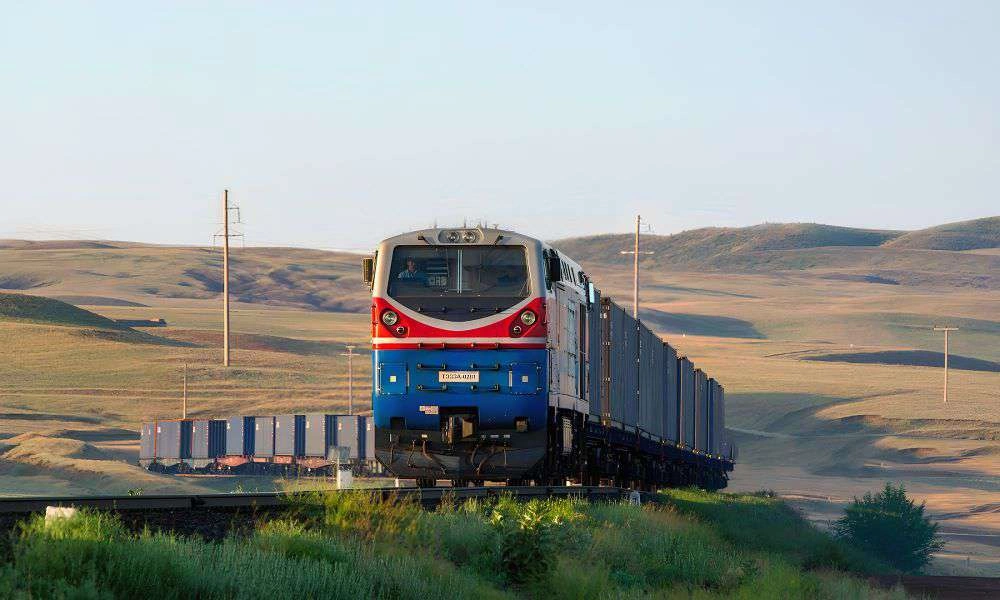
Middle Corridor (Trans-Caspian International Transport Route),
linking China, Central Asia, the Caspian Sea, Azerbaijan, Georgia,
Türkiye and Europe, is becoming more than just an alternative route
- it is emerging as one of the key elements of the global
geoeconomic system. Azerbaijan stands at the center of this
transformation.
Speaking at the opening ceremony of the 2026 Annual Meetings of
the Islamic Development Bank Group in Baku, President of the
Republic Azerbaijan Ilham Aliyev highlighted Azerbaijan’s growing
role as an international transport and logistics hub.
“So today East-West and North-South corridors crossing
Azerbaijan provide very important supply routes for growing number
of countries,” President Ilham Aliyev said.
President Ilham Aliyev emphasized that efforts to further
strengthen Azerbaijan’s position as a transport and logistics hub
must continue.
“Our plan is to double the volume of cargo going through
Azerbaijan. Today it's about 14–15 million tons. We look to
doubling this figure. Of course, not everything will depend on us,
because it will also depend on the geopolitical situation and also
the situation in the neighborhood, but these are our plans,”
President Ilham Aliyev said.
Assistant to the President of Azerbaijan Hikmet Hajiyev also
believes that the Middle Corridor has already moved beyond the
traditional understanding of a transport route. According to him,
the route is transforming into a strategic geoeconomic system
connecting Europe, the South Caucasus and Central Asia, reflecting
fundamental changes in Eurasia’s transport architecture.
Hajiyev noted that Azerbaijan’s investments in railway,
maritime, aviation and digital infrastructure have enabled the
country to become one of Eurasia’s key connectivity hubs.
Azerbaijan strengthens its position on the geoeconomic
map
In recent years, Azerbaijan has pursued a consistent policy
aimed at transforming itself from a transit country into a
logistics and transport hub with broader functions. Billions of
dollars invested in railways, highways, port infrastructure,
logistics centers and digital solutions have already begun
delivering tangible results.
According to the State Statistics Committee of Azerbaijan, in
January-May this year, international transport corridors passing
through Azerbaijan carried 6.1597 million tons of cargo by rail,
4.731 million tons by road and 2.6525 million tons by sea.
Thus, rail transport accounted for 45.5% of total cargo volumes,
road transport for 34.9%, and maritime transport for 19.6%.
Compared with the same period last year, railway cargo
transportation increased by 3.3%, while road transportation grew by
5.9%, demonstrating rising demand for Azerbaijan’s transit
capabilities.
World searches for new logistics routes
Amid growing risks facing traditional routes, the European Union
is also paying particular attention to the Middle Corridor.
European Commissioner for Enlargement Marta Kos said that for many
years Europe had relied mainly on the northern route through Russia
and the southern route via the Suez Canal for trade with Asia.
However, current geopolitical realities have significantly
reduced the reliability of these routes. According to her, this is
precisely why the Middle Corridor passing through the South
Caucasus is becoming a strategic alternative for Europe’s trade,
energy and digital connectivity.
Kos noted that cargo volumes along the Middle Corridor have
already increased fourfold since 2022, while the European Union
aims to reduce delivery times along the route from 45 days to 15
days. Achieving this goal requires modernization of roads, railways
and ports, as well as simplification of border procedures.