BAKU, Azerbaijan, July 30. Kyrgyzstan will host
the Central Asia-Azerbaijan Summit from July 30 to August 1 in the
resort city of Cholpon-Ata on the shores of Lake Issyk-Kul. The
summit will provide another opportunity to discuss the further
development of Azerbaijan's relations with the countries of Central
Asia.
One of the fastest-growing areas of regional cooperation in
recent years has been the relationship between Azerbaijan and
Kyrgyzstan, which now spans trade, transport, energy, culture,
security, and political dialogue.
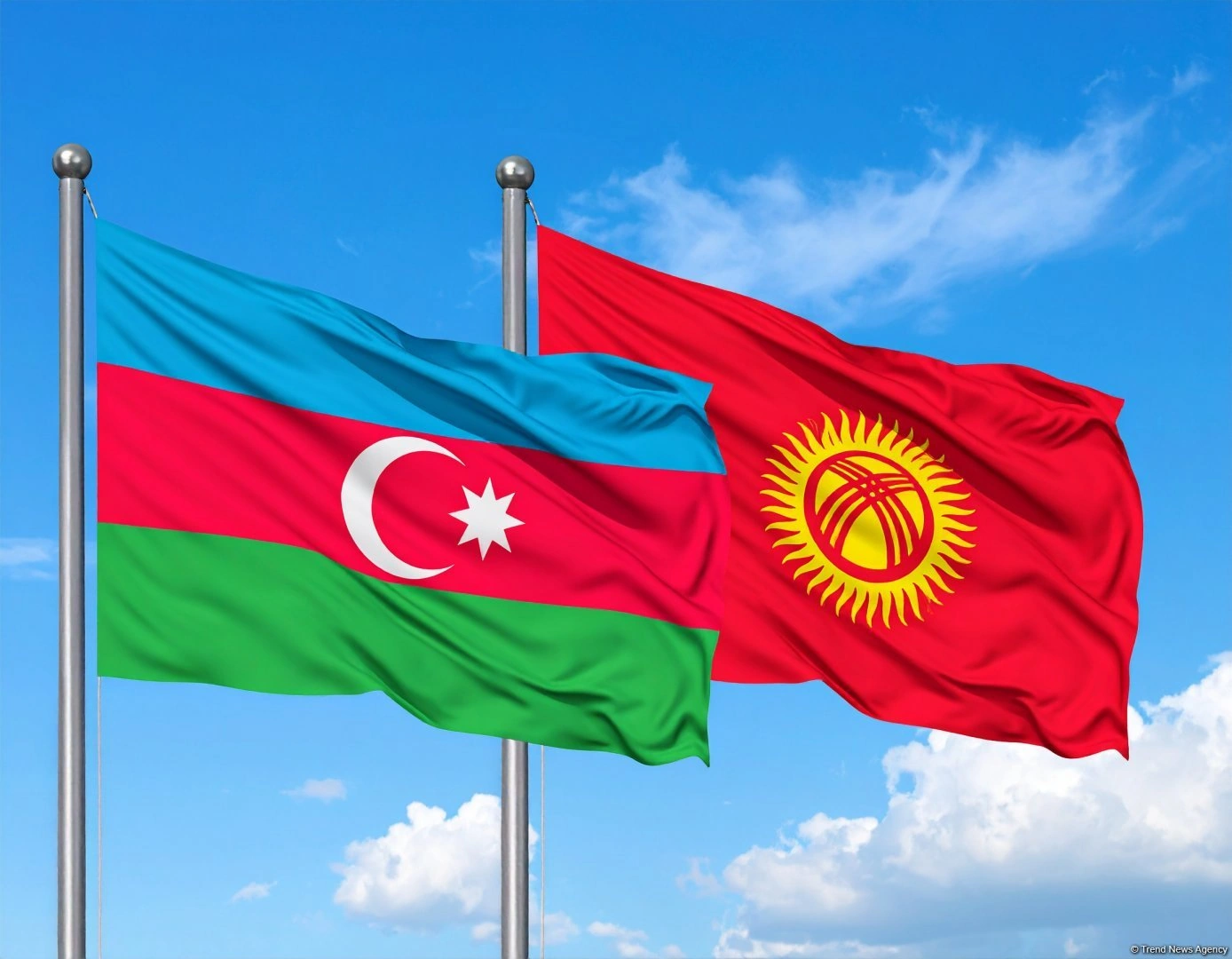
The summit comes amid a noticeable intensification of bilateral
contacts. Over the past two years, Baku and Bishkek have
significantly expanded political engagement, while economic
indicators point to accelerating cooperation, although overall
trade volumes remain relatively modest.
The most pronounced progress has been seen in bilateral trade.
According to Kyrgyzstan's National Statistical Committee, trade
turnover between the two countries reached $13.67 million from
January through May 2026, nearly tripling from $4.63 million
recorded during the same period a year earlier. This represents a
194.9% increase, or 294.9% of the level recorded from January
through May 2025.
The main driver of this growth was a sharp increase in imports
of Azerbaijani products into Kyrgyzstan. During the first five
months of 2026, imports reached $10.53 million, compared to
$988,900 a year earlier, increasing more than tenfold.
The pace of trade growth during the period reflects the
continued expansion of economic ties between the two countries.
Compared with Kyrgyzstan's overall foreign trade growth, bilateral
trade with Azerbaijan expanded at a considerably faster rate.
Economic cooperation is also extending beyond traditional trade.
One of the most notable developments in recent weeks was
Kyrgyzstan's appeal to Azerbaijan, as well as Russia, Kazakhstan,
Belarus, Uzbekistan and Turkmenistan, seeking assistance in
ensuring stable fuel supplies. Bishkek attributed the potential
risk of fuel shortages to its heavy dependence on imported
petroleum products, geopolitical tensions in the Middle East, risks
to international logistics, and rising global oil prices.
While the request does not imply any immediate change in supply
routes, it indicates that Azerbaijan is viewed by Kyrgyzstan as one
of its potential partners in strengthening energy security. At the
same time, Bishkek is pursuing efforts to diversify fuel imports,
expand international cooperation in the sector, and increase its
domestic oil refining capacity.
Political dialogue has also continued to deepen. At the end of
August, Bishkek will host a state visit by Chinese President Xi
Jinping, who is also expected to attend the Shanghai Cooperation
Organization Summit. Hosting several high-level international
events within a short period, including the Central Asia–Azerbaijan
Summit, reflects Kyrgyzstan's efforts to strengthen its diplomatic
engagement across multiple regional platforms.
Cooperation in the security sphere has likewise expanded. Under
the 2026 bilateral defense cooperation plan, a Kyrgyz military
delegation visited Azerbaijan, where the two sides discussed
internal and military security issues, exchanged experience, and
explored prospects for further cooperation between relevant
institutions. Such contacts point to the gradual broadening of the
bilateral agenda.
Humanitarian cooperation has also gained momentum. Earlier this
year, an official Kyrgyz delegation led by State Secretary Arslan
Koichiev and Minister of Culture, Information and Youth Policy
Mirbek Mambetaliev visited Azerbaijan. The centerpiece of the visit
was the premiere of the musical "Jamila", staged by the Toktogul
Satylganov Kyrgyz National Philharmonic as part of events marking
the 100th anniversary of renowned Kyrgyz writer Chingiz
Aitmatov.
During talks between Azerbaijan's Minister of Culture Adil
Karimli and the Kyrgyz delegation, both sides reaffirmed their
commitment to expanding cultural exchanges, highlighting the
importance of joint projects, cultural days and creative
initiatives. These contacts built on humanitarian cooperation that
received additional impetus following the unveiling of a monument
to Chingiz Aitmatov in Baku in 2024, attended by the presidents of
Azerbaijan and Kyrgyzstan.
Against this backdrop, the upcoming Central Asia–Azerbaijan
Summit may provide a platform for reviewing ongoing initiatives and
identifying new areas of cooperation. For Azerbaijan, the Central
Asian states remain important partners in the development of
transport corridors, trade and energy cooperation, while Kyrgyzstan
is interested in expanding economic ties, attracting investment and
diversifying its external economic partnerships.
Looking ahead, bilateral relations could develop along several
trajectories. One scenario envisages maintaining the current
momentum, with expanding trade and broader economic cooperation
remaining the principal drivers. A second scenario involves deeper
cooperation in the energy sector, including fuel supplies and the
implementation of joint initiatives. A third possibility is the
expansion of transport and logistics cooperation amid the continued
development of international transit routes linking the South
Caucasus and Central Asia.
Another potential direction is the further expansion of
humanitarian and educational exchanges, as well as cooperation in
the security sphere through greater institutional dialogue and the
sharing of professional experience. Which of these trajectories
ultimately materializes will depend on the outcomes of the summit,
regional economic conditions, and the broader geopolitical
environment.