BAKU, Azerbaijan, July 22. The IMF has lowered
its economic growth forecast for Türkiye in 2026 while slightly
raising its outlook for 2027.
This was reflected in the International Monetary Fund's (IMF)
July 2026 update of the World Economic Outlook, titled Global
Economy in Crosscurrents of War and Technology.
According to the report, Türkiye's real GDP is projected to grow
by 2.9% in 2026 and 3.6% in 2027. Compared with the IMF's April
forecast, the outlook for 2026 was revised down by 0.5 percentage
points, while the 2027 projection was increased by 0.1 percentage
points.
The IMF noted that Türkiye's economy expanded by 3.3% in 2024
and 3.6% in 2025, indicating that growth is expected to moderate in
2026 before returning to its 2025 pace the following year.
More broadly, the IMF projects growth in emerging market and
developing economies to slow to 3.8% in 2026 before recovering to
4.5% in 2027. The report says country-specific outlooks continue to
reflect differences in commodity exposure, financial conditions,
tourism revenues, remittance flows and participation in global
technology value chains.
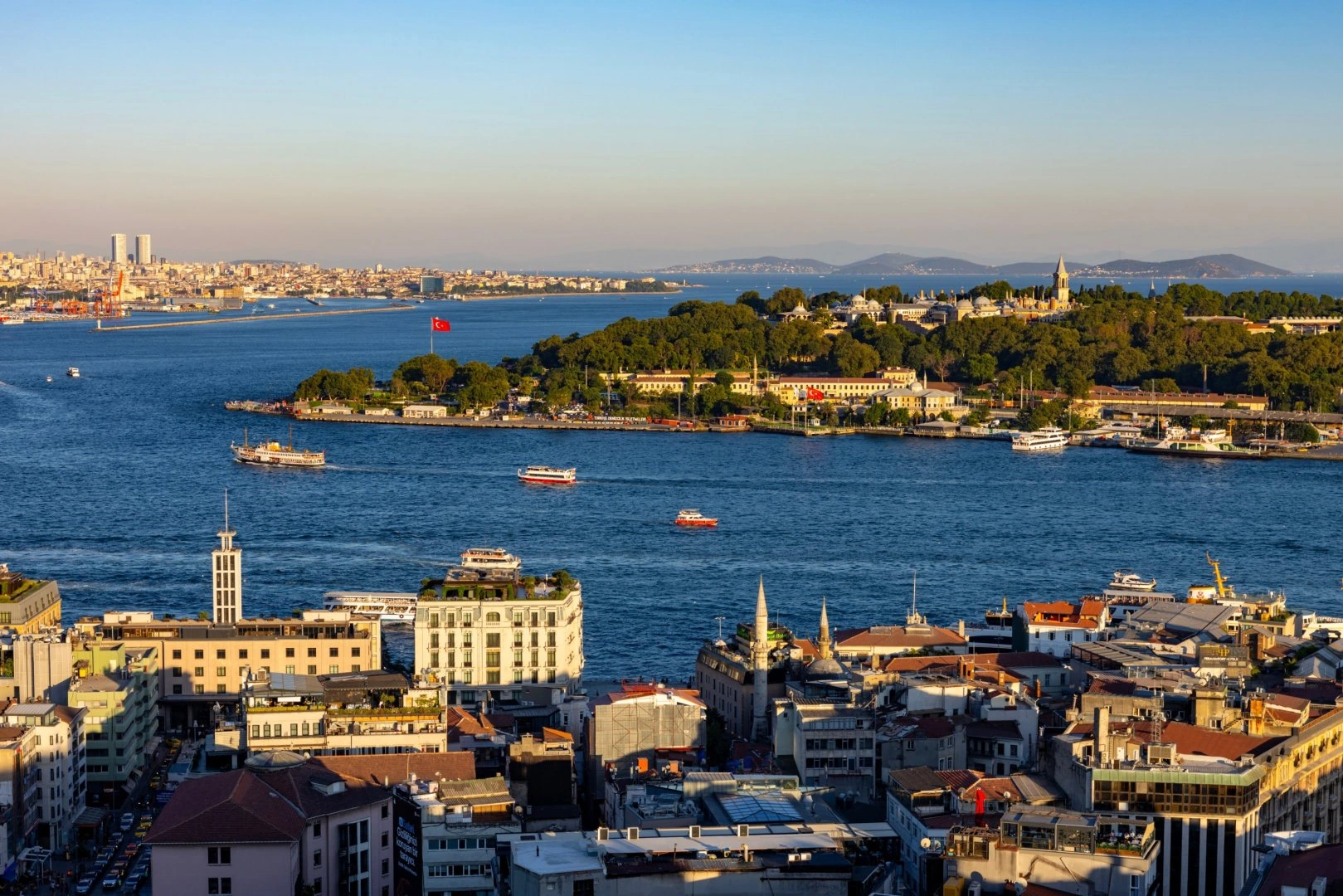
Meanwhile, Türkiye remains one of the largest and most
diversified economies in the region, serving as a major
manufacturing, export and logistics hub linking Europe, Asia and
the Middle East. The country's industrial base and strategic
location have made transport connectivity an increasingly important
pillar of economic growth, particularly as companies seek to
diversify supply chains and trade routes.
Against this backdrop, the Middle Corridor - also known as the
Trans-Caspian International Transport Route (TITR) - continues to
gain strategic importance. Stretching from China through Central
Asia, the Caspian Sea, the South Caucasus and Türkiye to Europe,
the corridor has become one of the main alternatives for East-West
freight flows.
That assessment is broadly consistent with the view of the
International Transport Forum (ITF). In an exclusive interview with
Trend, the organization said the Middle Corridor will
retain its strategic importance even if improving geopolitical
conditions make routes through Iran more attractive.
"The Middle Corridor would nevertheless retain strategic value
as a diversified Asia-Europe route that avoids both Russia and
Iran. It will continue to benefit from strong political and
investment support for Eurasian connectivity," the organization
said.