BAKU, Azerbaijan, July 20. Passenger
Transportation JSC, Kazakhstan’s national passenger railway
operator and a subsidiary of Kazakhstan Temir Zholy (KTZ), has
received international certification for its integrated management
system under four ISO standards.
This is reported by the company's press service.
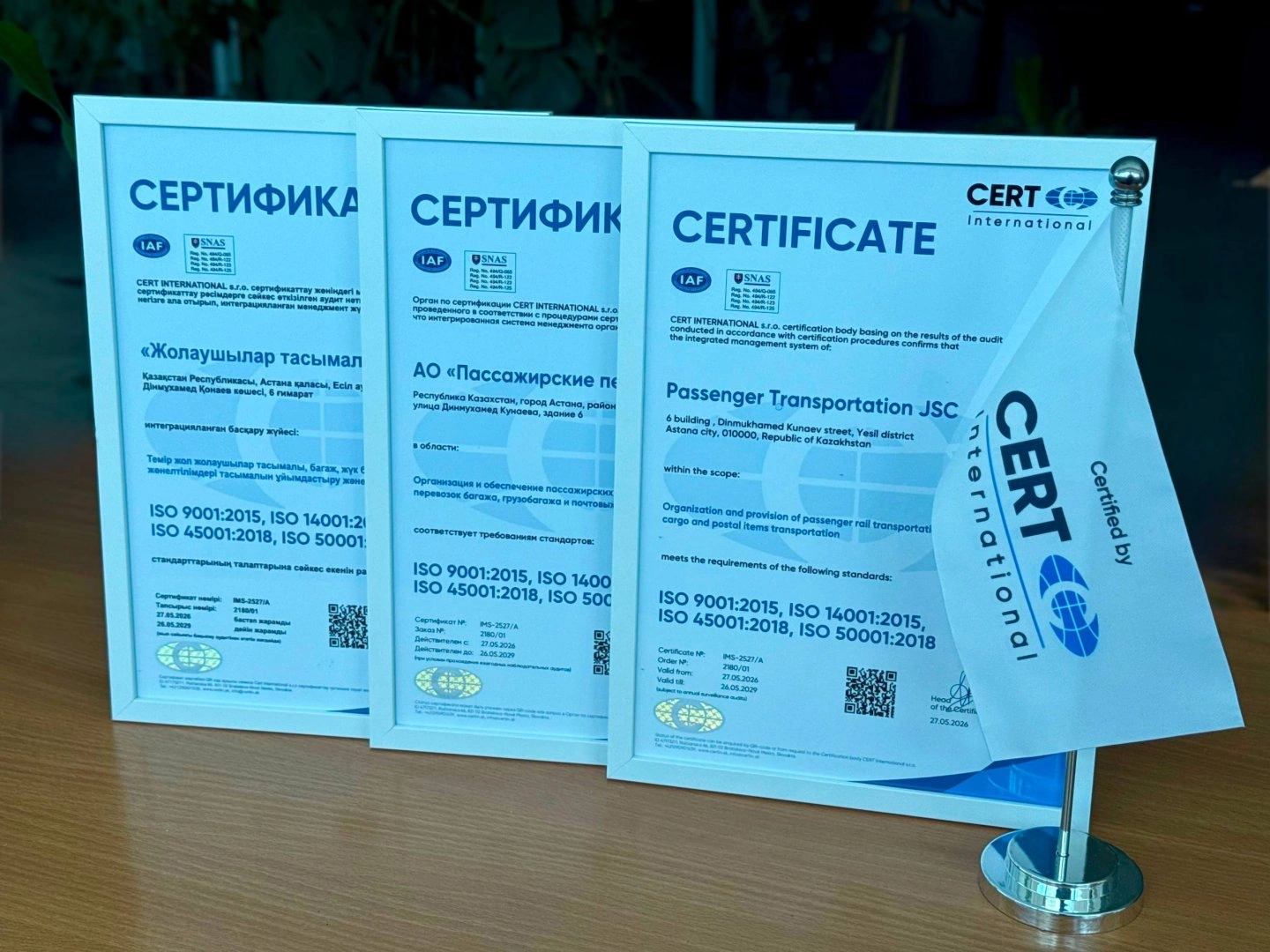
The certification was issued by international certification body
CERT International s.r.o. following a multi-stage audit of the
company’s management processes.
Passenger Transportation JSC was certified under ISO 9001:2015
for quality management, ISO 14001:2015 for environmental
management, ISO 45001:2018 for occupational health and safety
management, and ISO 50001:2018 for energy management.
According to the company, preparations for the certification
process were carried out throughout 2025 and included staff
training, revision of internal documentation and standardization of
operational procedures.
Before the external audit, the company conducted internal
assessments across its regional divisions. The final certification
audit was held in May 2026, when CERT International s.r.o.
specialists reviewed documentation and operational processes across
16 structural divisions and held discussions with company
employees.
"Obtaining international certifications confirms the company's
compliance with best global management practices. Adherence to ISO
9001 standards helps streamline business processes, minimize
disruptions, and consistently improve the quality of services
provided. ISO 14001 helps reduce environmental impacts and enhance
environmental management effectiveness. ISO 45001 aims to ensure
safe working conditions, reduce industrial risks, and prevent
injuries. ISO 50001, meanwhile, promotes the rational use of fuel
and energy resources, improves energy efficiency, and reduces
non-production costs," the company notes.
The ISO certification covers areas related to service quality
management, environmental practices, workplace safety and energy
efficiency.
The company said it will continue monitoring compliance with the
standards through regular internal procedures and annual
supervisory audits conducted by international inspectors.