BAKU, Azerbaijan, July 1. President of
Kyrgyzstan Sadyr Japarov instructed authorities to take measures
against suppliers after being informed that part of the specialized
equipment delivered to Karakol failed to meet technical
requirements.
This was reported by the press service of the President of
Kyrgyzstan.
"During the inspection, the President was informed that part of
the delivered equipment, including garbage trucks, water trucks,
and tow trucks, did not meet the required technical
specifications," the statement said.
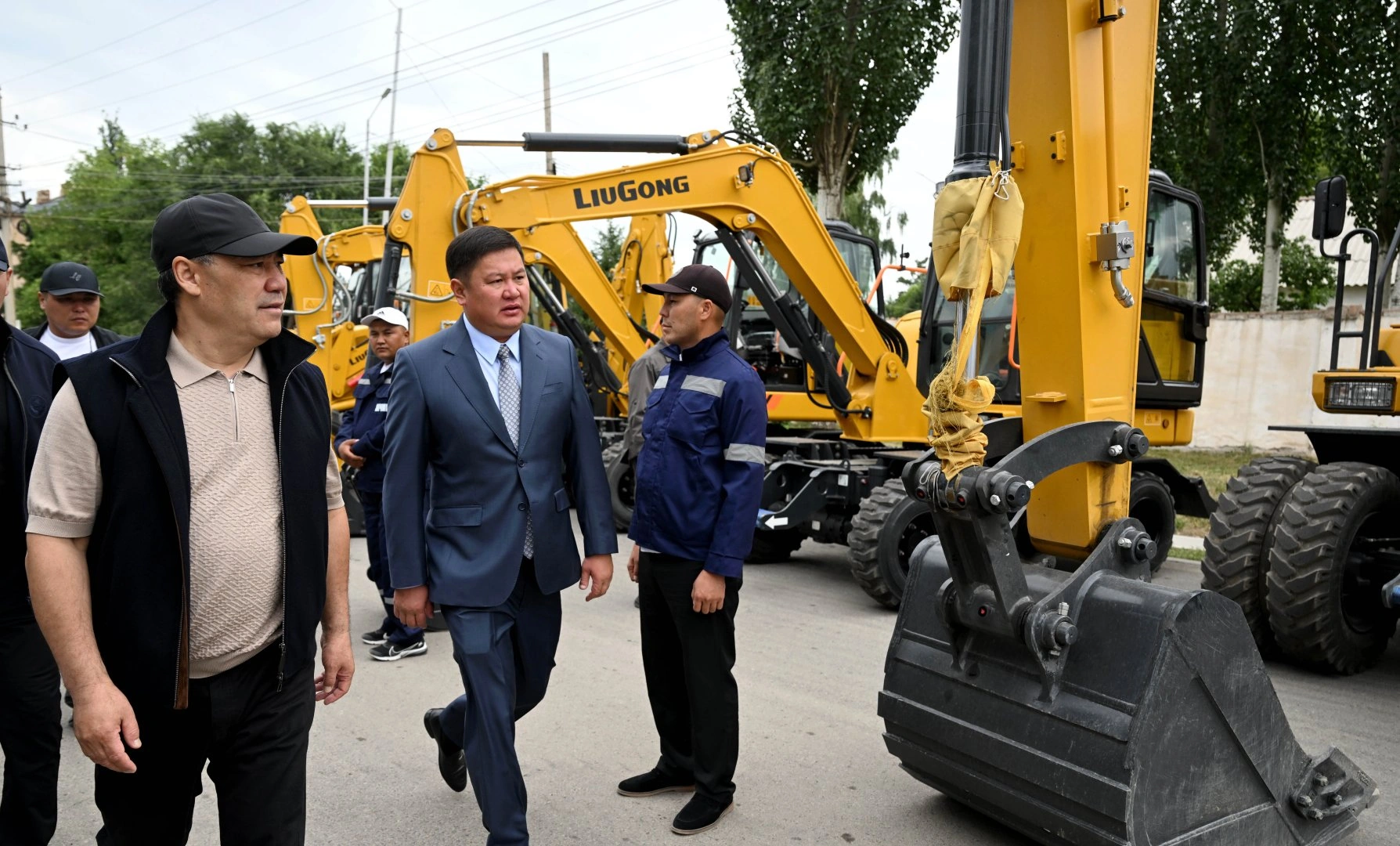
The issue was identified during Japarov's inspection of
specialized machinery intended for the development of Karakol's
road, construction, and municipal infrastructure as part of his
working visit to the Issyk-Kul region.
According to the presidential press service, inspections
revealed several manufacturing shortcomings, including evidence of
secondary repainting, the use of components with signs of
non-factory welding, and other technical defects.
The equipment presented to the President included truck cranes,
front-end loaders, road rollers, wheeled excavators, an asphalt
paver, a motor grader, backhoe loaders, garbage trucks, water
trucks, loader cranes of various lifting capacities, concrete mixer
trucks, vacuum trucks, dump trucks, street-cleaning vehicles, and
tow trucks.
The machinery is intended to be used for the construction and
rehabilitation of roads, the development of infrastructure
facilities, municipal services, urban improvement projects, as well
as special operations and emergency response tasks.
Officials noted that the introduction of modern specialized
equipment is expected to improve the quality and efficiency of
construction, road maintenance, and municipal services, expand the
operational capabilities of municipal authorities, and ensure the
timely implementation of infrastructure projects.
Following the inspection, Japarov instructed the relevant
authorities to take the necessary measures with regard to
suppliers, ensure that all future deliveries fully comply with
approved technical requirements and are manufactured under factory
conditions, and strengthen quality control over procured
equipment.
Meanwhile, the President's instructions are expected to lead to
stricter oversight of public procurement and tighter quality
control over equipment supplied for state-funded infrastructure
projects in Kyrgyzstan.
The move could result in additional inspections of future
deliveries, greater accountability for suppliers that fail to meet
technical standards, and more rigorous acceptance procedures before
equipment is put into operation. In the longer term, stronger
procurement controls are expected to improve the reliability of
municipal infrastructure projects and reduce maintenance costs
associated with substandard equipment.