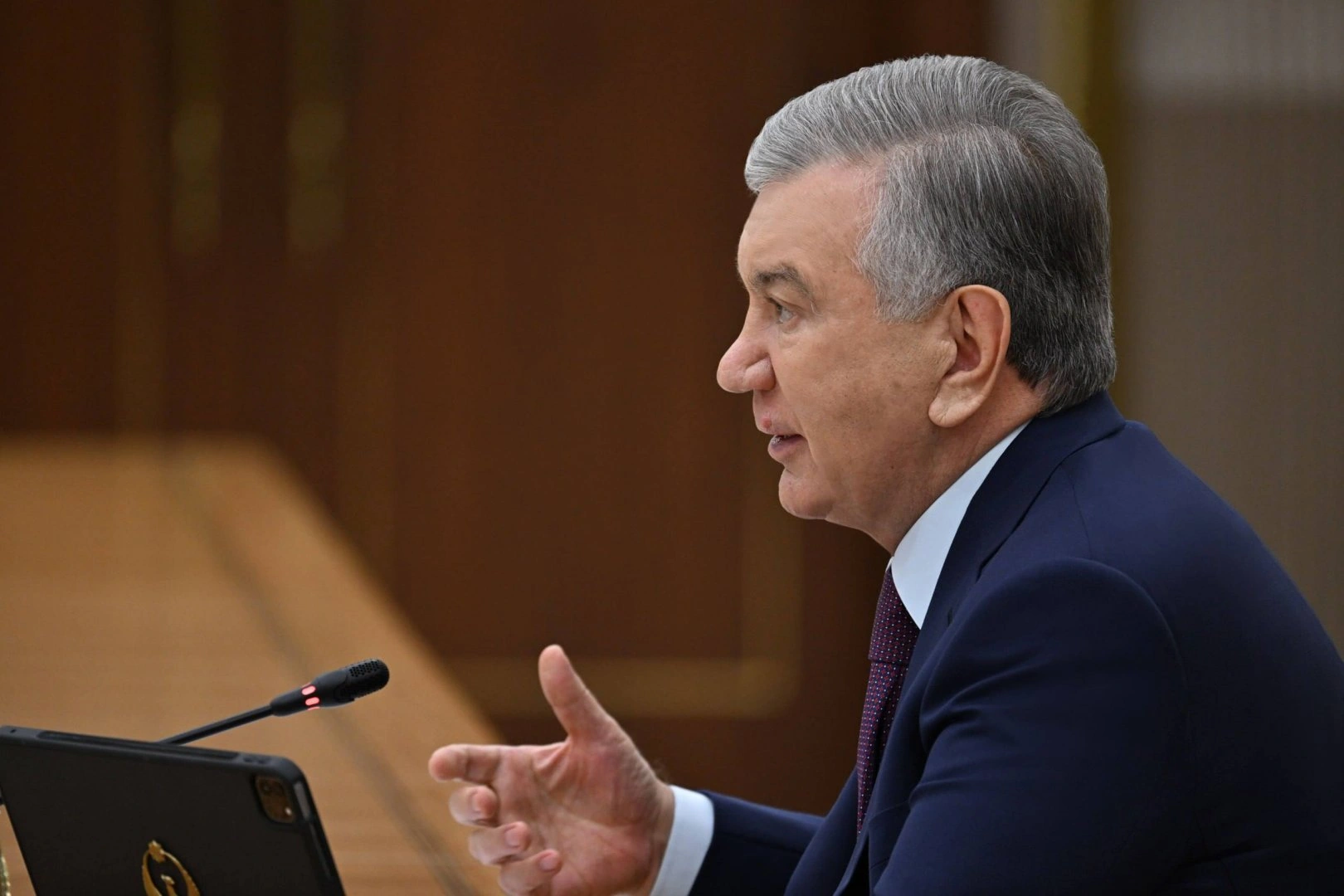
BAKU, Azerbaijan, June 27. President Shavkat
Mirziyoyev reviewed a new digital platform designed to curb
Uzbekistan’s shadow economy and strengthen prosecutorial oversight
through artificial intelligence and real-time data analysis.
This was reflected in the statement by the press service of the
Uzbek president.
The initiative comes as Uzbekistan intensifies efforts to reduce
unregistered economic activity, which authorities say continues to
undermine budget revenues, fair competition, and social protections
despite significant progress in recent years.
According to the press service, the share of the non-observed
economy has declined from 35% to 23% over the past two years.
During the same period, authorities collected an additional 38
trillion Uzbek soms ($3.1 billion) in budget revenues, while the
number of officially employed citizens surpassed 8.5 million and
average reported wages approached 6.5 million soms (about
$540).
However, the shadow economy remains substantial. In the first
quarter of 2026 alone, its estimated volume reached 81.1 trillion
soms (approximately $6.7 billion) in agriculture, 24.5 trillion
soms (about $2 billion) in trade and services, 23.9 trillion soms
(approximately $1.9 billion) in construction, and 6.7 trillion soms
(about $577 million) in industry.
To address these challenges, the General Prosecutor’s Office has
developed the pilot version of the “Shadow Economy Map” platform.
The system integrates data from 16 government agencies and analyzes
more than 100 risk indicators to identify illegal economic activity
and estimate potential budget losses across sectors and
regions.
The platform covers 22 major sectors of the economy, 85 economic
activities, all 14 regions, and 208 districts and cities. Using
real-time analytics, it automatically classifies sectors and
territories into green, yellow, and red risk categories and detects
violations such as unlicensed business operations, concealed
turnover, undeclared employment, and underreported profits.
Authorities plan to use the platform to improve coordination
among agencies responsible for combating the shadow economy while
reducing the role of human discretion in oversight and
enforcement.
Uzbekistan aims to cut the size of its shadow economy by half by
2030, increase the number of formally employed citizens to 14
million, and raise the share of cashless payments to 75%.
During the presentation, Mirziyoyev emphasized the importance of
technological solutions in achieving these goals.
“When reducing the shadow economy, primary attention must be
given to digitalization, strengthening data exchange, minimizing
the human factor, and organizing targeted oversight,” he said.
The president instructed officials to integrate more than 70
information systems into the platform by Oct. 1, expand its
coverage to all regions and sectors, and fully launch the system
next year.
He also called for stronger prosecutorial oversight to ensure
fair competition among businesses and increase the accountability
of public officials responsible for reducing the scale of the
shadow economy.