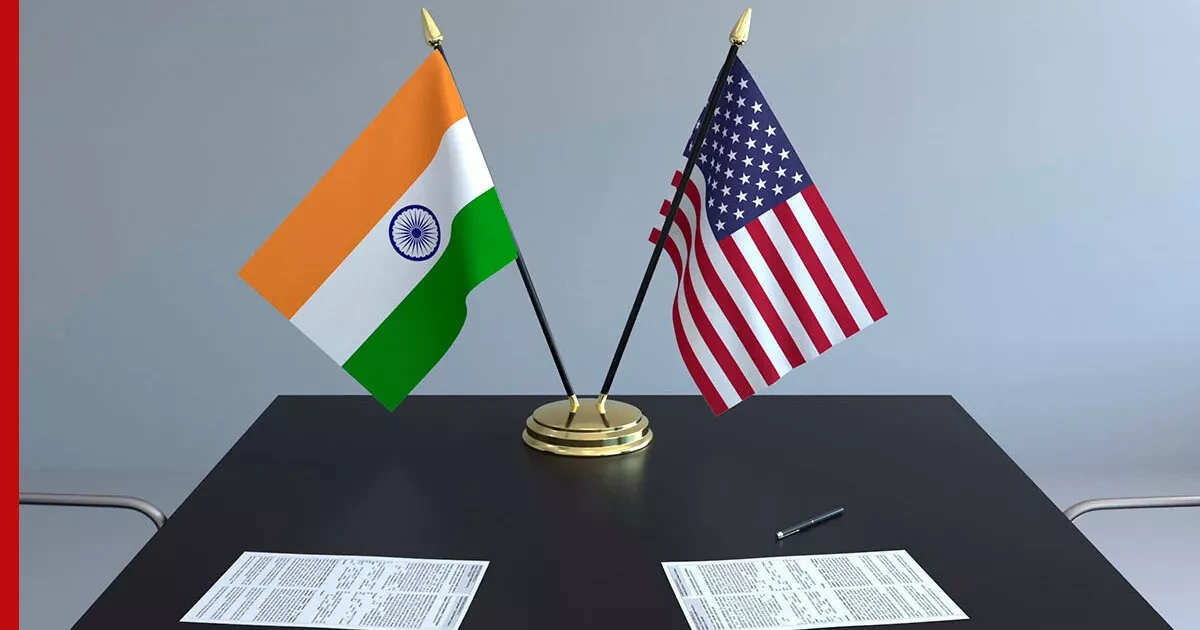
India and the United States have reached a preliminary agreement on the terms of an interim trade deal that will serve as a stepping stone toward a comprehensive bilateral trade pact, with the agreement expected to be signed within the next two weeks.
New Delhi stated that both sides carried out a “comprehensive review” of key areas, including “enhanced market access, digital trade, supply chain resilience, reduction of non-tariff barriers, and expanded cooperation in strategic sectors,” Caliber.Az reports, citing The Indian Express.
The US delegation was headed by United States Trade Representative Jamieson Greer. The discussions took place just weeks before Washington is expected to unveil a new tariff framework under Section 301 of the US Trade Act, replacing reciprocal tariffs that were ruled unlawful by the US Supreme Court earlier this year.
According to an industry source, a seven-member US congressional delegation currently visiting Maharashtra has also begun assessing opportunities for technology exports to India. The source added that the two countries have reached an in-principle understanding on the trade deal and are aiming to sign it within the next two weeks.
India’s Ministry of Commerce and Industry said both sides were optimistic that the negotiations would further strengthen economic relations and reinforce the India-US Comprehensive Global Strategic Partnership.
“Ambassador Greer held multiple rounds of discussions with the Union Minister of Commerce and Industry, Piyush Goyal. The two leaders conducted a comprehensive review of core bilateral trade agreement (BTA) elements, including enhanced market access, digital trade, supply chain resilience, reduction of non-tariff barriers, and expanded cooperation in strategic sectors,” the ministry said.
The ministry noted that the talks centred on finalising an interim accord as a stepping stone toward a broader BTA, with both countries reaffirming their commitment to reaching an agreement that is balanced and commercially meaningful.
During the visit, Greer also met with Finance Minister Nirmala Sitharaman. India's Finance Ministry said the discussions focused on boosting bilateral trade and economic cooperation, while exploring new avenues for growth and deeper commercial engagement.
Speaking separately, Greer highlighted India's technological ambitions.
“They want to move forward in AI. They want to cooperate and collaborate with the United States on the technologies of the future and trade of the future. And that’s some of the exciting opportunities that we’ll have between the United States and India,” he said.
Greer also praised the relationship between US President Donald Trump and Indian Prime Minister Narendra Modi.
“Just last week, they met at the G7 in Evian, France, and I was there, and they agreed to take the relationship to the next level. This includes the trade deal that we’re working on, but it includes every aspect of the relationship, and we expect the relationship to continue developing and only going to a higher and higher level with every passing week,” he said.
However, Ajay Srivastava, former trade official and founder of the Global Trade Research Initiative (GTRI), urged caution, warning that India could end up accepting “a one-way market-access agreement rather than a balanced trade pact.”
“Even a signed agreement would offer no protection against future US trade actions, as Washington has repeatedly launched Section 301 investigations and imposed trade restrictions on countries with which it already has trade agreements. In these circumstances, India realises that delaying, or even abandoning, a rushed BTA may be the more prudent course than locking India into obligations whose costs could far exceed any temporary tariff relief offered by Washington,” Srivastava said.
His comments came as the United States recently opened a Section 301 investigation into Germany despite having a trade agreement in place. Washington argued that Germany’s pharmaceutical pricing policies unfairly affect American companies and reduce incentives for research and development.
“Evidence further suggests that reduced revenue associated with these acts, policies, and practices contributes to, among other things, reduced investment for R&D that supports the development of innovative pharmaceuticals. As a result, the United States pays a disproportionate share of global R&D costs for innovative pharmaceuticals,” a USTR report said.
The US also launched a separate Section 301 probe into Vietnam last month, alleging that the country had failed to adequately address longstanding concerns over intellectual property protection and enforcement, despite being among the first nations to reach a trade agreement with Washington.
By Bakhtiyar Abbasov