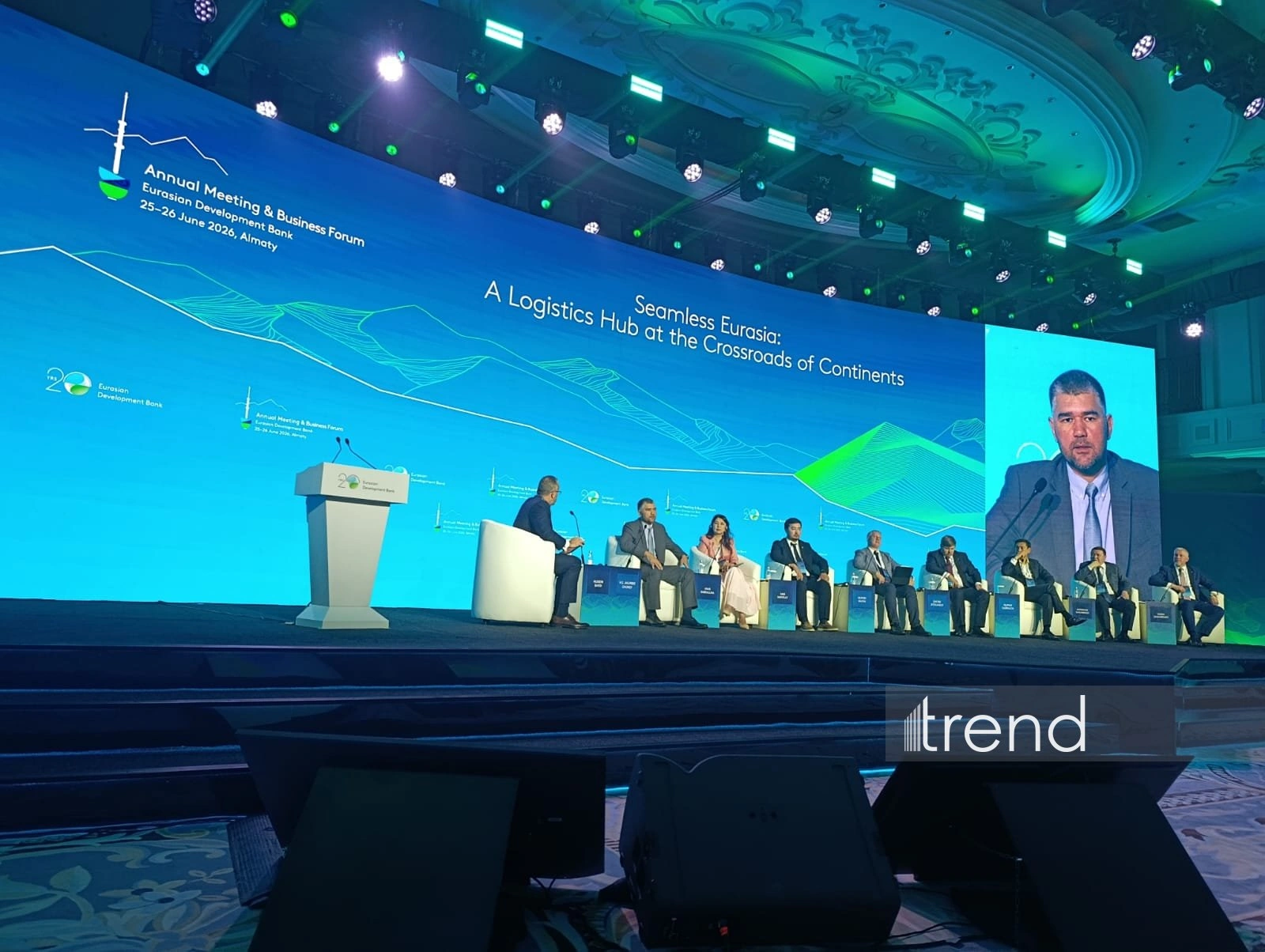
ALMATY, Kazakhstan, June 25. The countries of
Central Asia need to create simpler and more convenient
cross-border interaction mechanisms to ensure sustainable growth,
the General Secretary of the Permanent Secretariat of the TRACECA
Intergovernmental Commission, Zhasurbek Choriev, said during the
session "Seamless Eurasia: A Logistics Hub at the Crossroads of
Continents", Trend's correspondent reports from the event.
"The Middle Corridor, or as it was called - the Silk Road, has
always existed. It was a route for trade, an opportunity to enter
new markets, the development of trade relations, and the creation
of added value between countries. To the question why Central Asia
is gaining special importance today, I would answer simply: because
all the countries of the region are moving towards integration.
After the collapse of the Soviet Union, almost all states closed
their borders. The main attention was focused on issues of
security, protection, and independent survival. Therefore, it took
time for the countries of Central Asia to come to the understanding
that there will be no sustainable growth without integration and
the creation of simpler and more convenient cross-border
opportunities," he said.
According to Choriyev, further development of the region will be
based on joint efforts and regional cooperation.
"In the countries of Central Asia, significant indicators of GDP
growth, population size, and the volume of investments entering the
region are recorded. This creates additional value, contributes to
the increase in the volume of goods, and requires the search for
new markets.
For us, new markets are located in all directions — in the
north, south, and west. We strive to access them with minimal costs
and maximum efficiency. For this purpose, new transport corridors
and opportunities must be created by governments within the
framework of regional cooperation, as well as with the active
participation of development banks and international financial
institutions," he noted.