BAKU, Azerbaijan, June 25. Chairman of
Uzbekistan’s Customs Committee met with Secretary General of the
World Customs Organization (WCO) to discuss ongoing customs
reforms, digital transformation efforts, and prospects for
expanding cooperation.
This was reflected in the statement by the State Customs
Committee of the Republic of Uzbekistan, following the meeting
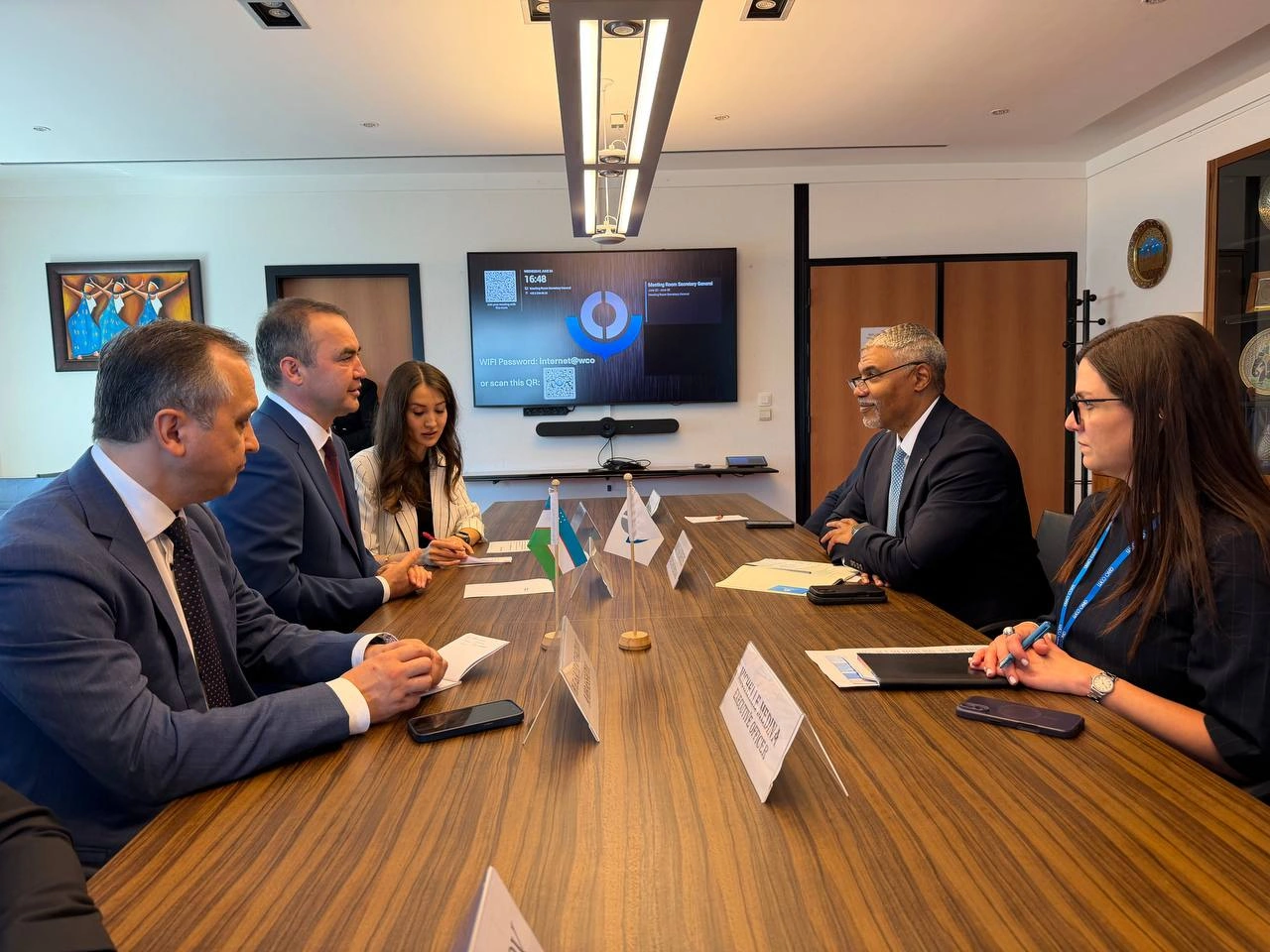
between Chairman of Uzbekistan’s Customs Committee Akmal Mavlonov
and Ian Saunders, Secretary General of the World Customs
Organization (WCO), in Brussels.
According to official information, the parties reviewed
Uzbekistan’s large-scale modernization of its customs system and
discussed priority areas for future collaboration with the WCO.
Particular attention was paid to the establishment of a customs
attaché position within Uzbekistan’s Embassy in Belgium. The
initiative was described as an important step toward strengthening
Uzbekistan’s participation in WCO activities, promoting
international initiatives, and enhancing multilateral cooperation
in the customs sphere.
The meeting was also attended by Uzbekistan’s Permanent
Representative to international organizations in Brussels, Laziz
Atoyev.
During the discussions, both sides highlighted the positive
results of seminars, training programs, and diagnostic missions
conducted with the support of the WCO, noting their contribution to
strengthening the professional capacity of Uzbekistan’s customs
specialists.
The parties also welcomed the recent appointment of Customs
Committee official Nodir Qurbonov as a WCO international expert on
Performance Measurement Mechanisms (PMM), describing it as a
significant achievement for Uzbekistan’s customs
administration.
"The parties emphasized the importance of expanding information
exchange, improving risk management systems, and enhancing
analytical capabilities to further strengthen customs
administration and border security," the statement said.
Mavlonov briefed the WCO leadership on efforts to introduce
digital technologies and intelligent solutions at border customs
posts across the country as part of broader modernization
initiatives aimed at facilitating trade and improving operational
efficiency.
The sides emphasized the importance of further deepening
cooperation in areas such as information exchange, risk management,
and the development of analytical capabilities to enhance customs
administration and border security.