ALMATY, Kazakhstan,
June 25. The water-energy nexus is a particularly
important issue for Central Asia, Demir Kabylbayev, Senior Analyst
at the EDB’s Industry Analysis Center under the Bank’s Analytical
Directorate, said, Trend's correspondent reports from the event.
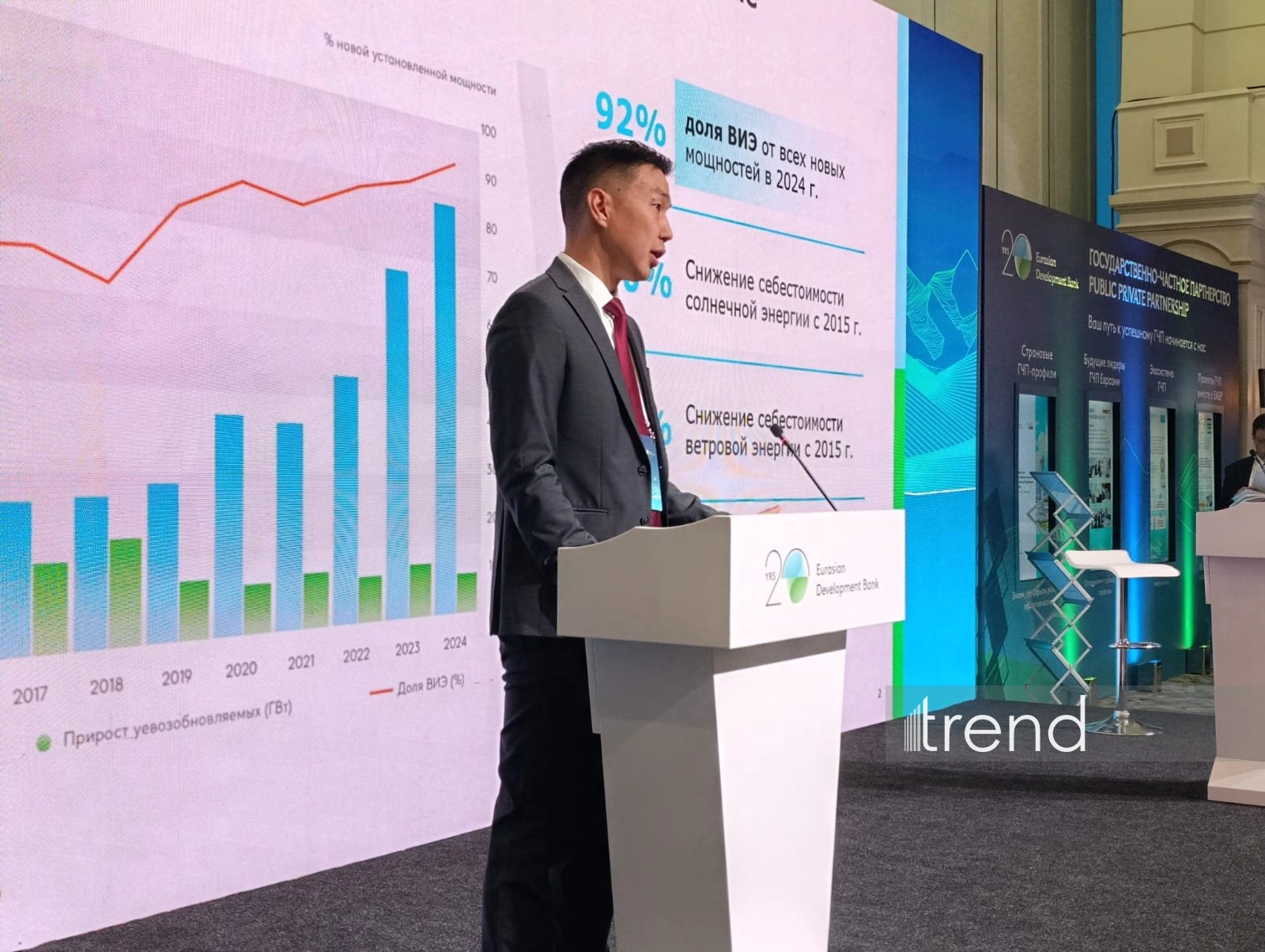
He made the remarks during a presentation of the bank’s
analytical reports held as part of its Annual Meeting and Business
Forum.
He said the EDB had conducted an assessment of the energy
transition sector in Central Asia and identified a number of key
challenges.
“First, infrastructure is aging — both generation capacity and
power grids — resulting in high losses of up to 20%. Electricity
demand is rising, while flexible generation capacity needed to
integrate renewable energy sources remains limited. Cross-border
electricity trade is also relatively underdeveloped,” Kabylbayev
said.
He emphasized that, from an environmental sustainability
perspective, the water-energy nexus is especially significant for
the region.
“Water is a strategic resource in Central Asia and plays a
crucial role in energy production, irrigation and providing
drinking water to the population. Therefore, this is a highly
sensitive issue that requires a balanced approach,” he added.
Kabylbayev also identified limited diversification of the energy
sector as one of the remaining risks. According to him, each
country in the region relies predominantly on a single major source
of electricity generation, which creates certain technological,
geopolitical and economic vulnerabilities.
“We propose a balanced approach that combines the advantages of
different solutions. This includes modernizing existing thermal
power plants, expanding renewable energy capacity, and introducing
technologies that support the integration of renewables. In
particular, the development of gas-fired generation is currently
necessary to ensure the effective integration of renewable energy,”
the EDB representative said.