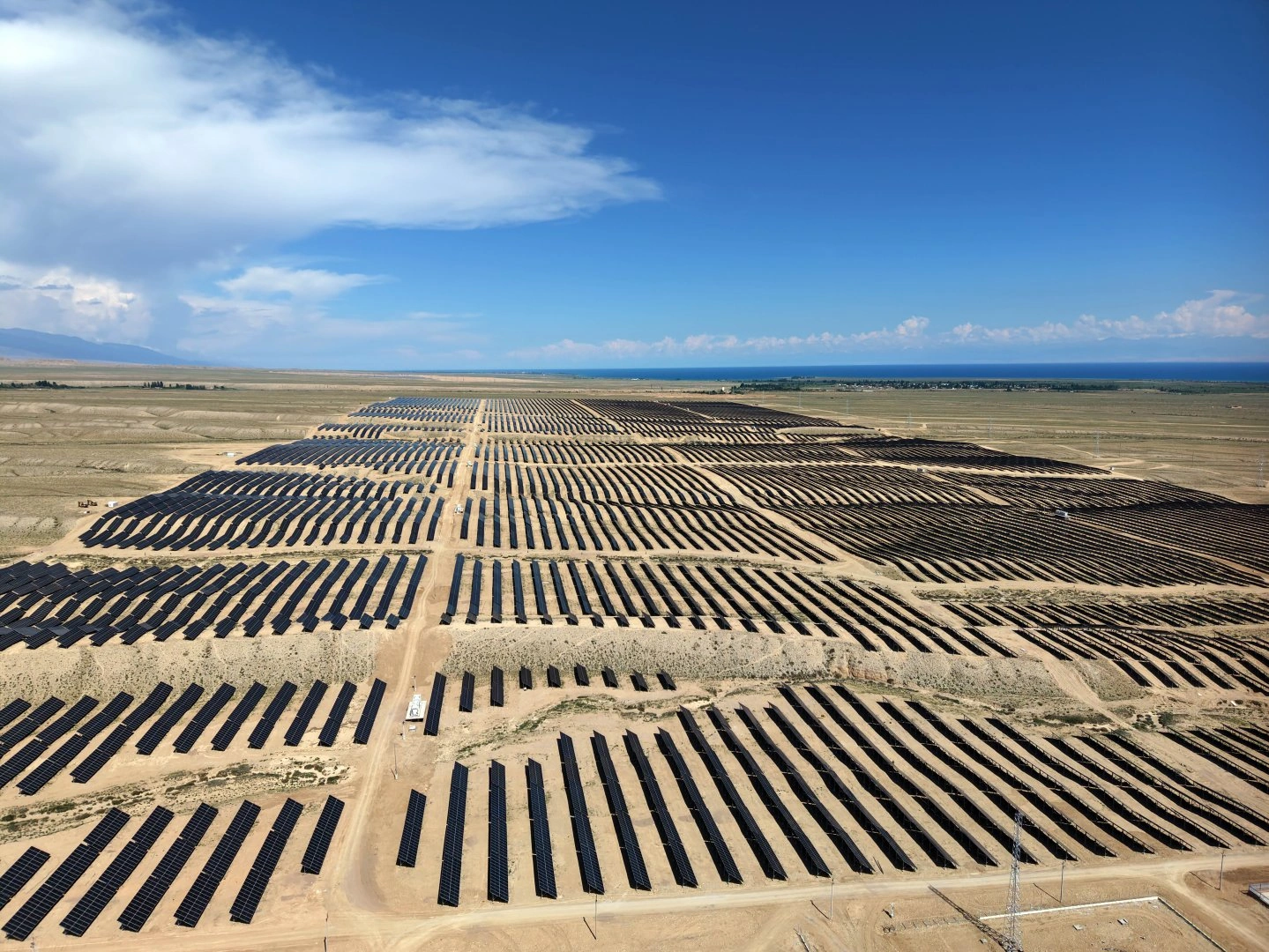
BAKU, Azerbaijan, June 25. Kyrgyzstan has
launched the first phase of a solar power plant with a total
planned capacity of 1,900 MW, while work is underway in its
Issyk-Kul region to connect new solar facilities with capacities of
300 MW "Bishkek Solar" and 400 MW "Fortis KG" to the national power
grid.
These projects are becoming part of a broader transformation of
Kyrgyzstan’s energy sector, which is facing the need to increase
generation capacity, modernize infrastructure, and improve the
resilience of the national energy system. The development of
renewable energy sources is viewed as one of the tools for
diversifying the country’s energy balance.
Speaking at the commissioning ceremony of the first phase of the
"ROX Issyk-Kul" solar power plant with a capacity of 175 MWp,
President of Kyrgyzstan Sadyr Japarov noted that the project
represents one of the major initiatives in the renewable energy
sector.
"Our country has significant potential in the fields of solar,
hydropower, and wind energy. This project is one of the major and
strategically important initiatives aimed at effectively using
these opportunities," the President said.
According to Sadyr Japarov, the implementation of all stages of
the solar power plant project with a total capacity of 1,900 MWp is
expected to attract around $1.5 billion in investments.
"It will contribute to the modernization of the energy sector,
diversification of energy sources, and reduction of dependence on
hydropower. It is especially important that amid declining water
resources, the development of solar energy is becoming one of the
key factors in ensuring energy sustainability," the President
emphasized.
The connection of new solar power plants requires the expansion
of grid infrastructure. Currently, construction works are ongoing
in the Issyk-Kul region on facilities required for electricity
transmission. The projects include connection to the Issyk-Kul
substation through a 220 kV overhead power line, as well as the
construction of a 220 kV open switchgear facility (OSG-220 kV).
The foundation works for portal structures have been completed,
while installation of 220 kV equipment is ongoing. The territory of
the Issyk-Kul substation has also been expanded to ensure the
reception and transmission of electricity generated by new solar
facilities.
At the same time, the Ministry of Energy of Kyrgyzstan continues
implementing other directions of energy modernization. An important
focus remains improving the reliability of existing hydropower
facilities. "Chakan HPP" OJSC is carrying out a repair campaign to
prepare facilities for the autumn-winter period of 2026–2027.
As part of this work, the major overhaul of Hydro Unit No. 2 at
HPP-6 has been completed, and the unit is currently undergoing
high-load testing before being put into operation. According to the
2026 repair plan, major overhauls are scheduled for hydro units at
HPP-3, HPP-4, HPP-5, and HPP-6, which is expected to improve the
reliability of existing generation capacities.
The development of green energy is also becoming part of
Kyrgyzstan’s international energy cooperation. During the sixth
Meeting of Energy Ministers of the Shanghai Cooperation
Organization (SCO) member states held in Bishkek, participants
discussed energy security, investment attraction, digitalization of
the sector, and the development of cross-border energy
infrastructure.
During the meeting, Kyrgyzstan proposed the establishment of a
Regional Center for the Implementation of Energy-Efficient and
Resource-Saving Technologies in Bishkek. The center is expected to
serve as a platform for experience exchange, personnel training,
and the introduction of modern energy solutions.
At the same time, Kyrgyzstan is expanding cooperation with
international financial institutions. The World Bank noted the
acceleration of joint energy sector projects, including KEMS and
REMIT initiatives aimed at improving sector management and
increasing the efficiency of the energy system.
Further development of the sector may depend on several factors,
including the volume of attracted investments, the pace of
construction of new facilities, the condition of electricity grid
infrastructure, and the ability of the system to integrate new
sources of generation.
In one possible scenario, Kyrgyzstan could speed up the increase
of the share of solar and other renewable energy sources in its
overall energy balance, expand its export potential, and strengthen
regional energy cooperation. Another scenario involves a gradual
expansion of new capacities alongside the modernization of existing
hydropower facilities. Further progress may also depend on the pace
of implementation of large-scale projects and the readiness of
infrastructure to adapt to increasing volumes of variable renewable
generation.
Thus, the development of green energy in Kyrgyzstan is becoming
a long-term process, with investment, technological modernization,
and effective energy system management remaining key factors.