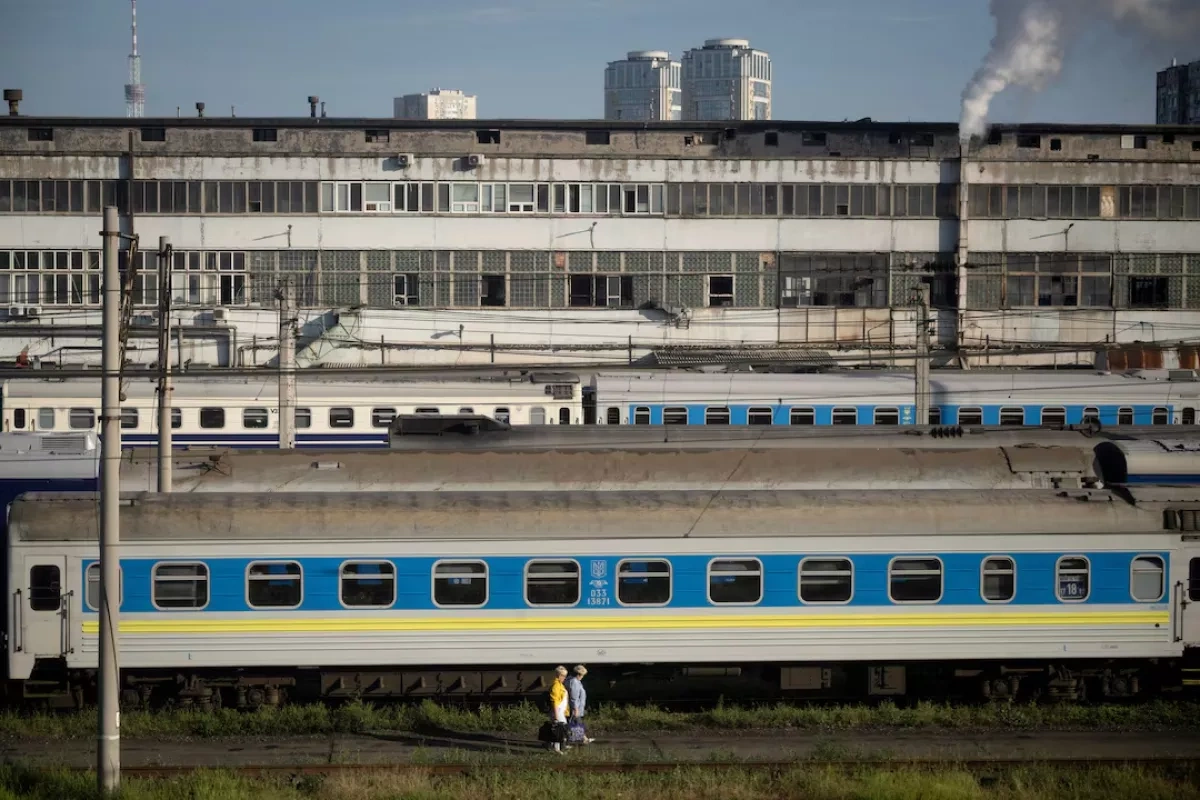
Ukraine’s Economy Ministry has proposed increasing state railway Ukrzaliznytsia’s freight tariffs by 30% from August 1 in an effort to stabilise the company’s financial position, though steelmakers and agricultural producers have warned the move could reduce their competitiveness on global markets, Reuters reports.
With the war against Russia now in its fifth year, rail remains a critical component of Ukraine’s logistics system, carrying both freight and passengers. However, rising spending on security and infrastructure maintenance is placing additional pressure on public finances, as the government also seeks to restructure its debt.
Ukrzaliznytsia CEO Oleksandr Pertsovskyi said that the company needed to raise tariffs by at least 45% this year to restore financial stability.
In a note over the weekend, the Economy Ministry said the proposed 30% increase is expected to generate additional revenue for Ukrzaliznytsia, boosting the company’s financial capacity to partially cover a funding gap of 8.6 billion hryvnias ($191.50 million) in 2026.
The ministry said it will consult with industry stakeholders but retains the authority to implement the increase independently.
Ukrzaliznytsia described the 30% rise as a “compromise”, but steelmakers and agricultural producers have opposed higher freight costs, warning they could weaken the competitiveness of Ukrainian exports.
Pertsovskyi said that a 45% tariff increase would cover roughly half of the company’s projected $587 million cash shortfall.
The ministry did not clarify whether additional increases would follow to reach the 45% level. Ukrzaliznytsia said any further tariff adjustment from January 1 “will be made separately.”
The railway operator added that the proposed increase alone would not be sufficient to fully stabilise its finances, but said that if approved, it would help restore access to support from international financial institutions and allow for further optimisation measures.
Ukrzaliznytsia also noted that the tariff adjustment would only marginally increase transport costs—by about $3.2 per metric ton of ore and $3.6 per ton of grain—when transported over full routes of up to 750 km (466 miles).
Major shippers have previously opposed the planned increase, warning that in the steel sector alone it could place up to 300,000 jobs at risk and potentially lead to the closure of key enterprises.
Key Ukrainian industries, including agriculture and metallurgy, argue that higher freight rates would create a significant competitive disadvantage for exporters at a time when the country is seeking to preserve industrial output, export revenues, employment, and foreign currency inflows.
By Vafa Guliyeva