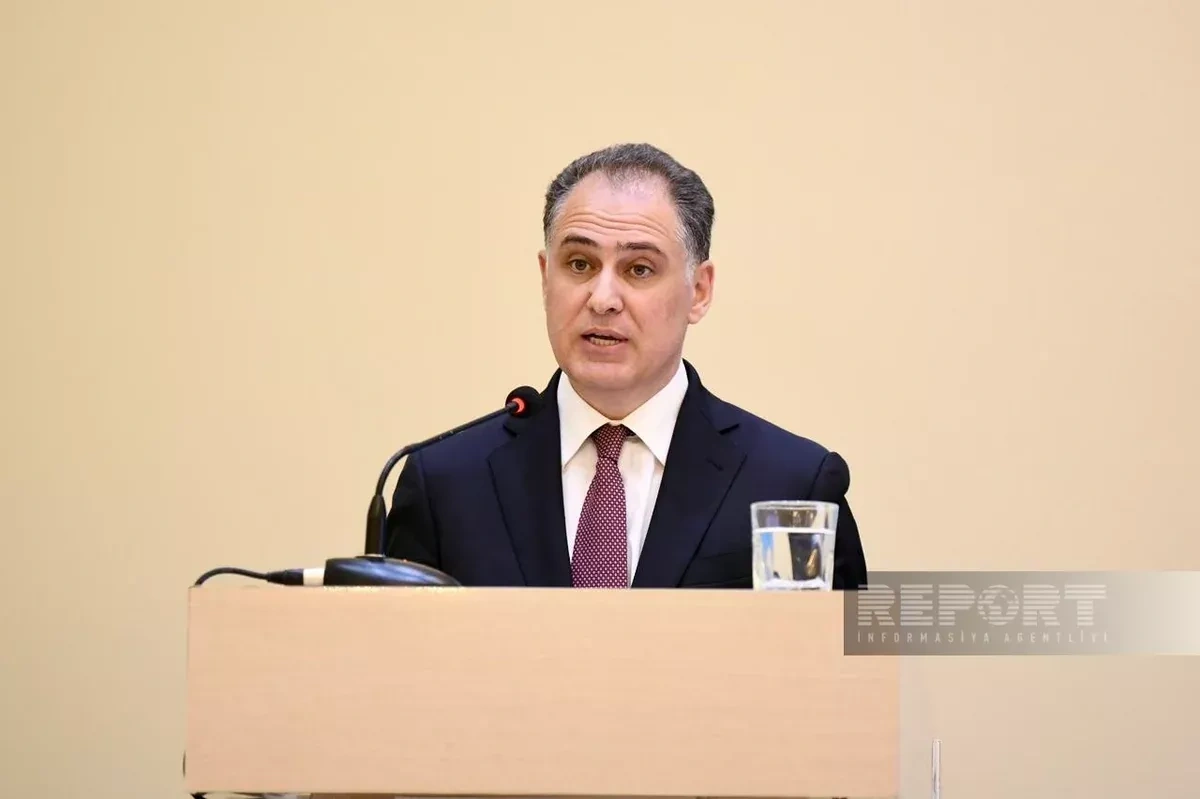
The implementation of the Shirvan Irrigation Canal project in Azerbaijan is expected to bring 105,900 hectares of previously unused land into agricultural production, Khayyam Mammadov, Deputy Chairman of the Azerbaijan State Water Resources Agency, has stated.
Speaking at a regional meeting on the Shirvan-Salyan economic region held within the framework of the 2026–2030 State Programme, he said the project includes the construction of a 204.3-kilometre main irrigation canal with a designed water capacity of 180 cubic metres per second, Caliber.Az reports, citing local media.
According to him, as a result of the project’s implementation, irrigation conditions for 112,300 hectares of existing farmland across nine districts, including Hajigabul, will be improved.
“In addition, 105,900 hectares of new agricultural land will be brought into cultivation. The project is planned for completion in 2027. It will play an important role in the socio-economic development of the Shirvan region by expanding agricultural output and strengthening regional water security,” he added.
Mammadov noted that the reconstruction of the 172.4-kilometre Karabakh irrigation canal, with a capacity of 135 cubic metres per second, will significantly enhance water supply to Karabakh and surrounding areas.
He explained that the canal will additionally supply water to the Bahramtepe hydropower station on the Araz River, improving irrigation for farmland in the Central Aran and Shirvan-Salyan economic zones and increasing agricultural sustainability and productivity.
Furthermore, he highlighted the construction of the Bargushadchay Reservoir as a strategically important infrastructure project for the region.
In his view, the reservoir will improve long-term water supply stability for districts including Beylagan, Imishli, Saatli, Sabirabad, Jalilabad, and Masalli.
He added that the project will enhance the efficient distribution of water resources within the Kura–Araz basin and strengthen water security in downstream areas such as Salyan and Neftchala.
By Bakhtiyar Abbasov