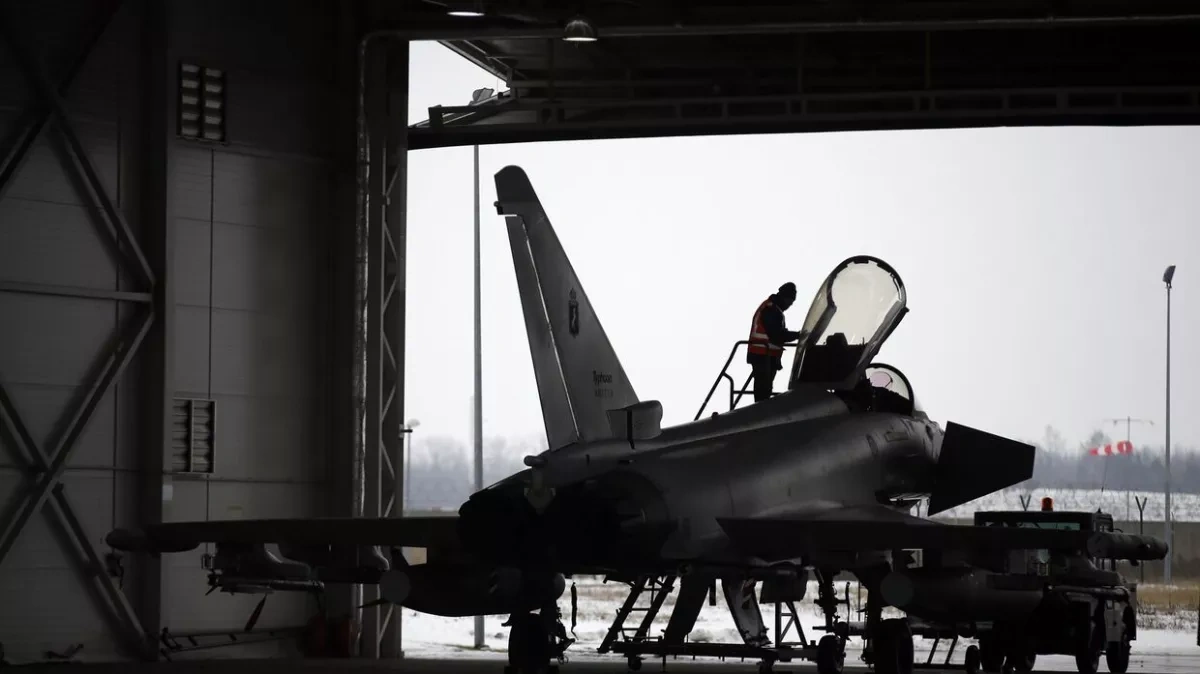
Italy would be open to Germany joining the Global Combat Air Programme (GCAP) alongside the UK and Japan, according to the head of Italian defence group Leonardo SpA, amid shifting European aerospace alliances following the collapse of a rival project.
Lorenzo Mariani, who recently took over as chief executive, said German participation would likely slow development of the sixth-generation fighter initiative but could strengthen it financially and industrially in the long term, Caliber.Az reports, citing Financial Times.
“If you wanted to bring a new nation now, with the same rights as the other three, this would be a little bit disruptive,” he said, but “the long-term benefits are clear.”
The GCAP programme, developed jointly by the United Kingdom, Italy and Japan, aims to deliver a next-generation combat aircraft by 2035. Any expansion to include Germany would require complex renegotiation of industrial workshare and governance.
Mariani pointed to previous cooperation between European defence firms, including joint work on the Eurofighter Typhoon, as evidence that collaboration with German industry could be viable.
“I would be glad if some of the German industrial complex joined our activities,” he said. “These programmes are always very demanding in terms of investment. Normally they absorb more than you foresee at the beginning. So having another partner with both money and industrial competence would be good.”
His comments come after the collapse of the €100billion Future Combat Air System (FCAS) programme involving France, Germany and Spain, which had been designed as Europe’s parallel next-generation fighter project.
Mariani said he was not surprised by FCAS failing to advance, arguing that political agreement had not been matched by industrial alignment.
“You can start politically, but if the industry doesn’t find the right commonalities, the right objectives, the sharing of work, it is really difficult,” he said.
Germany has since signalled interest in either joining an existing programme or leading a new initiative, provided it secures a “substantial” role reflecting its financial contribution.
Japan, however, is wary of expanding GCAP’s membership, concerned that additional partners could delay delivery of the aircraft, which remains targeted for 2035.
Questions have also emerged over the UK’s long-term commitment to defence spending, though Mariani expressed confidence that London would remain engaged, citing the strategic importance of combat air capabilities.
“Combat air is a segment that is so important for the UK that they will never abandon the priority,” he said. “It’s important for the nation, for the way the nation is geographically located and it’s important for its industrial competence.”
Mariani, appointed last month by Italy’s government under Prime Minister Giorgia Meloni, has pledged to expand production capacity at Leonardo SpA, recruit thousands of staff, and address supply-chain constraints as demand for defence equipment rises across Europe.
By Aghakazim Guliyev