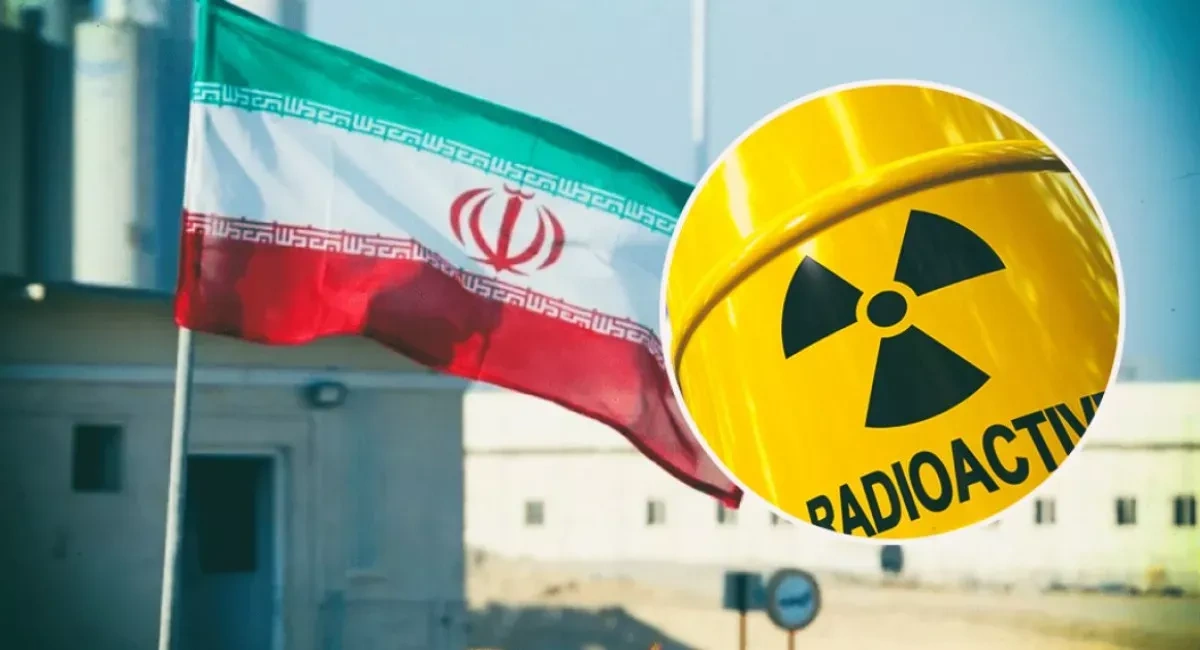
Iran’s stockpiles of highly enriched uranium will be destroyed on site. The International Atomic Energy Agency (IAEA) will oversee this process, Fox News reported, citing the text of a memorandum signed by the United States and Iran.
Iran has agreed, at least, that its stockpiles of enriched uranium will be destroyed on site under IAEA supervision, the channel reported.
The Strait of Hormuz is being opened immediately, there will be no attacks, no fees, and we are gradually lifting the blockade. Iran is once again allowed to sell oil, Fox News noted.
Can the new US–Iran memorandum become a real breakthrough, or is it merely a temporary reprieve? Is Tehran truly prepared to give up its stockpiles of enriched uranium and allow effective IAEA monitoring? And why does Iran’s missile programme — already posing a threat to Europe — effectively remain outside the scope of the agreement?
Experts on the region shared their answers to these questions with Caliber.Az.
Middle East expert and NEST Centre specialist Ruslan Suleymanov believes that one of the main problems of the agreement reached between the United States and Iran is the absence of effective enforcement mechanisms and third parties capable of monitoring compliance by both sides.
“I think that the authorities of the Islamic Republic, in light of recent events, have finally become convinced that they need to acquire nuclear weapons as soon as possible. And in the Iranian press, such calls are being voiced quite loudly.
It is difficult to imagine that Iran would allow representatives of the IAEA or other international observers to access its nuclear facilities and centrifuges. What happens there will remain unknown to everyone except, presumably, intelligence services — primarily American and Israeli.
Obviously, this will lead to new rounds of escalation and new attempts by Washington and Tel Aviv to at least slow down the development of Iran’s nuclear programme. Therefore, the problem is far from being resolved and, I believe, will only worsen,” Suleymanov said.
Executive Director of the Centre for Middle East Studies (Kyiv) Ihor Semyvolos believes that the memorandum does not resolve key issues, but merely postpones questions related to uranium, the missile programme, and monitoring for the next 60 days of negotiations, while simultaneously providing Iran with economic benefits.
“This is a classic asymmetry of concessions: tangible and immediate benefits for Tehran in exchange for promises whose implementation can only be verified ex post facto.
As far as I know, the fate of enriched uranium is not formulated as its destruction, but rather as its dilution to a lower level under IAEA supervision.
The missile programme remains an important part of Iranian sovereignty, so there is no talk of restricting it. The only limitation Iran has voluntarily imposed on itself is a missile range cap of 2,000 kilometres,” Semyvolos said.