BAKU, Azerbaijan, June 16. Sustainable finance
is one of the key elements of the strategic framework of the
Central Bank of Azerbaijan, said Rustam Tahirov, Director of the
Sustainable Development of the Financial Sector Department at the
Central Bank, Trend's correspondent reports from the event.
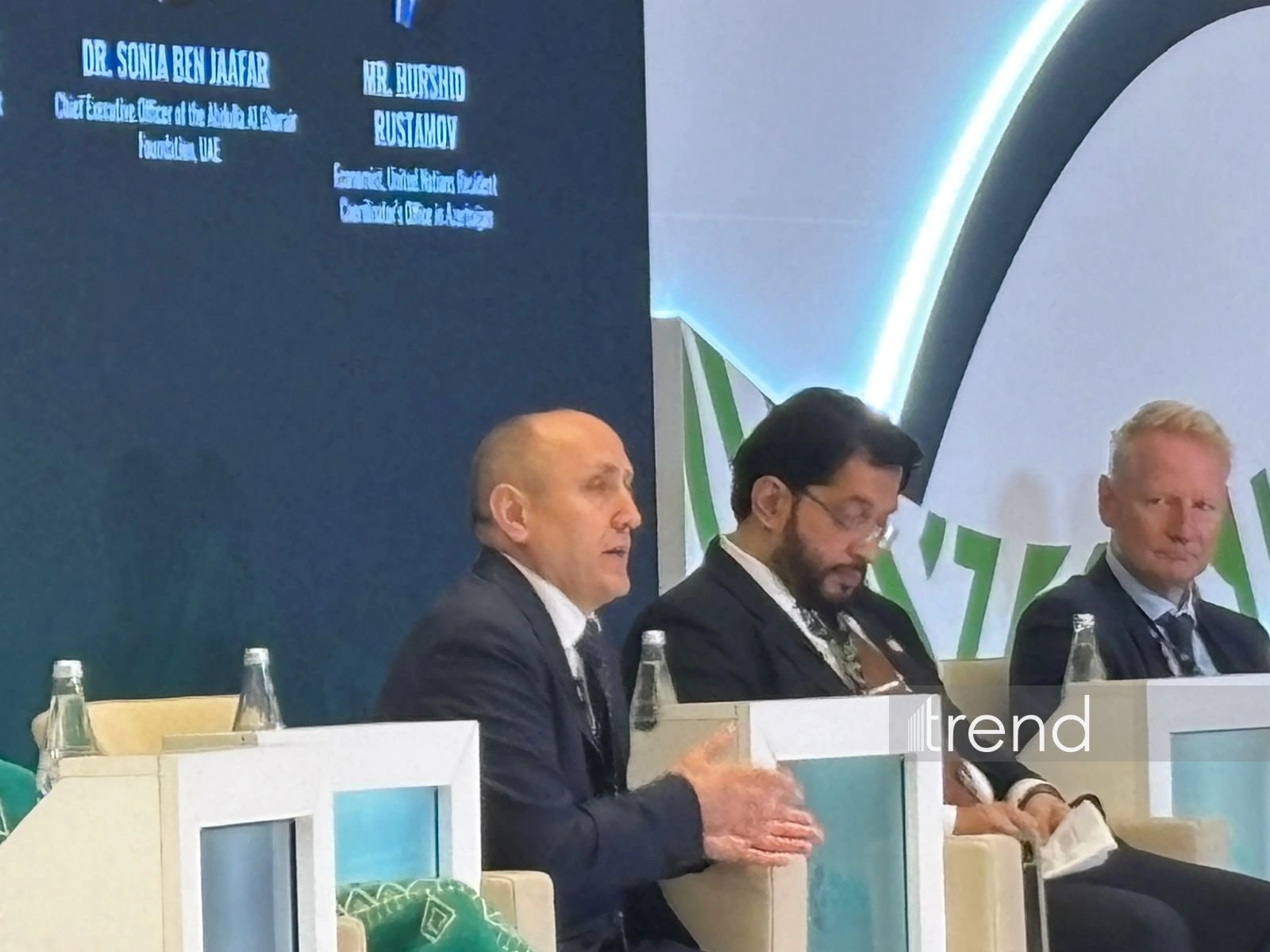
Tahirov made the remark during the 14th Private Sector Forum of
the Islamic Development Bank Group.
According to him, Azerbaijan's high exposure to climate and
environmental risks, including both transition and physical risks,
makes sustainable finance a crucial focus area for the
regulator.
"These risks impact the mandate of the Central Bank,
particularly financial stability and the resilience of financial
institutions. Therefore, sustainable finance has been integrated
into the strategic framework of the Central Bank," Tahirov
said.
He noted that the Central Bank of Azerbaijan has approved a
roadmap for sustainable finance, implemented a green taxonomy, and
introduced regulatory requirements for managing climate and
environmental risks in the banking sector.
"In addition, disclosure and reporting requirements have been
introduced. The green taxonomy serves as a strategic tool for both
the state and the private sector. The taxonomy allows funds to be
directed into priority areas and supports the decarbonization of
the economy," he stated, adding that, according to World Bank
estimates, the country will require approximately 2.3% of its GDP
annually to achieve carbon neutrality.
According to him, for the private sector, the taxonomy creates
opportunities to attract and diversify financing, as well as to
develop green financial instruments.
He specifically noted that the taxonomy enhances market
transparency and defines the criteria for which projects are
classified as green, transitional, or ineligible.
"Projects must align with environmental objectives, technical
criteria, the 'do no significant harm' principle, as well as
minimum social standards," Tahirov noted.
He added that the Central Bank is implementing regulations for
green and sustainable loans and is considering expanding the range
of instruments to include green, social, and sustainable bonds, as
well as blue bonds (a type of sustainable bond where proceeds are
directed toward projects related to water resources and the ocean
economy).
Tahirov also recalled that following COP29 in Azerbaijan, the
country's banking sector committed 2 billion manats ($1.7 billion)
toward sustainable financing.
"Banks have already begun financing projects in renewable
energy, energy efficiency, sustainable agriculture, and water
resource management," he stated.