BAKU, Azerbaijan, June 2. The increase in the
annual cargo capacity of the Baku-Tbilisi-Kars (BTK) railway from 1
million tons to 5 million tons opens up new opportunities for
international freight transport and significantly enhances the
route’s competitiveness, Azerbaijani transport expert Rauf
Aghamirzayev told Trend.
He added that the Baku-Tbilisi-Kars railway is of particular
importance in the current geopolitical situation. According to him,
the BTK is one of the few land transport routes passing through
countries not subject to sanctions, and this is the project’s main
strategic value.
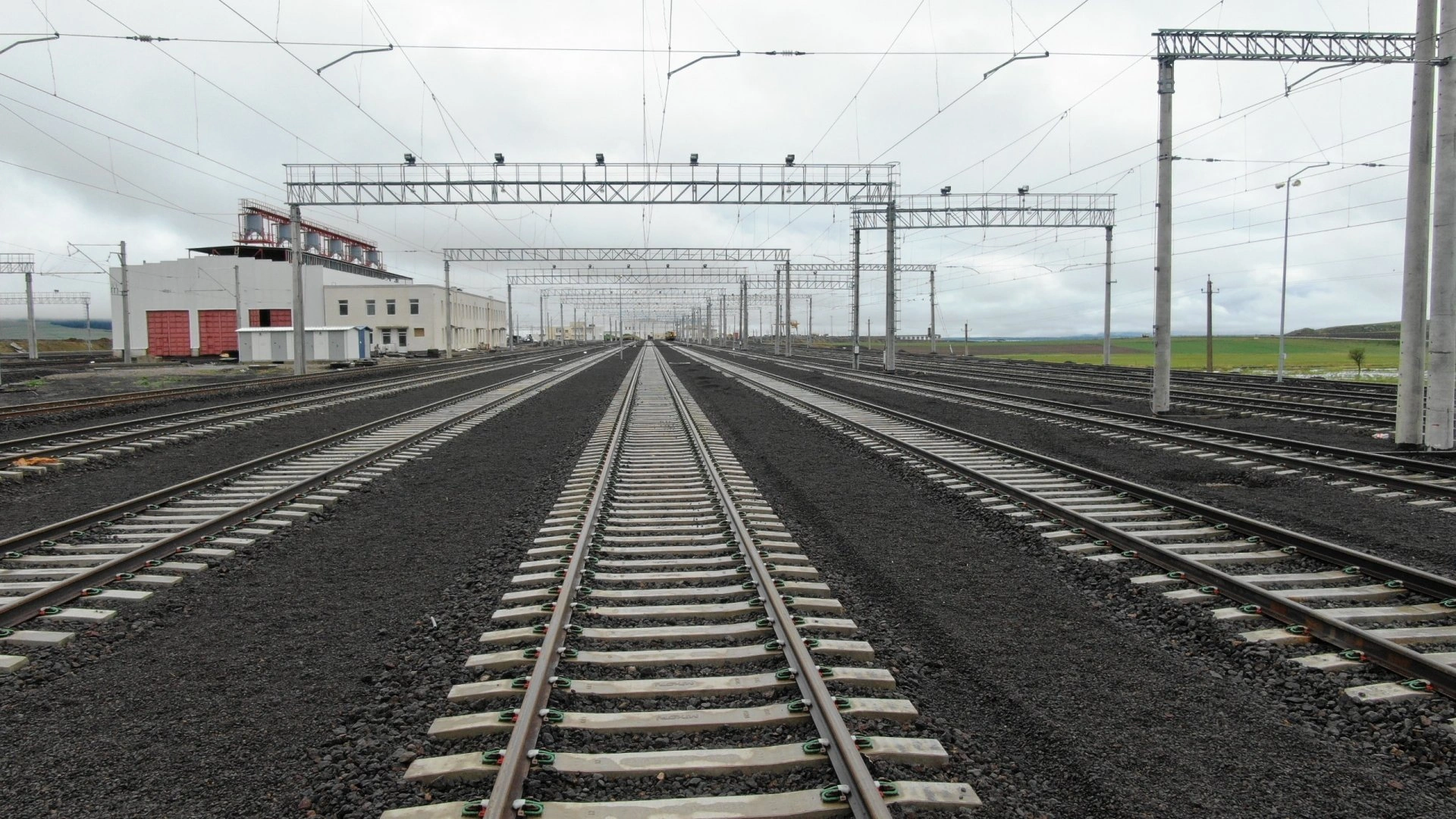
The completion of the modernization of the Baku-Tbilisi-Kars
(BTK) railway and its full-scale operation further strengthens
Azerbaijan’s role in the international transport and logistics
system. Increased capacity, expanded competitive advantages of the
route, and accelerated freight flows along the Middle Corridor make
the BTK one of the most strategic transport projects in the
region.
Fast and reliable logistics are not limited to the availability
of infrastructure. To this end, it is important to simplify border
crossing procedures, harmonize standards among participating
countries, and implement digital solutions.
In his view, integrating the Middle Corridor, from the Chinese
border to the borders of the European Union, into a single digital
logistics system will further enhance the corridor’s efficiency.
However, since the technical capabilities and standards of the
countries involved vary in this regard, coordination must be
strengthened.
The expert believes that strengthening Azerbaijan’s position in
the Middle Corridor is a natural process. This is due to the
country’s important geographical location in the region from a
geopolitical standpoint and its key role in ensuring transport
links in various directions: “The modernization of the
Baku-Tbilisi-Ceyhan pipeline and the expansion of transport
capacity further enhance Azerbaijan’s transit potential. At the
same time, coordinated efforts by all corridor participants to
increase cargo volumes, reduce transit times, and improve logistics
services remain crucial.
As a result of the modernization work carried out, the BTK is
already demonstrating the potential to become one of the main
transport arteries in the Eurasian space, moving away from its
status as an alternative route for the region,” the expert
added.
Meanwhile, the Baku-Tbilisi-Kars (BTK) is an 827-kilometer
international railway connecting Azerbaijan, Georgia, and Türkiye.
As a crucial segment of the Middle Corridor, it provides a fast,
continuous freight and passenger link between Asia and Europe,
bypassing Russian territory to revolutionize Eurasian overland
transport.