BAKU, Azerbaijan, June 1. The Final investment
decision on the Trans Adriatic Pipeline's (TAP) expansion is
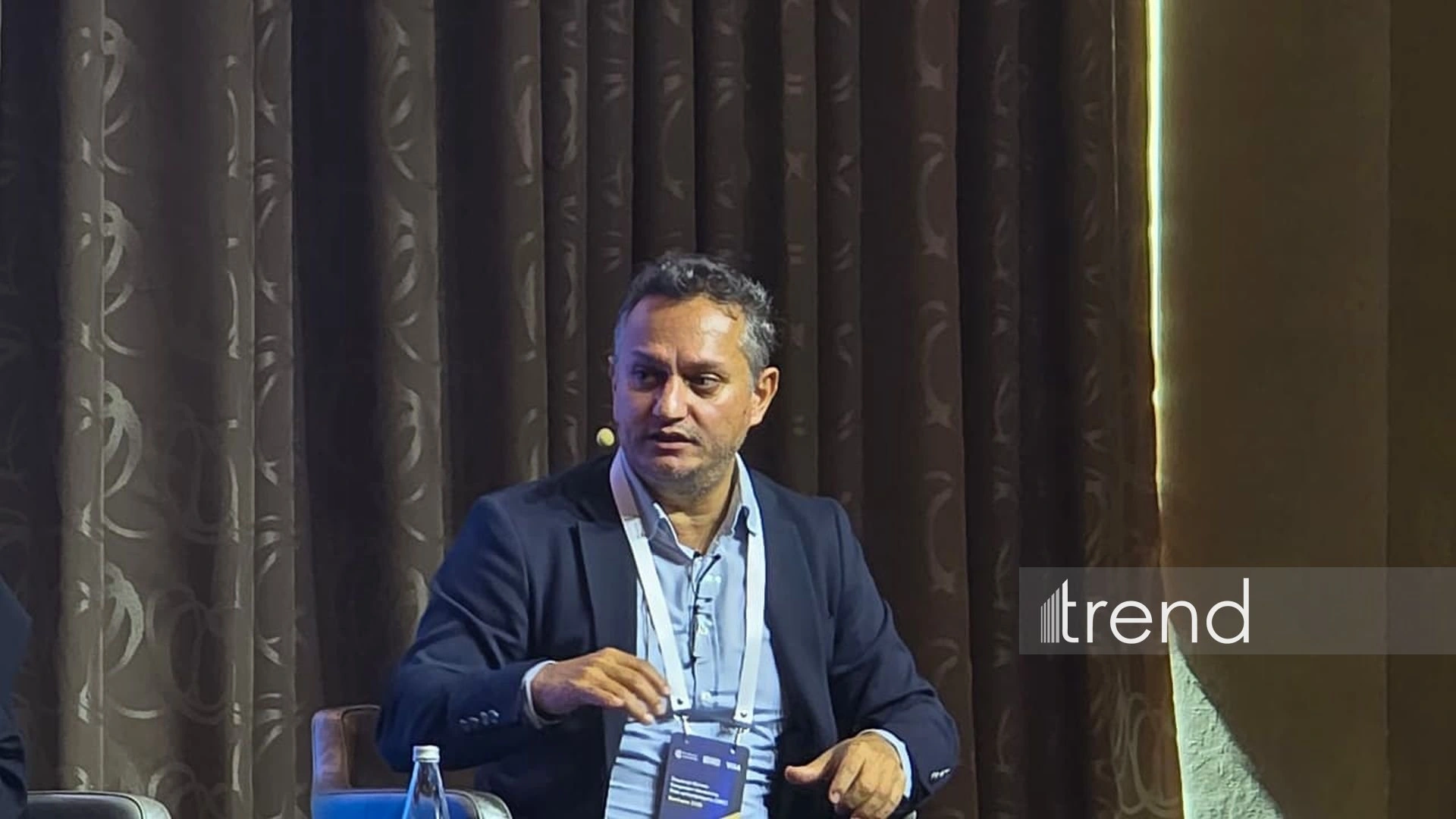
expected in Q1 2027, TAP Managing Director Luca Schieppati said in
an exclusive interview with Trend on the sidelines of the Baku
Energy Week.
"A Market Test is a regulated process, which aims to allow
shippers to express their interest and potentially commit to
long-term capacity bookings. These commitments are a key condition
for successfully moving forward, as they need to demonstrate that
any expansion is both commercially viable and sustainable. Any
Market Test is structured in two phases: a non-binding phase,
followed by a binding phase," he said.
Schieppati noted that the non-binding phase of the 2025 Market
Test, launched in July 2025, is still progressing, and the process
is now moving into the next stages, where the potential expansion
is further developed and assessed, including through a consultation
process and a final project proposal.
"In practical terms, this means that there is interest from the
market, but the process is still ongoing and no final investment
decision has yet been taken. The decision to invest in new capacity
will depend on sufficient binding long-term commitments from
shippers to ensure project viability. The next key steps include
completing the consultation process, finalising the project
proposal and moving towards the binding phase, where subject to
sufficient binding commitments, capacity may be allocated to
shippers and a final investment decision can be taken. This final
step is currently foreseen to take place in the course of Q1 2027,"
he explained.
As for the Fier gas exit point project in Albania, the managing
director noted that it will be designed, procured and constructed
by TAP and subsequently handed over to the Albanian government.
"It represents a multimillion‑euro investment and a key step in
supporting the development of the country’s gas network. Following
the award of the Engineering, Procurement and Construction (EPC)
contract, engineering and procurement activities are currently
underway. Construction works are expected to commence in mid‑2026,
in line with the project schedule. TAP remains fully committed to
supporting Albania’s gasification, with the Fier exit point
expected to play an important role in enabling access to natural
gas and strengthening regional connectivity," said Schieppati.
He noted that TAP has repeatedly demonstrated its strategic
relevance for Europe’s energy security by providing a new source
and route of gas supply.
"Since the start of commercial operations, the pipeline has
delivered close to 60 billion cubic metres of gas to Europe. This
is reflected in key markets such as Italy, where TAP accounted for
around 16% of total imports and 25% of pipeline gas in 2025, and
Greece, where it covered over 14% of imports. Beyond volumes, TAP
has contributed to strengthening the role of our host countries as
integral parts of Europe’s energy system, enhancing regional
connectivity and security of supply, while also bringing a more
competitive and lower-carbon alternative to certain fuels to
South-East Europe and the Western Balkans, where the energy sector
is still overly reliant on heavy fossil fuels, such as coal and
lignite for power generation. In an increasingly complex
environment, diversification of sources and routes, together with
resilience and adaptability to evolving market conditions, are
becoming ever more important. Infrastructure such as TAP, as part
of the Southern Gas Corridor, plays a central role in enabling
these dynamics and enhancing the overall resilience of the European
energy system," said TAP's managing director.
He went on to add that reliability, resilience and flexibility
are central to TAP’s development, both in commercial and
operational terms.
"Alongside standard capacity products, the pipeline has
progressively enhanced its offerings - enabling features such as
reverse flow and intra-day deliveries - while also expanding its
physical capacity in response to market demand. The recent
expansion of the pipeline, delivered following the 2021 Market Test
results, is a key milestone in this respect, adding more capacity
to the system and reinforcing TAP’s ability to provide both volume
and flexibility to the markets it operates in. Looking ahead, TAP
is positioning itself not only as a reliable gas transporter, but
as a future-proof energy infrastructure. In the medium term, this
translates into maintaining competitiveness and resilience, while
exploring further market opportunities, interconnections, and
potential additional supply routes. In parallel, the Company is
actively preparing for the longer term by ensuring that TAP can
adapt to different energy scenarios, including the gradual
integration of lower-carbon gases, such as biomethane and hydrogen,
in line with evolving regulatory and market requirements.
Ultimately, TAP’s ambition is to continue evolving into a flexible
and resilient multipurpose energy corridor, capable of supporting
both energy security and the energy transition in a balanced and
pragmatic way," said Schieppati.
Speaking about advancing the decarbonisation goals, the managing
director noted that TAP is committed to contributing to Europe’s
energy transition, including by preparing its infrastructure for
the potential transport of low‑carbon gases.
"At the same time, the Company is actively working to reduce its
overall environmental footprint. A central component of this effort
is the decarbonisation of our own operations, where significant
results have already been achieved and further enhancements are
planned. A key driver of this effort is the implementation of the
Carbon Management Plan, aligned with TAP’s Long‑Term Energy
Transition Strategy. The first Plan (2022–2025) included a
comprehensive set of initiatives to reduce greenhouse gas emissions
across operations, covering carbon dioxide, methane and fugitive
emissions. By 2025, TAP achieved strong results, reducing total
greenhouse gas emissions by more than 25% compared to forecast,
methane emissions by over 50%, and fugitive emissions by more than
85% compared to the baseline," he added.
Schieppati pointed out that building on this performance, TAP
has launched a new Carbon Management Plan for the period 2026–2030
to further enhance emissions performance and operational
efficiency.
"As part of this effort, TAP is advancing targeted measures to
decarbonise its operations, including programmes to reduce fugitive
emissions and operational optimisation measures aimed at improving
energy efficiency across its assets. The Company is also assessing
electrification options for compressor stations, in the context of
a potential expansion, as well as strengthening emissions
monitoring and reporting systems. A key priority remains the
reduction of methane emissions through the application of best
available technologies and practices. In this context, TAP is
progressing under the Oil and Gas Methane Partnership (OGMP 2.0)
framework, a UNEP‑led initiative that sets the global standard for
methane measurement, reporting and mitigation in the oil and gas
sector, with the aim of achieving full Gold Standard
certification," he concluded.