BAKU, Azerbaijan, May 20. To address the
housing crisis, we conducted a mid-term review of the overall
policy framework, thereby creating an opportunity for investment in
public housing through the European Regional Development Fund
(EDDF), which was previously impossible, Member of the European
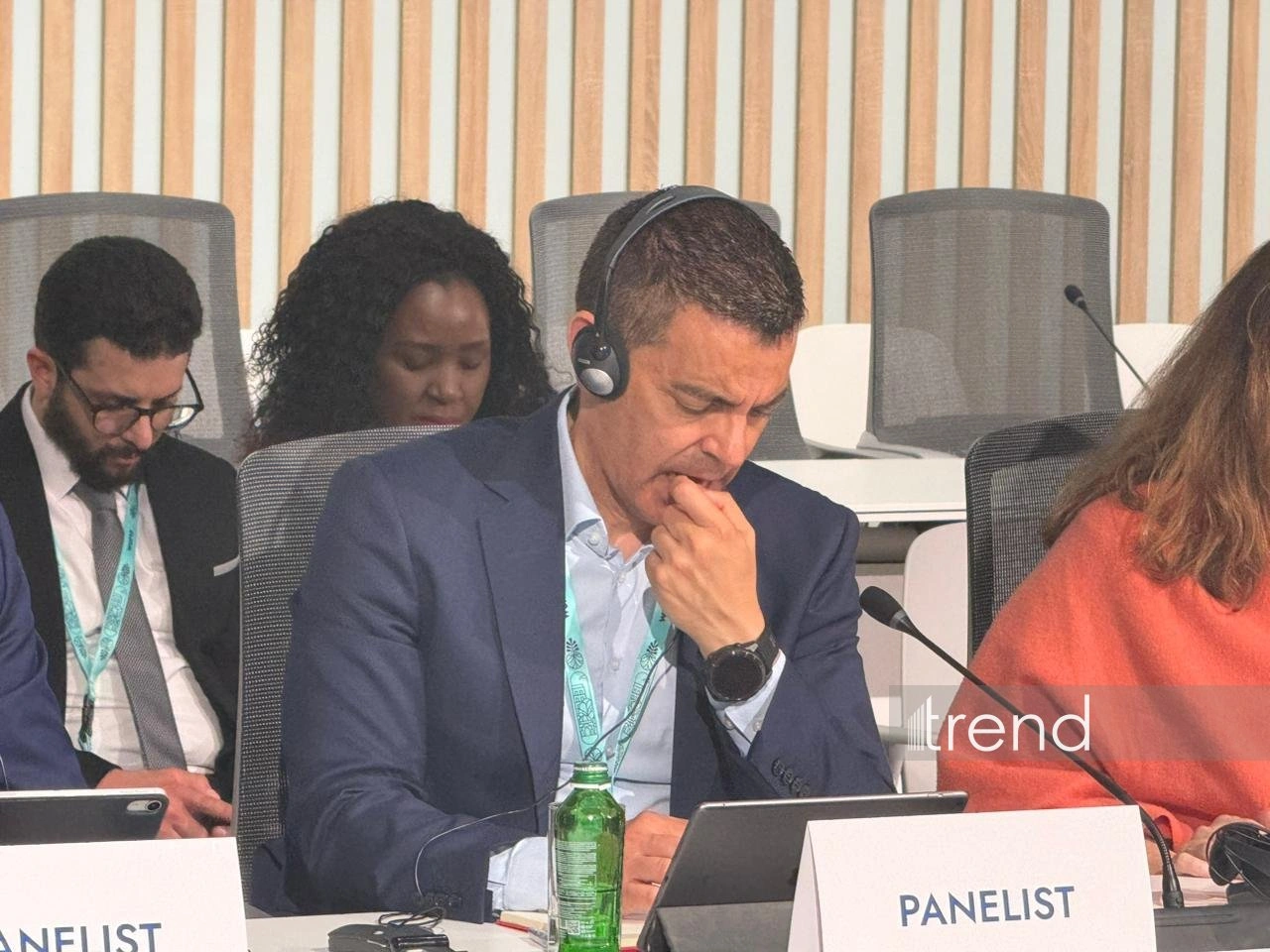
Parliament Marcos Ros Sempere said, Trend reports.
This was stated by Member of the European Parliament Marcos Ros
Sempere at a round table of parliamentarians on "How can national
legislation transform global commitments in the field of housing
into real results?", held within the framework of the 13th session
of the World Urbanism Forum (WUF13).
"In the European Parliament, we are also working to strengthen
support for affordable, sustainable, and community-based housing
models, as well as diverse housing solutions. In September, for the
first time, we adopted the concept of "affordable housing" as a
separate concept, and this is no longer just social housing, but an
area that can be funded from the European Regional Development Fund
(ERDF). We are now advocating a broader approach. During the
negotiations on the new budget program for 2028-2034, we declare
that housing policy cannot be considered in isolation from spatial
planning, mobility, public services, energy efficiency, and climate
sustainability," he said.
The MP stressed that one of the main problems today is precisely
the fragmented management of politics and budgets.
“All too often, housing policy is disconnected from land-use
planning and transportation systems, and at the same time, many
local authorities face a shortage of funding. We need to find both
funding and solutions at the same time. That is why we in the
European Parliament are advocating for stronger multilevel
governance and increased funding under the next multiannual
financial framework (MFF). This will be our top priority for the
next two to three years, and we will continue to push these issues
forward during negotiations on the next MFF,” he added.
Today, the fourth day of the WUF13 conference is taking place in
Baku.
The first day included a ministerial meeting dedicated to the
New Urban Agenda, a ministerial roundtable, assemblies for women
and civil society, business sessions, and discussions on urban
prosperity. An official ceremony marking the raising of the UN and
Azerbaijani flags also took place.
The second day stood out for the inaugural Leaders' Summit,
featuring high-level discussions on the global housing crisis,
urbanization policy, and urban resilience. Concurrently, the
opening of the Mexico City pavilion took place, serving as a
significant platform for expanding cooperation with the Latin
American region and preparing for WUF14.
The third day of WUF13 featured a comprehensive program of
events covering the global housing crisis, the formation of safe
and inclusive cities, climate resilience, artificial intelligence
and urban governance, green urbanization, social equity, and
sustainable transport.
WUF13, which has attracted more than 40,000 registered
participants from 182 countries, will continue until May 22. Held
under the theme “Housing the world: Safe and resilient cities and
communities,” the forum brings together governments, international
organizations, experts, and representatives of civil society to
strengthen global cooperation in the field of sustainable urban
development.