BAKU, Azerbaijan, May 20. The Great Return
Program has been declared one of Azerbaijan's five main national
priorities for socio-economic development through 2030, Deputy
Chairman of the State Committee for Refugees and Internally
Displaced Persons, Fuad Huseynov, said, Trend reports.
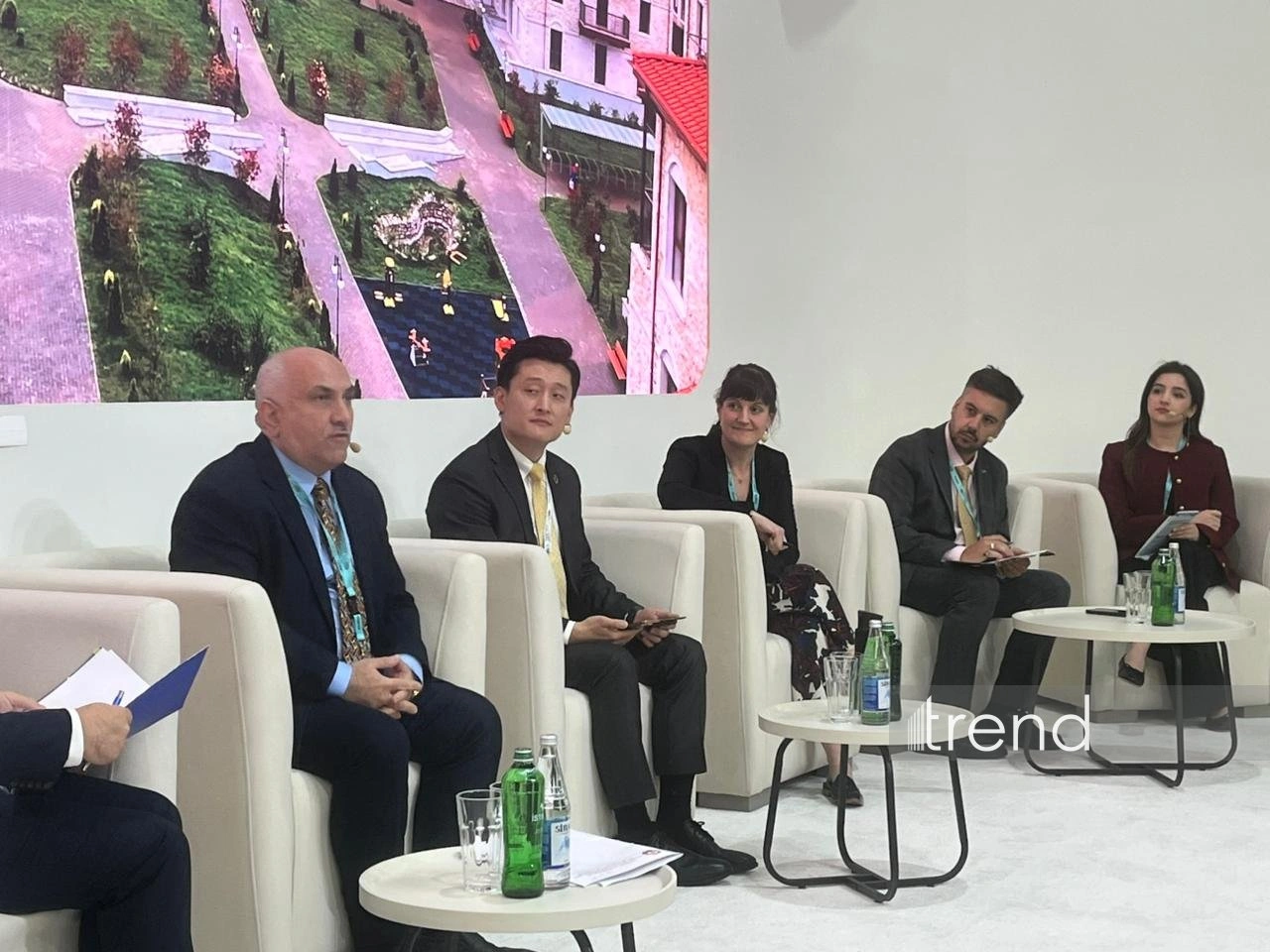
Huseynov made the remark during a panel discussion titled
"Migration and Cities: A Framework for Safe, Innovative and
Sustainable Governance" held within the framework of the 13th
session of the World Urban Forum (WUF13) in Baku.
He noted that one of the largest cases of forced displacement in
the world in the last 30 years occurred as a result of the
Armenian-Azerbaijani conflict.
"In a country with a population of 10 million, hundreds of
thousands of people became internally displaced persons. As a
result of the conflict, people were displaced from their native
lands. Over the past years, the Azerbaijani state has built more
than 20 new and modern settlements for internally displaced
persons, and 320,000 people have been provided with improved
housing conditions. However, the only sustainable solution to the
problem of internal displacement was a political resolution of the
conflict and the liberation of the occupied territories," he
stressed.
The official pointed out that the 44-day Second Karabakh War
that took place in 2020 restored the territorial integrity of
Azerbaijan within its internationally recognized borders and
created conditions for the safe, voluntary, and dignified return of
internally displaced persons.
"Azerbaijan has entered a new stage of post-conflict
development. For the first time, the government has adopted a state
program on the Great Return to the liberated territories. Within
the framework of the program, large-scale reconstruction work is
being carried out in Karabakh and East Zangezur, and it is
envisaged that approximately 700,000 former internally displaced
persons will gradually return to their native lands," he added.
Today marks the fourth day of WUF13 in Baku.
The first day included a ministerial meeting dedicated to the
New Urban Agenda, a ministerial roundtable, assemblies for women
and civil society, business sessions, and discussions on urban
prosperity. An official ceremony marking the raising of the UN and
Azerbaijani flags also took place.
The second day stood out for the inaugural Leaders' Summit,
featuring high-level discussions on the global housing crisis,
urbanization policy, and urban resilience. Concurrently, the
opening of the Mexico City pavilion took place, serving as a
significant platform for expanding cooperation with the Latin
American region and preparing for WUF14.
The third day of WUF13 featured a comprehensive program of
events covering the global housing crisis, the formation of safe
and inclusive cities, climate resilience, artificial intelligence
and urban governance, green urbanization, social equity, and
sustainable transport.
WUF13, which has attracted more than 40,000 registered
participants from 182 countries, will continue until May 22. Held
under the theme “Housing the world: Safe and resilient cities and
communities,” the forum brings together governments, international
organizations, experts, and representatives of civil society to
strengthen global cooperation in the field of sustainable urban
development.