BAKU, Azerbaijan, May 20. Global agendas and
international commitments gain real meaning only when translated
into national priorities through legislation, accountability
mechanisms, and local implementation, which underscores the vital
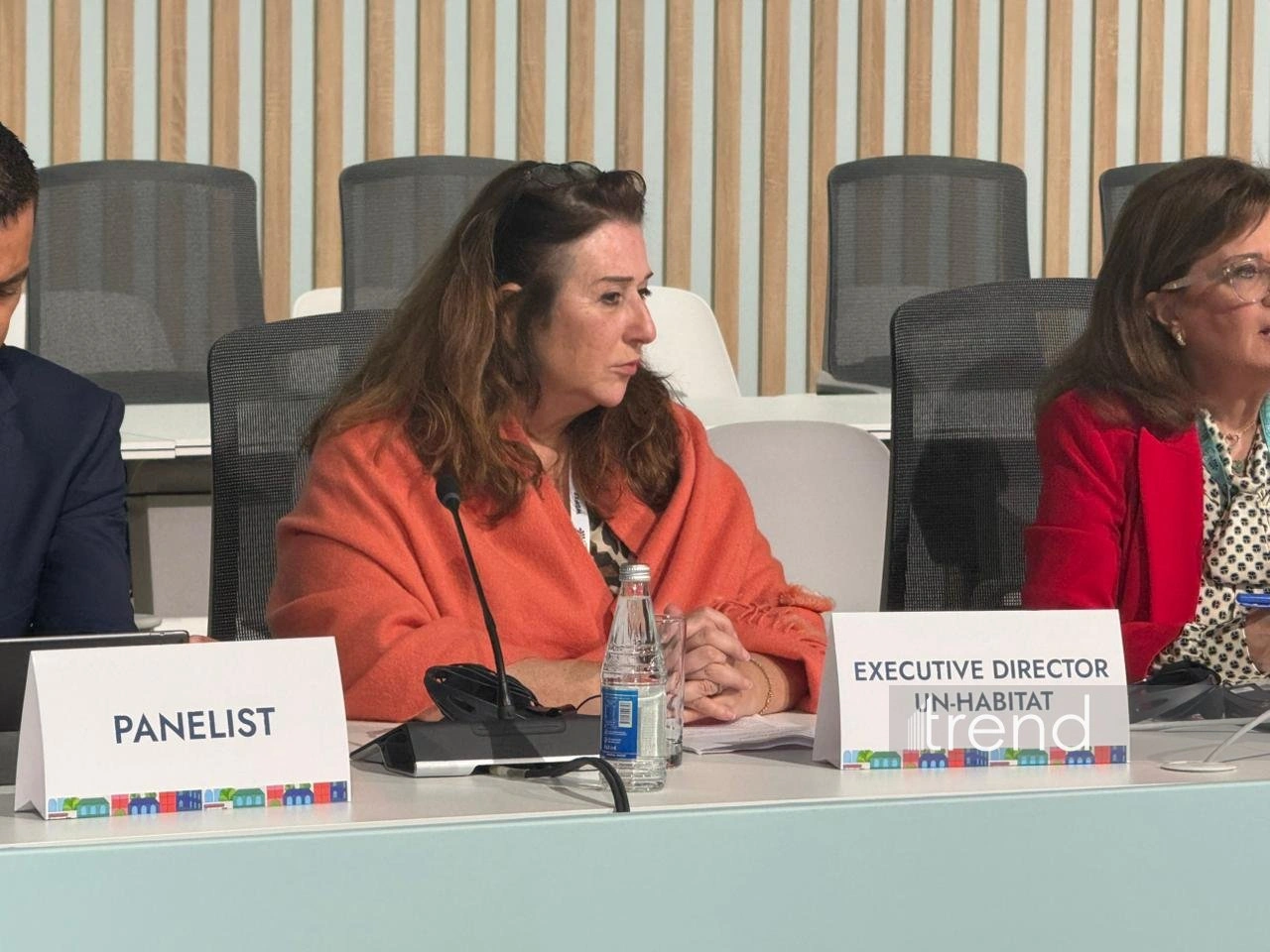
role of parliamentarians, said Rania Hedeya, Regional Director of
the UN-Habitat Regional Office for Arab States, Trend reports.
She made the remarks during a parliamentarians' roundtable
titled "How National Legislation Can Translate Global Housing
Commitments into Tangible Results" held within the framework of the
13th session of the World Urban Forum (WUF13) in Baku.
She noted that parliamentarians serve not merely as lawmakers,
but as primary coordinators acting as a crucial bridge between
global development targets and the practical needs of local
communities.
"You shape policies across land regulation, infrastructure
development, housing finance, tenure security, urban planning,
climate action, and public investment. Concurrently, you monitor
execution and ensure that governments remain accountable to the
citizens you represent," Hedeya pointed out.
She emphasized that this roundtable took shape through extensive
multilateral consultations conducted over recent months.
"Through various dialogues, sessions, and governmental events
held this week in Baku, more than 2,500 stakeholders contributed to
shaping these discussions. This clearly demonstrates that the
housing crisis cannot undergo resolution in isolation. This
challenge demands coordinated action across all levels of
governance and all sectors of society," she added.
The ongoing discussions, Hedeya concluded, remain tightly bound
to global policy processes, and the outcomes emerging from this
roundtable will further strengthen the active participation of
parliaments in these broader international frameworks.
Today marks the fourth day of WUF13 in Baku.
The first day included a ministerial meeting dedicated to the
New Urban Agenda, a ministerial roundtable, assemblies for women
and civil society, business sessions, and discussions on urban
prosperity. An official ceremony marking the raising of the UN and
Azerbaijani flags also took place.
The second day stood out for the inaugural Leaders' Summit,
featuring high-level discussions on the global housing crisis,
urbanization policy, and urban resilience. Concurrently, the
opening of the Mexico City pavilion took place, serving as a
significant platform for expanding cooperation with the Latin
American region and preparing for WUF14.
The third day of WUF13 featured a comprehensive program of
events covering the global housing crisis, the formation of safe
and inclusive cities, climate resilience, artificial intelligence
and urban governance, green urbanization, social equity, and
sustainable transport.
WUF13, which has attracted more than 40,000 registered
participants from 182 countries, will continue until May 22. Held
under the theme “Housing the world: Safe and resilient cities and
communities,” the forum brings together governments, international
organizations, experts, and representatives of civil society to
strengthen global cooperation in the field of sustainable urban
development.