BAKU, Azerbaijan, May 20. A fundamental shift
in the housing sector is necessary to achieve climate goals,
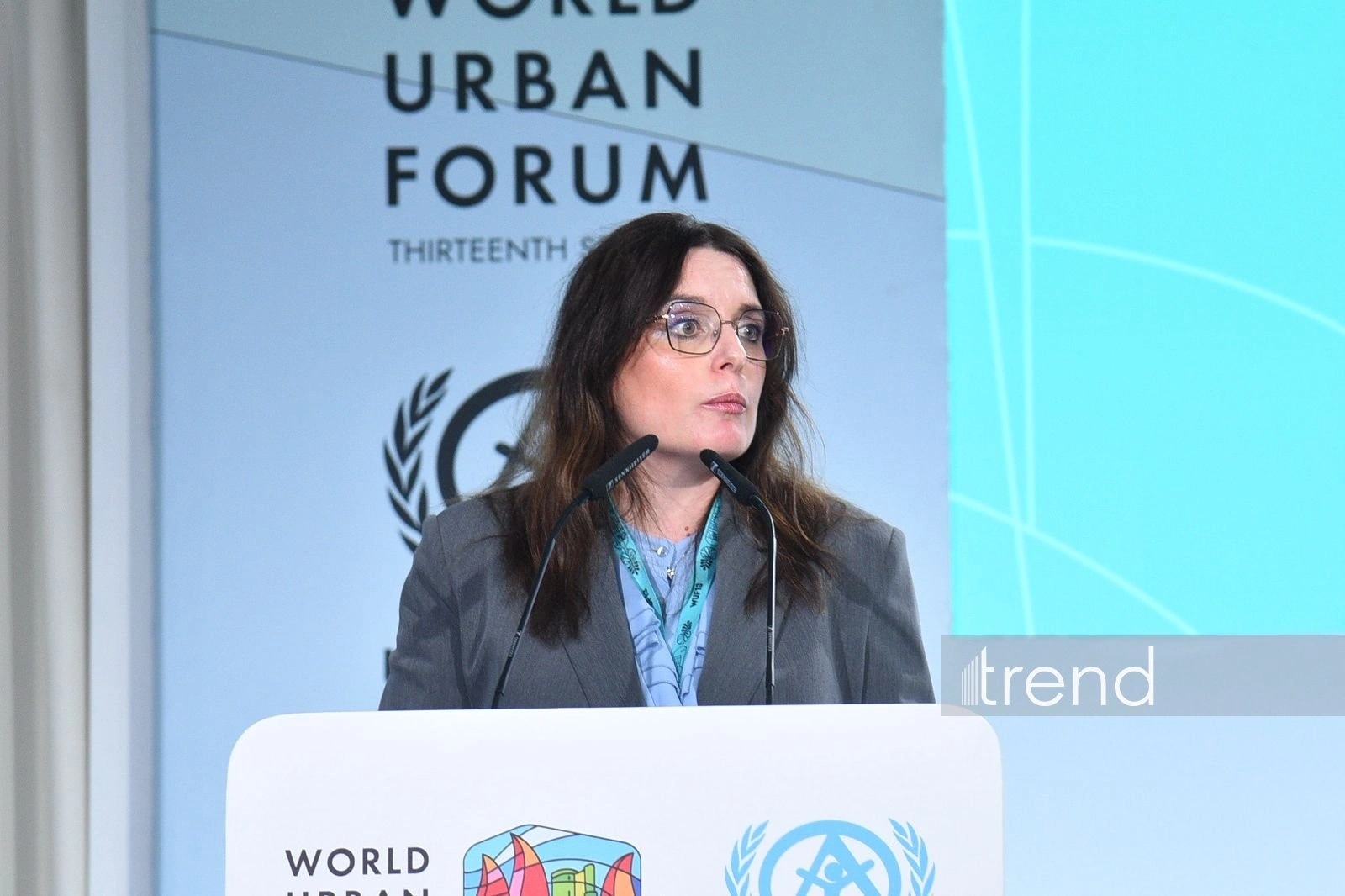
Giorgia Rambelli, Director of Innovation at the Urban Transitions
Mission, said, Trend
reports.
She made the statement during a session titled “Decarbonizing
housing and buildings at the City-Industry-Climate Nexus” as part
of WUF13.
"The housing sector and the built environment are at the very
heart of both the urban climate challenge and the global
development agenda. A fundamental shift is needed in this sector to
achieve our climate goals. The buildings and construction sector
alone accounts for approximately 37% of global CO2 emissions and
represents 28% of global energy consumption,” she said.
According to Rambelli, this sector alone accounts for nearly 50%
of global material extraction, representing the largest material
footprint among all industries on the planet.
“Cities are very well aware of this challenge and its potential
impact on communities. And they feel a strong sense of
responsibility for shaping their sustainable future, while also
recognizing the potential for decarbonization and enhancing the
sustainability of our built environment,” she noted.
Furthermore, Rambelli emphasized that 14,000 communities
worldwide have already joined the Global Covenant of Mayors for
Climate and Energy and are committed to reducing emissions and
implementing ambitious climate adaptation strategies.
“In all these plans, the built environment and housing measures
play an extremely important and central role. An increasing number
of cities around the world are also going even further in their
commitments by setting long-term goals to achieve net-zero
emissions,” she said.
She added that 145 cities from 52 countries have joined the
Urban Transitions Mission and are working to mobilize
decision-makers at all levels of government to prioritize systemic
measures for implementing urban transformation.
“By joining forces and promoting technical, financial, and
regulatory solutions and approaches at every stage of climate
action, they aim not only to address the most urgent and complex
needs but also to shape a sustainable future for our communities,”
Rambelli emphasized.
Today, the fourth day of the WUF13 conference is taking place in
Baku.
The first day included a ministerial meeting dedicated to the
New Urban Agenda, a ministerial roundtable, assemblies for women
and civil society, business sessions, and discussions on urban
prosperity. An official ceremony marking the raising of the UN and
Azerbaijani flags also took place.
The second day stood out for the inaugural Leaders' Summit,
featuring high-level discussions on the global housing crisis,
urbanization policy, and urban resilience. Concurrently, the
opening of the Mexico City pavilion took place, serving as a
significant platform for expanding cooperation with the Latin
American region and preparing for WUF14.
The third day of WUF13 featured a comprehensive program of
events covering the global housing crisis, the formation of safe
and inclusive cities, climate resilience, artificial intelligence
and urban governance, green urbanization, social equity, and
sustainable transport.
WUF13, which has attracted more than 40,000 registered
participants from 182 countries, will continue until May 22. Held
under the theme “Housing the world: Safe and resilient cities and
communities,” the forum brings together governments, international
organizations, experts, and representatives of civil society to
strengthen global cooperation in the field of sustainable urban
development.