BAKU, Azerbaijan, May 20. Youth must actively
participate in shaping sustainable and inclusive cities, especially
in the nations of the Global South where the consequences of
colonial legacies continue to influence the development of
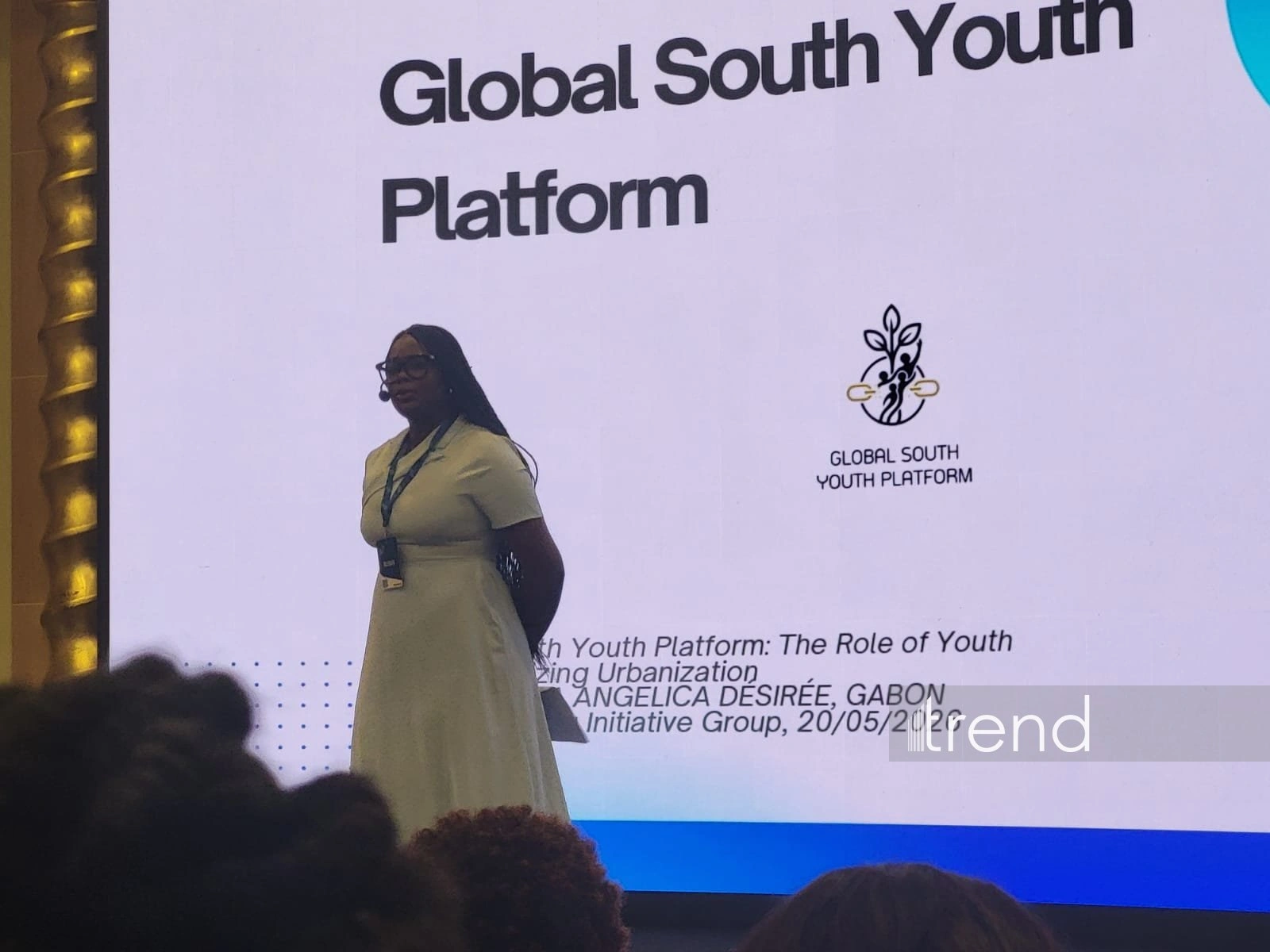
urbanization, said Angélique Désirée Mpiga Ivala, a Gabonese
researcher in political science and international relations,
Trend reports.
The expert made the remarks during the international conference
titled "The Role of Youth in Decolonizing Urbanization," held
within the framework of the 13th session of the World Urban Forum
(WUF13) in Baku.
According to Mpiga Ivala, urbanization in African nations and
the broader Global South faces severe challenges tied to the
remnants of the colonial system.
"Urban growth in Africa occurs rapidly due to rural migration,
centralization, and the lack of opportunities in rural areas," she
noted.
She emphasized that many cities in former colonies were
initially structured to serve the interests of elites, leaving
vulnerable segments of the population on the periphery of
development.
Mpiga Ivala proposed a series of measures aimed at "decolonizing
urbanization" across the Global South. These steps include the
recognition of customary land rights, the mass issuance of land
titles, infrastructure deployment prior to the settlement of
territories, enhanced social mobility, and expanded access to
financing. She stressed the importance of constructing housing that
accounts for local socio-cultural and climatic characteristics.
Speaking on the role of the younger generation, the Gabonese
representative highlighted the necessity of engaging youth in
decision-making processes, noting that they should participate in
urban planning, design, and management, while receiving
professional training in fields tied to urbanization and
sustainable development.
"Youth participation in sustainable urban development remains
impossible without the political and financial engagement of young
people, alongside innovation and professional expertise," Mpiga
Ivala concluded.
Today marks the fourth day of WUF13 in Baku.
The first day included a ministerial meeting dedicated to the
New Urban Agenda, a ministerial roundtable, assemblies for women
and civil society, business sessions, and discussions on urban
prosperity. An official ceremony marking the raising of the UN and
Azerbaijani flags also took place.
The second day stood out for the inaugural Leaders' Summit,
featuring high-level discussions on the global housing crisis,
urbanization policy, and urban resilience. Concurrently, the
opening of the Mexico City pavilion took place, serving as a
significant platform for expanding cooperation with the Latin
American region and preparing for WUF14.
The third day of WUF13 featured a comprehensive program of
events covering the global housing crisis, the formation of safe
and inclusive cities, climate resilience, artificial intelligence
and urban governance, green urbanization, social equity, and
sustainable transport.
WUF13, which has attracted more than 40,000 registered
participants from 182 countries, will continue until May 22. Held
under the theme “Housing the world: Safe and resilient cities and
communities,” the forum brings together governments, international
organizations, experts, and representatives of civil society to
strengthen global cooperation in the field of sustainable urban
development.