BAKU, Azerbaijan, May 20. Resolving the housing
crisis for low-income populations remains impossible without
lowering the cost of capital and establishing a comprehensive
financing system that incorporates sustainable financial
instruments and housing affordability mechanisms, said Musadik
Masood Malik, Pakistan’s Federal Minister for Climate Change and
Environmental Coordination, Trend reports.
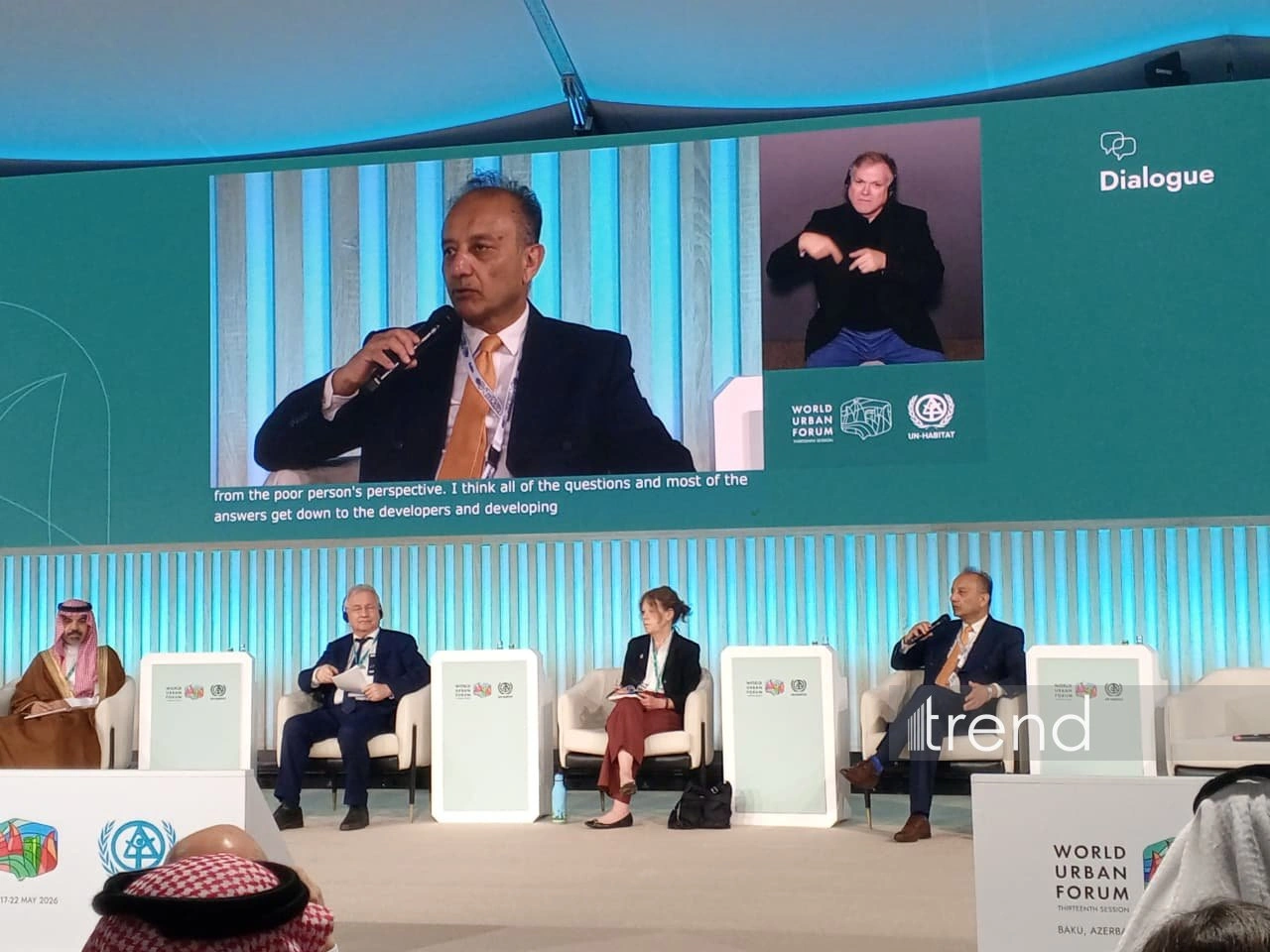
The minister made the remarks during a panel session titled "The
Climate-Housing Nexus" held within the framework of the 13th
session of the World Urban Forum (WUF13) in Baku.
He noted that when discussing housing construction, policymakers
must account for the entire value and affordability chain; however,
under the current system, this mechanism fails to function
effectively for impoverished segments of the population. According
to him, the primary bottleneck remains the cost of capital, which
severely restricts opportunities for constructing affordable
housing.
"When we speak about millions of people lacking adequate
housing, we must evaluate the cost of capital from their
perspective," he noted.
The minister also emphasized that even when funding is
available, the lack of sustainable housing finance mechanisms for
low-income groups persists, particularly in developing nations. He
drew attention to the necessity of creating instruments analogous
to mortgage and securitization models that would expand housing
access.
Without such mechanisms, Malik concluded, the housing challenge
cannot undergo systemic resolution.
Today marks the fourth day of WUF13 in Baku.
The first day included a ministerial meeting dedicated to the
New Urban Agenda, a ministerial roundtable, assemblies for women
and civil society, business sessions, and discussions on urban
prosperity. An official ceremony marking the raising of the UN and
Azerbaijani flags also took place.
The second day stood out for the inaugural Leaders' Summit,
featuring high-level discussions on the global housing crisis,
urbanization policy, and urban resilience. Concurrently, the
opening of the Mexico City pavilion took place, serving as a
significant platform for expanding cooperation with the Latin
American region and preparing for WUF14.
The third day of WUF13 featured a comprehensive program of
events covering the global housing crisis, the formation of safe
and inclusive cities, climate resilience, artificial intelligence
and urban governance, green urbanization, social equity, and
sustainable transport.
WUF13, which has attracted more than 40,000 registered
participants from 182 countries, will continue until May 22. Held
under the theme “Housing the world: Safe and resilient cities and
communities,” the forum brings together governments, international
organizations, experts, and representatives of civil society to
strengthen global cooperation in the field of sustainable urban
development.