BAKU, Azerbaijan, May 20. Evaluating housing as
a social necessity and building a transparent, data-driven
investment system with mandatory outcome monitoring stand as core
requirements for effective urban development and improving public
quality of life, said Fahad Albuliheshi, Mayor of the Madinah
Region and CEO of the Madinah Region Development Authority,
Trend reports.
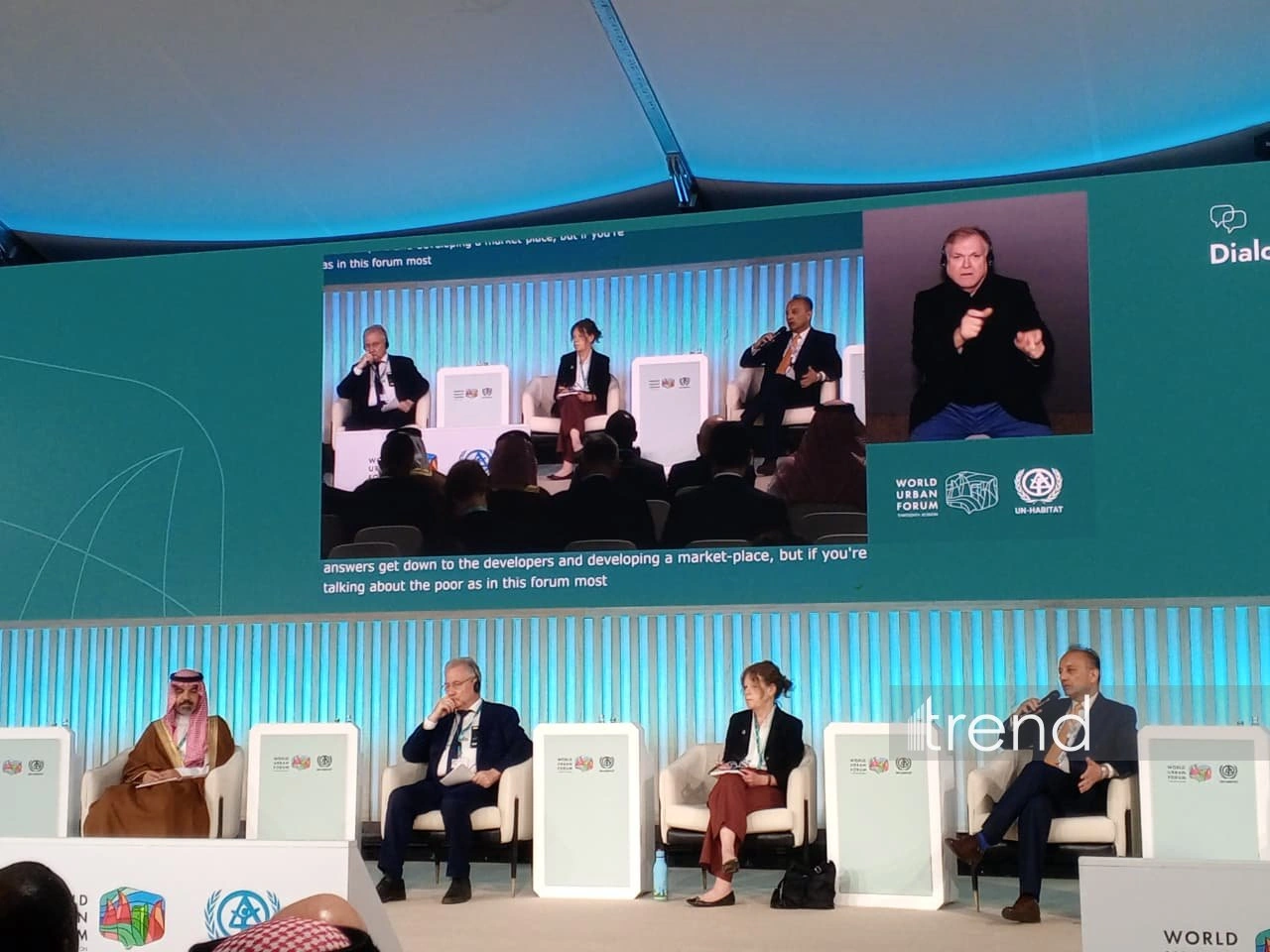
The official made the remarks during a panel session titled "The
Climate-Housing Nexus" held within the framework of the 13th
session of the World Urban Forum (WUF13) in Baku.
"We view housing as a social necessity, not simply as an
infrastructure asset, and that is precisely why we build a
transparent and data-driven investment system," he noted.
According to him, achieving tangible changes requires
establishing a unified language of interaction among government
entities, international investors, and data analysts.
"If we want to achieve a real impact, we must speak the same
language as investors and those who analyze data," he added.
He emphasized that Medina successfully established a transparent
and reliable governance framework by engaging experts and
developing an appropriate legislative base. AAlbuliheshi also
shared that investments in the city align with sustainable
development goals and rely on a system of continuous monitoring and
outcome evaluation.
According to the mayor, regular oversight not only boosts
project efficiency but also tracks its economic impact. As
examples, he cited the restoration of urban canals, alleys, and
municipal infrastructure, noting that the monitoring framework
enables timely adjustments to municipal policy and the city's
broader development strategy.
Today marks the fourth day of WUF13 in Baku.
The first day included a ministerial meeting dedicated to the
New Urban Agenda, a ministerial roundtable, assemblies for women
and civil society, business sessions, and discussions on urban
prosperity. An official ceremony marking the raising of the UN and
Azerbaijani flags also took place.
The second day stood out for the inaugural Leaders' Summit,
featuring high-level discussions on the global housing crisis,
urbanization policy, and urban resilience. Concurrently, the
opening of the Mexico City pavilion took place, serving as a
significant platform for expanding cooperation with the Latin
American region and preparing for WUF14.
The third day of WUF13 featured a comprehensive program of
events covering the global housing crisis, the formation of safe
and inclusive cities, climate resilience, artificial intelligence
and urban governance, green urbanization, social equity, and
sustainable transport.
WUF13, which has attracted more than 40,000 registered
participants from 182 countries, will continue until May 22. Held
under the theme “Housing the world: Safe and resilient cities and
communities,” the forum brings together governments, international
organizations, experts, and representatives of civil society to
strengthen global cooperation in the field of sustainable urban
development.