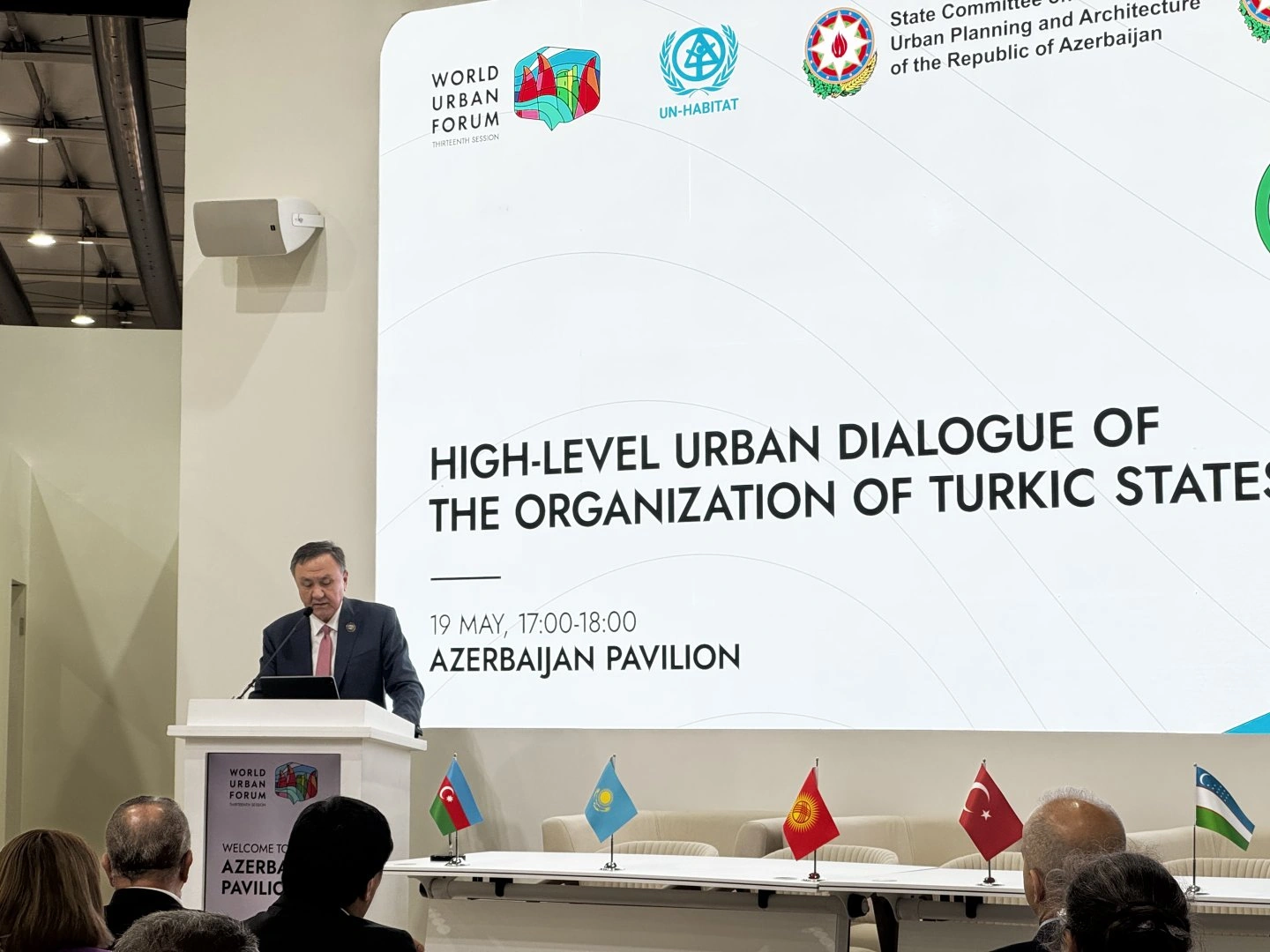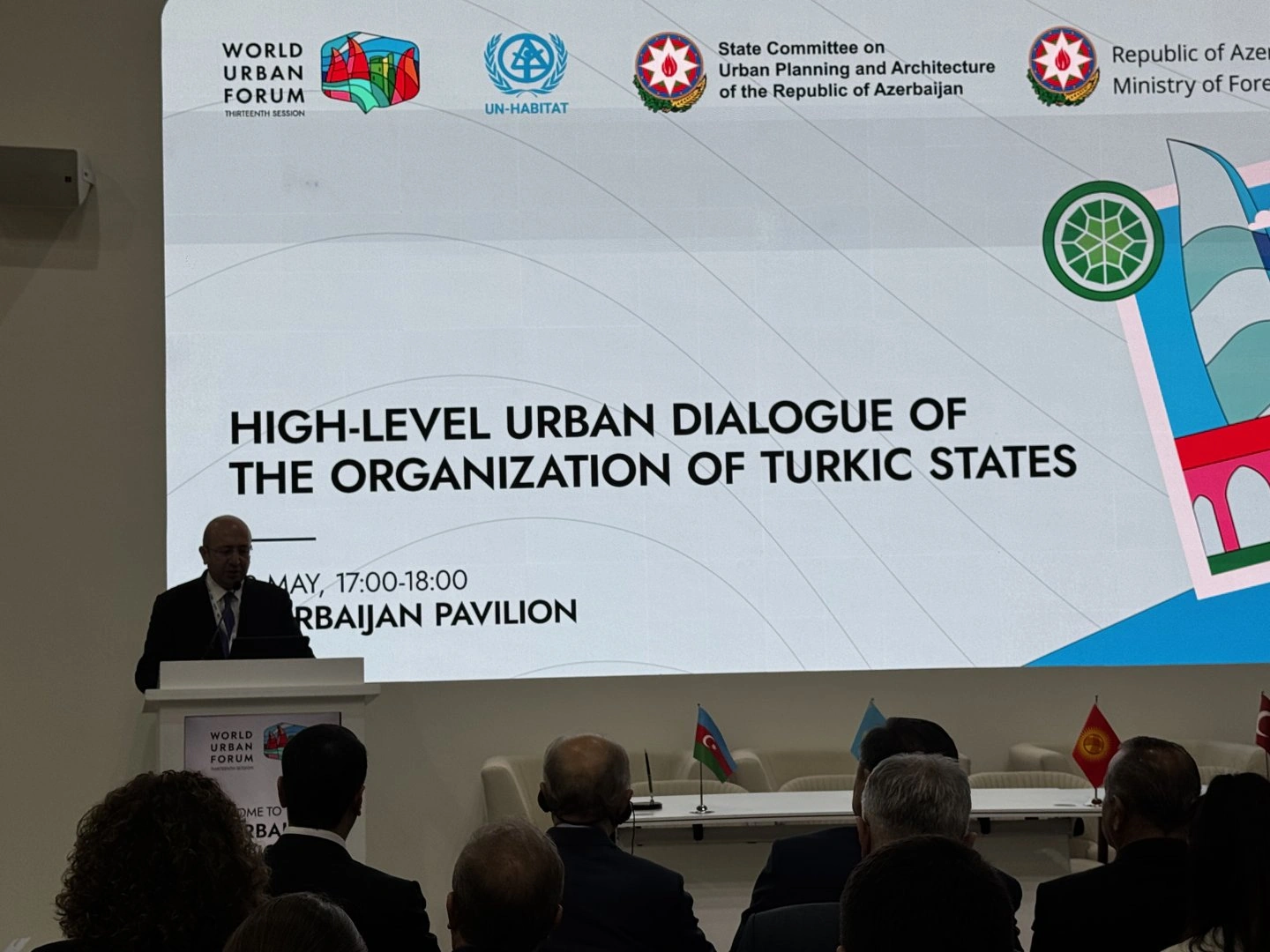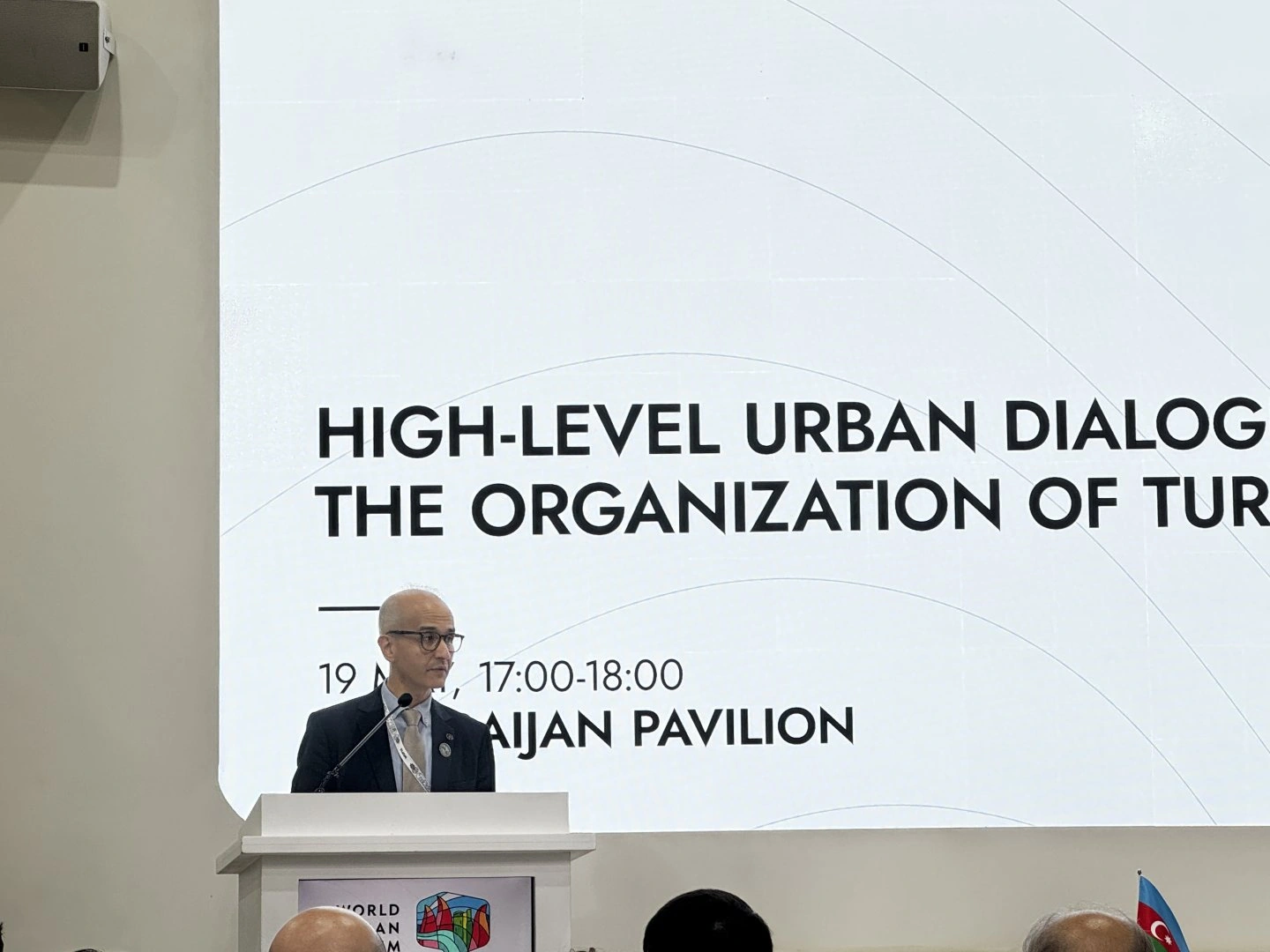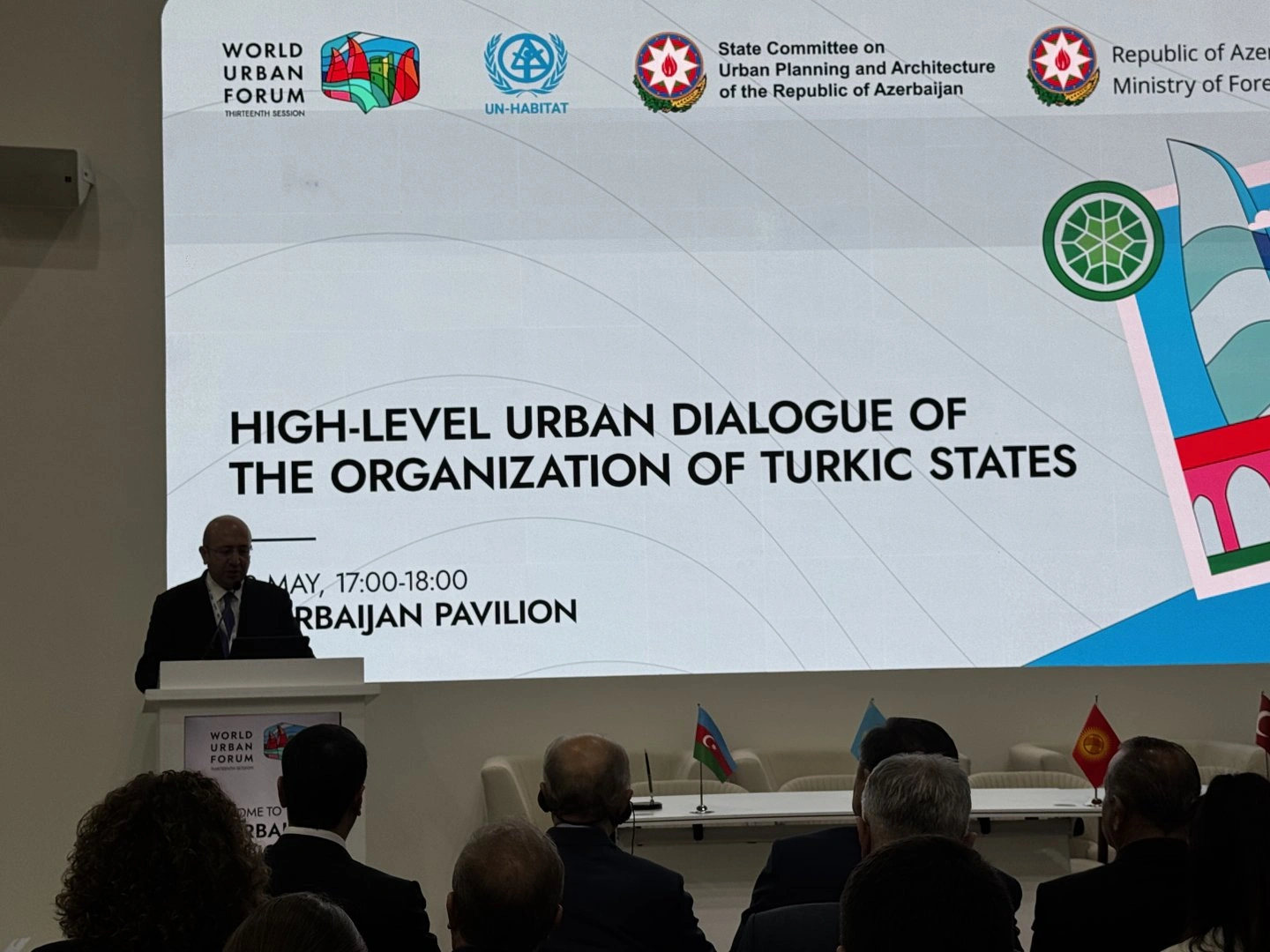
BAKU, Azerbaijan, May 19. As part of the 13th
session of the World Urban Forum (WUF13), held in Baku, the
Organization of Turkic States (OTS) held a high-level dialogue on
urban issues, Trend
reports.
Anar Guliyev, Chairman of the State Committee for Urban Planning
and Architecture, noted in his speech that 65% of Azerbaijan’s
cities are already governed by 20-year master plans:
“The approval process is underway for 10 of the 79 cities.
Detailed planning has been carried out for 2,230 settlements. The
Baku master plan through 2040 envisions a polycentric,
people-centered, environmentally responsible development model.
Here, housing, jobs, services, and public spaces are brought closer
together. In housing policy, we view housing not as a commodity,
but as the foundation of social stability and inclusive
development,” Guliyev added.
Deputy Minister of Industry and Construction of Kazakhstan,
Rakhymzhan Isakulov, emphasized that a systematic and long-term
approach to urban planning is particularly important in the context
of accelerating urbanization, climate change, and growing demands
for quality public governance.
Hasan Suver, Deputy Minister of Environment, Urbanization, and
Climate Change of the Republic of Türkiye, spoke about safer, more
sustainable, and people-centered reconstruction of cities affected
by natural disasters. He noted that Türkiye is working on an
international fund called the “Sustainable Cities Fund” to
strengthen the financial foundation of the “Sustainable Cities
Declaration” in this context.
Erfan Ali, Director of the UN-Habitat Regional Office for
Eastern Europe and Central Asia, stated that the UN-Habitat
Regional Roadmap for Eastern Europe and Central Asia has translated
these priorities into practical action areas: “These areas include
effective urban governance, strengthening local institutions,
affordable housing, basic services, social integration, climate
resilience, sustainable urban infrastructure, and post-crisis
recovery.”
In his remarks, Secretary-General of the Organization of Turkic
States Kubanychbek Omuraliev stated that climate change adaptation,
disaster risk reduction, energy efficiency, and sustainable
transport must be at the center of future regional initiatives:
“This vision is already becoming a reality in our region. For
example, ‘smart city’ and ‘smart village’ projects are being
implemented in Karabakh and Eastern Zangezur; in Kazakhstan, there
is a high-tech model for the development of the city of Alatau; and
in Kyrgyzstan, there are digital monitoring systems for sustainable
mountain urbanism. Today, we see these initiatives on display in
the pavilions of member states. With the memorandum signed today,
we are establishing a formal framework for technical cooperation,”
he noted.
Meanwhile, the third day of the 13th session of the World Urban
Forum (WUF13) was held in Baku.
On the first day, a ministerial meeting dedicated to the New
Urban Agenda, a roundtable of ministers, assemblies of women and
civil society, business sessions, and discussions on urban
well-being were held. A ceremony for raising the flags of the
United Nations and Azerbaijan also took place within the framework
of the forum.
The second day of the forum drew attention with the first-ever
Leaders Summit. High-level discussions on the global housing
crisis, urbanization policy, and urban resilience were held that
day. At the same time, the Mexico City pavilion was inaugurated
within the framework of WUF13. The pavilion was presented as an
important platform for expanding cooperation with the Latin
American region and preparing for WUF14.
WUF13, which has attracted more than 40,000 registered
participants from 182 countries, will continue until May 22. Held
under the theme “Housing the world: Safe and resilient cities and
communities,” the forum brings together governments, international
organizations, experts, and representatives of civil society to
strengthen global cooperation in the field of sustainable urban
development.