BAKU, Azerbaijan, May 19. Iran prepares to
expand the implementation of solar systems in residential
buildings, said Gholamreza Kazemian, Deputy Minister of Roads and
Urban Development of Iran, Trend reports.
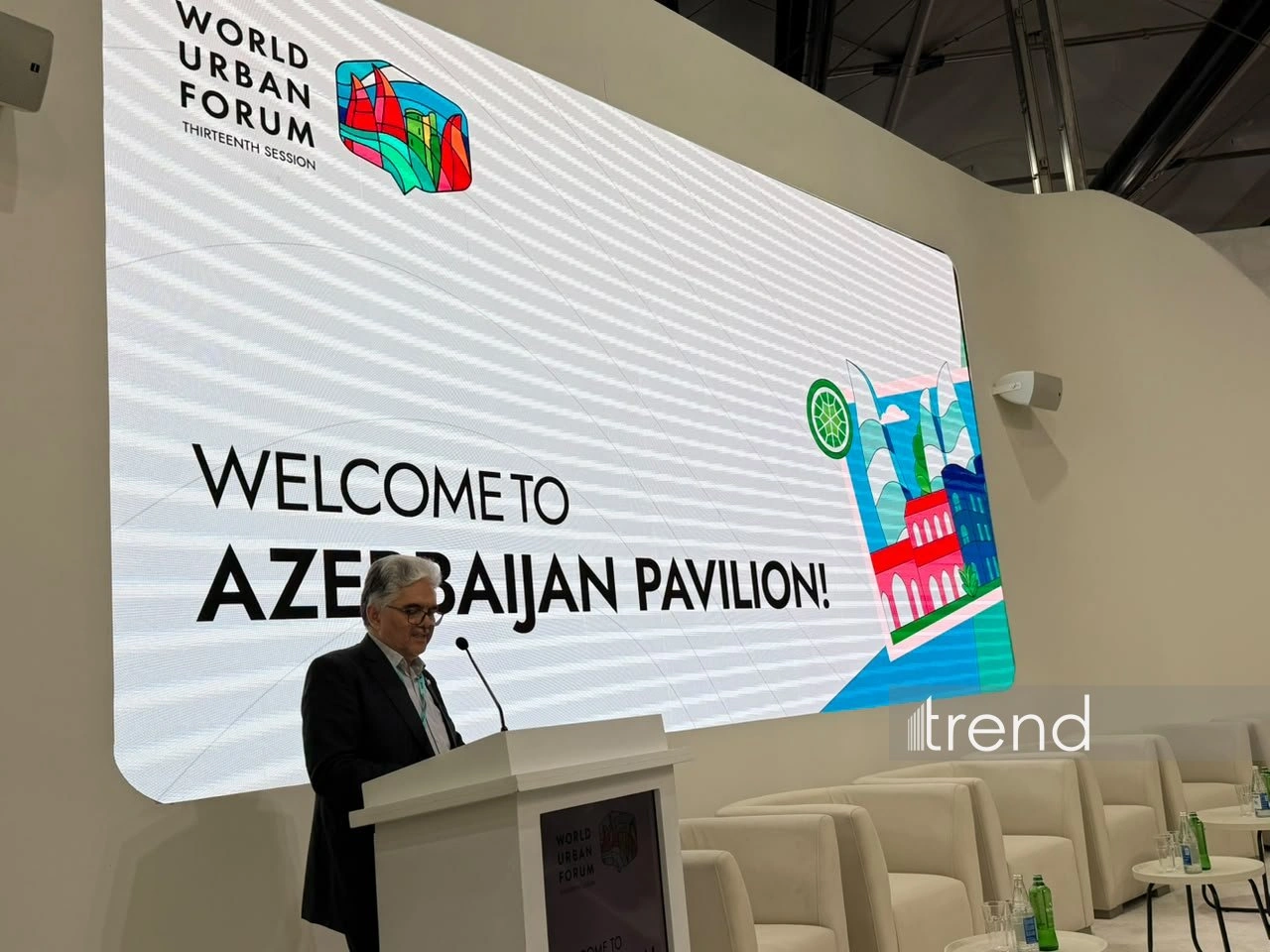
The deputy minister made the remark during his speech at the
"High-Level Energy and Urban Dialogue of D-8 Countries" event held
within the framework of the 13th session of the World Urban Forum
(WUF13) in Baku.
He outlined that water scarcity, climate change, water-sensitive
planning, and energy consumption management have emerged as core
priorities in Iran's urban development policy in recent years.
According to him, these issues occupy a special place in the new
generation of comprehensive urban development plans, the
preparation of which began about five years ago.
"Urban planning frameworks designed for the city of Khomir,
located in the West Azerbaijan Province, as well as other
settlements, received approval precisely based on this approach.
Similar plans developed for Isfahan expect imminent approval by the
Supreme Council for Urban Planning and Architecture of Iran," he
said.
The deputy minister noted that amid a deepening global energy
balance crisis, rising energy consumption and limited production
capacities complicate energy supplies in the industrial and service
sectors.
"Buildings in Iran account for more than 40% of the total annual
energy consumption. For this reason, the building sector holds
critical importance in energy management, particularly during peak
electricity demand periods," Kazemian emphasized.
He added that the presence of more than 300 sunny days per year
across many regions of the country enhances its renewable energy
potential and necessitates the expansion of solar energy
investments.
Kazemian stated that Iran's Ministry of Roads and Urban
Development, together with the Ministry of Energy and the
Construction Engineering Organization, prepares to sign a
memorandum of understanding on expanding the implementation of
solar systems in residential buildings.
"The project will undergo implementation under the framework of
the Law on Construction Engineering and Control. The main objective
of the initiative centers on reducing energy consumption in the
building sector and meeting a certain portion of the structures'
energy needs via solar panels. To this end, the application of
technical and engineering support, financial incentives, and loan
mechanisms remains under consideration," he noted.
According to the deputy minister, financing for the project will
come from funds generated through energy savings and energy-saving
certificates traded on the Iran Energy Exchange.
He recalled that the Law on Construction Engineering and
Control, adopted in 1995, defines technical standards regarding the
design, construction, and operation of buildings.
"Over the past 30 years, consistent measures targeting energy
consumption reduction in buildings have advanced under Section 19,
titled 'Energy Consumption Savings,'" he added.
Kazemian noted that the latest edition of that section, titled
"Energy Management in Buildings," establishes mandatory obligations
for all parties involved in the design, construction, and
operational phases.
"The fifth edition of the document introduces a building
life-cycle assessment system for the first time, establishing A, B,
C, and D levels for green building ratings. Under the new approach,
energy efficiency undergoes evaluation based on both regulatory
indicators and energy performance simulations," Kazemian
concluded.
The third day of the 13th session of the World Urban Forum
(WUF13) is underway in Baku.
On the first day, a ministerial meeting dedicated to the New
Urban Agenda, a roundtable of ministers, assemblies of women and
civil society, business sessions, and discussions on urban
well-being were held. A ceremony for raising the flags of the
United Nations and Azerbaijan also took place within the framework
of the forum.
The second day of the forum drew attention with the first-ever
Leaders Summit. High-level discussions on the global housing
crisis, urbanization policy, and urban resilience were held that
day. At the same time, the Mexico City pavilion was inaugurated
within the framework of WUF13. The pavilion was presented as an
important platform for expanding cooperation with the Latin
American region and preparing for WUF14.
WUF13, which has attracted more than 40,000 registered
participants from 182 countries, will continue until May 22. Held
under the theme “Housing the world: Safe and resilient cities and
communities,” the forum brings together governments, international
organizations, experts, and representatives of civil society to
strengthen global cooperation in the field of sustainable urban
development.