BAKU, Azerbaijan, May 19. Housing policy must
be viewed not only as the construction of buildings, but as the
creation of a full-fledged urban environment that ensures
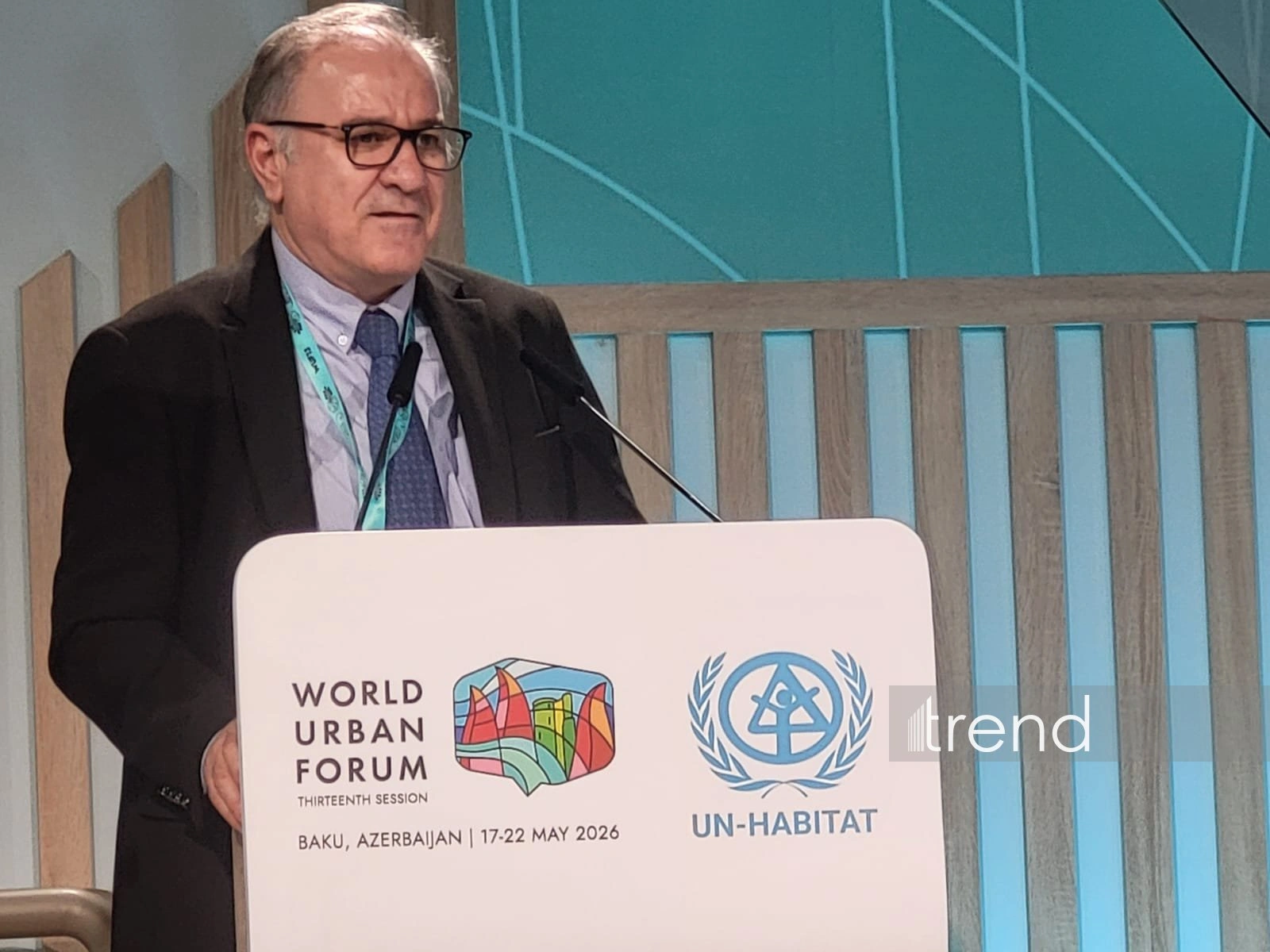
well-being and social sustainability, said Cemil Arslan, Secretary
General of the Marmara Municipalities Union of Türkiye, Trend reports.
He made the remark during a panel discussion titled "Launching
the Barcelona Metropolitan Declaration: Bold Commitments to
Addressing the Housing Crisis at a Metropolitan Scale" held within
the framework of the 13th session of the World Urban Forum (WUF13)
in Baku.
"Housing should not be seen as a privilege. It is a fundamental
right of every human being," he said.
According to Arslan, the Marmara Region covers only 9% of
Türkiye's territory but accounts for approximately 30% of the
country's population.
"Istanbul alone is home to about 16 million people. At the same
time, the metropolitan areas of the region are closely
interconnected," he noted.
He cited Istanbul's water supply system as an example of this
dependency on neighboring metropolitan areas.
"Istanbul receives water from Sakarya and Tekirdag. Without
these two metropolitan areas, it is impossible to secure the water
supply for the city's residents," Arslan emphasized.
According to him, a similar interdependence exists across
transport and industrial sectors.
"Around 200,000 trucks move daily between Istanbul, Kocaeli,
Tekirdag, and Sakarya. Without taking the linkages between these
territories into account, it is impossible to effectively resolve
transport, housing, and social issues," he stated.
Arslan informed that the Marmara Municipalities Union is
currently developing a strategic program for the region's spatial
development, bringing together around 200 municipalities.
Speaking on housing policy, he noted that building houses alone
does not guarantee a high quality of life.
"Following the devastating earthquake in Türkiye three years
ago, which affected 11 cities and about 14 million people, 450,000
residential buildings are being constructed in the country.
However, building housing does not automatically mean creating
well-being, social safety, and a comfortable living environment,"
Arslan said.
According to him, tackling such challenges requires coordinated
action between municipalities, international organizations, and
state bodies.
He also announced that the EMA Forum will be held in Istanbul in
October this year, focusing on the role of metropolitan areas in
global policy and climate risks related to water resources.
"Under the conditions of the climate crisis, metropolitan areas
must pay special attention to the issues of water scarcity,
flooding, and the associated social and environmental risks,"
Arslan added.
The third day of the 13th session of the World Urban Forum
(WUF13) is underway in Baku.
On the first day, a ministerial meeting dedicated to the New
Urban Agenda, a roundtable of ministers, assemblies of women and
civil society, business sessions, and discussions on urban
well-being were held. A ceremony for raising the flags of the
United Nations and Azerbaijan also took place within the framework
of the forum.
The second day of the forum drew attention with the first-ever
Leaders Summit. High-level discussions on the global housing
crisis, urbanization policy, and urban resilience were held that
day. At the same time, the Mexico City pavilion was inaugurated
within the framework of WUF13. The pavilion was presented as an
important platform for expanding cooperation with the Latin
American region and preparing for WUF14.
WUF13, which has attracted more than 40,000 registered
participants from 182 countries, will continue until May 22. Held
under the theme “Housing the world: Safe and resilient cities and
communities,” the forum brings together governments, international
organizations, experts, and representatives of civil society to
strengthen global cooperation in the field of sustainable urban
development.